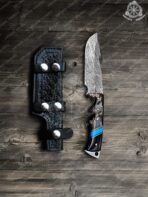
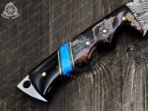
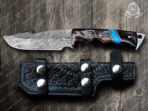
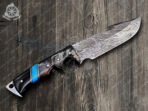
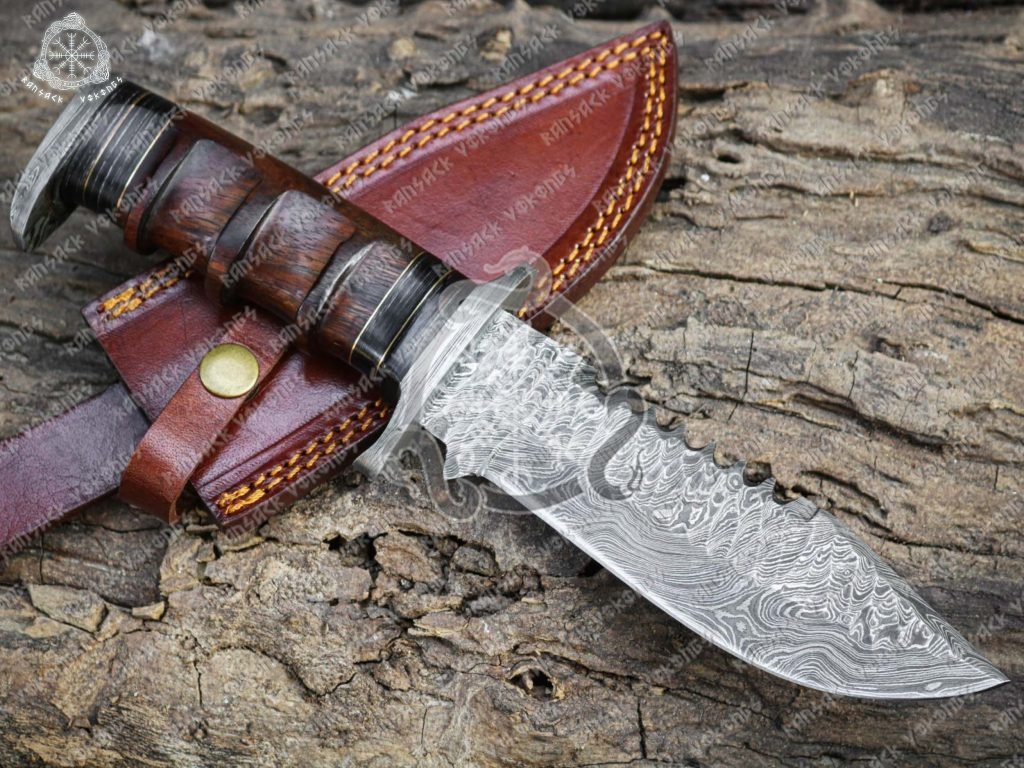
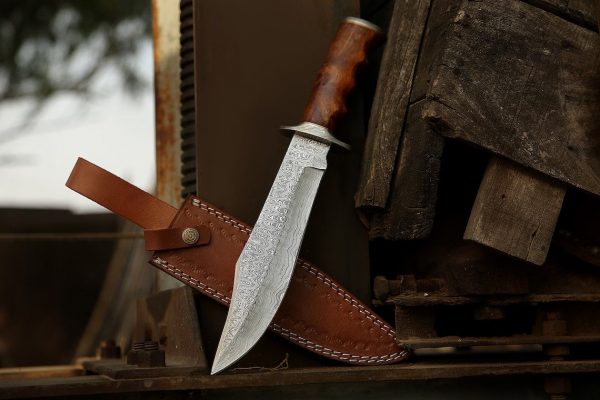
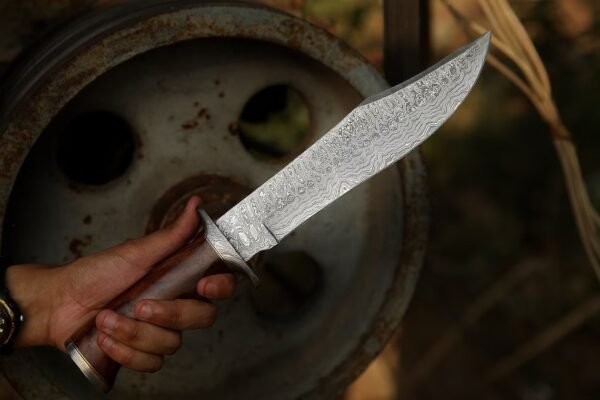
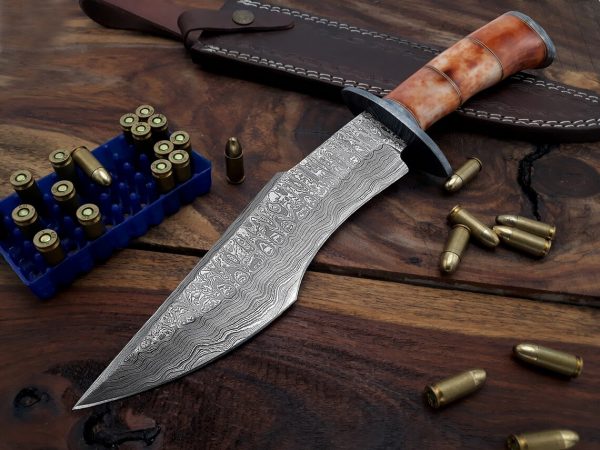
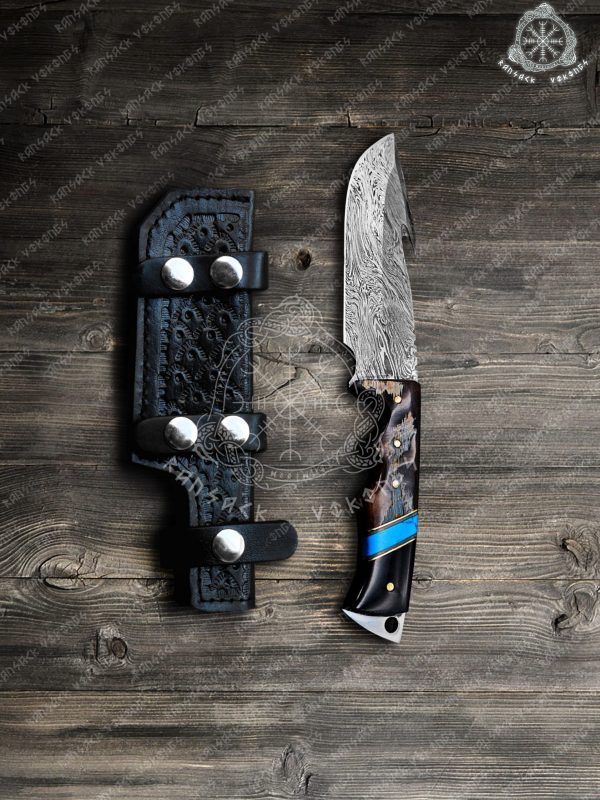
Hornreaver is a compact Damascus gut hook knife, 8.7 inches overall with a 4.6 inch blade and a 4.1 inch handle, weighing 5.6 oz. The blade is fire pattern Damascus forge welded from 1095 and 15N20 and finished with custom brass file work along the spine. The handle is built up from buffalo horn and ram horn with turquoise and brass fibre spacers between the layers. What the hook actually does in the field is covered in the gut hook explained.
Horn is an underrated material and it has a long history in the hand. It is keratin, structurally the same stuff as a fingernail, and unlike bone it can be heated, softened and pressed. Before glass was cheap, that property made horn the working plastic of the medieval world: it was split, flattened and scraped thin enough to glaze lantern windows, pressed into spoon bowls and combs, and turned into drinking vessels. What matters on a knife is that it is dense, warm to hold within a second or two, and completely unlike a moulded grip in the way it takes a polish and shows depth under the surface.
This knife is forged, ground, handled and sheathed in the Czech Republic. It ships with a fitted natural leather sheath, free within the United States, sharp on both the main edge and the inside of the hook.
Specifications
| Steel | Hand forged Damascus, 1095 and 15N20 forge welded |
|---|
| Hardness | 58 to 60 HRC |
|---|
| Pattern | Fire pattern Damascus with brass file work |
|---|
| Overall length | 8.7 inches |
|---|
| Blade length | 4.6 inches |
|---|
| Handle length | 4.1 inches |
|---|
| Weight | 5.6 oz |
|---|
| Handle | Buffalo horn and ram horn with turquoise and brass fibre spacers |
|---|
| Sheath | Natural leather sheath included |
|---|
| SKU | RK-360 |
|---|
How the hook does its job, and how to judge one
A gut hook is a short curved cutting edge set into the spine, with the sharpened side on the inside of the curve and the nose deliberately left blunt. You open the hide with a small entry cut, push the blunt nose in under the skin so it rides against the underside, and pull. The hide opens from the inside outwards. Because the nose cannot present a point downwards, it will not open the stomach or the intestine, and because the cut runs outwards it does not drag hair into the meat.
What separates a good hook from a bad one is geometry, and there are two numbers to look at. The first is the radius of the curve. Too tight and the hook binds and packs with hair and fat within a few inches. Too open and it slips off the hide instead of gripping. The second is the depth of the throat, which is how far back the sharpened edge sits from the mouth of the hook. A shallow throat is quick and easy to clean and suits thin skinned game. A deep throat holds thicker hide and pulls harder. The hook on this knife is cut to sit in the middle of that range, which is the right choice for a knife that will see deer and small game rather than one species.
At 4.6 inches the main blade is short enough to keep the point under control for caping and detail cutting around the head and legs, which is where a longer blade fights you. The brass file work along the spine is not only decoration: the filed ramp gives your thumb a positive place to sit when you are pushing the point through hide.
Why Damascus and not stainless
This blade is 1095 high carbon and 15N20 nickel steel, forge welded into a single billet and drawn out until the layers are fine enough to read as a pattern. The two steels harden together and take an etch differently, which is what makes the light and dark bands. It is not a print and it is not a coating, and the pattern is still there after every sharpening.
Run at 58 to 60 HRC it keeps a working edge through far more hide and cartilage than a soft stainless blade, and it comes back on a stone in a couple of minutes rather than a session. The honest cost is that under the pattern it is carbon steel, and carbon steel rusts if you put it away wet or leave it in a damp sheath. For a knife that gets cleaned after use that is a good trade. For a knife that lives in a tackle box under a boat seat it is not. We set out both sides in Damascus versus stainless, and the honest answer to whether the steel earns its reputation is in is Damascus steel good.
The horn handle and the spacers
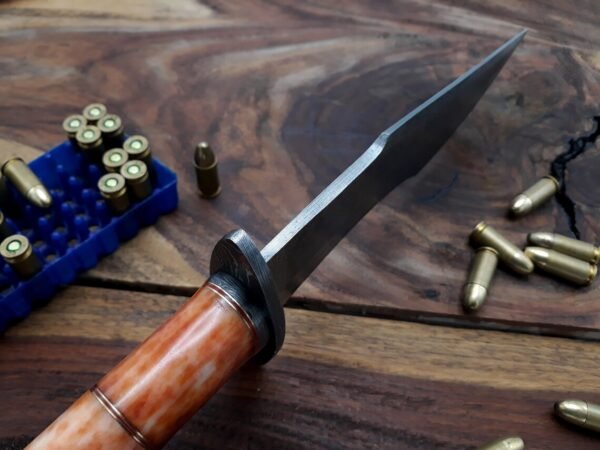
Buffalo horn is dark, dense and takes a mirror polish. Ram horn is lighter, more figured and often carries visible growth ridges. Stacking the two with turquoise and brass fibre spacers between them does two useful things. It gives the eye a series of bands so the handle reads as built rather than moulded, and it puts hard, slightly proud spacer lines under the fingers, which improves grip in wet hands more than a smooth handle of any single material would.
Horn has one requirement and it is not the same as wood. Keep it out of prolonged soaking and away from direct heat, because horn dries, shrinks and crazes if it is cooked or repeatedly wetted and dried. Wash the blade, dry the handle, and two or three times a year work a little mineral oil or a wax conditioner into the horn with your fingers and buff it back. That keeps the surface fed and the polish deep. The routine for horn, bone and wood together is in wooden handle care, and the sheath is covered in leather sheath care.
Engraving, runes and your own design
Use the rune converter on this page to turn a name, a date or a short phrase into Elder Futhark and we will cut it into the steel or the handle. If you would rather have a Viking pattern than a rune line, choose your own design in the engraving option above the add to cart button and tell us whether it goes on the blade or the handle. Where a piece already carries an engraved design, your chosen engraving replaces it rather than sitting alongside it. On this knife the flat of the blade below the hook is the clearest field for lettering, since the horn is layered and does not give one continuous surface. Placement and what will read at this size is covered on the engraving page.
Care and sharpening
The main edge is straightforward stone work at a consistent angle with light pressure. The hook is not. Never take a flat stone to it, and never sharpen the outer nose, because the nose has to stay blunt to ride under hide. Use a round ceramic rod, a small round diamond file or a chainsaw file sized to the inside radius and work only the inside curve. It needs very little, because material is drawn into a hook rather than pushed across it.
After a day in the field, wash, dry thoroughly and put a thin film of mineral or camellia oil on the steel. Do not store the knife in the sheath for long periods, because leather holds moisture against a blade. A grey patina is normal and protective. Active orange rust should be taken off with a soft abrasive and oil before it pits. Method in steel care and angles in sharpening with a whetstone.
Made in the Czech Republic
This is a handmade piece from the Czech Republic, made in a workshop that still forges, grinds and finishes by hand instead of stamping parts out. The smiths there have kept the older way of working, and the wood, horn and leather are shaped and fitted by hand as well. Two pieces of the same design will never be identical, and that is part of what you are buying.
Ransack Viking is a United States company. We handle the import ourselves, look over every piece when it lands and ship from our warehouse in Memphis, Tennessee. Engraving is done in the United States after the piece arrives, so your design goes on before we send it out.
A note on handmade variation
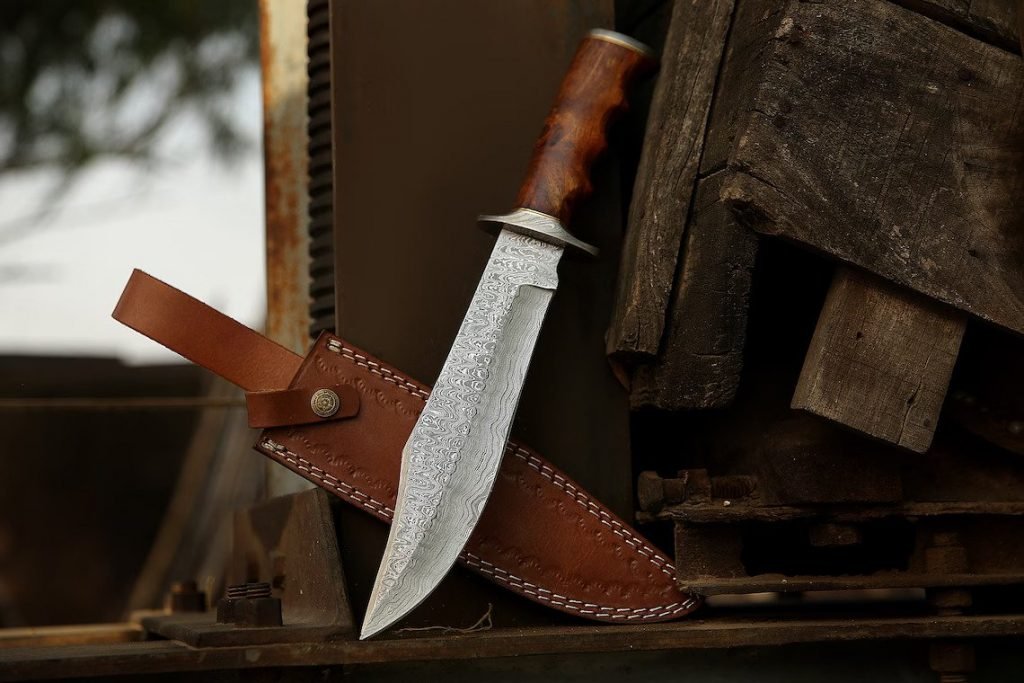
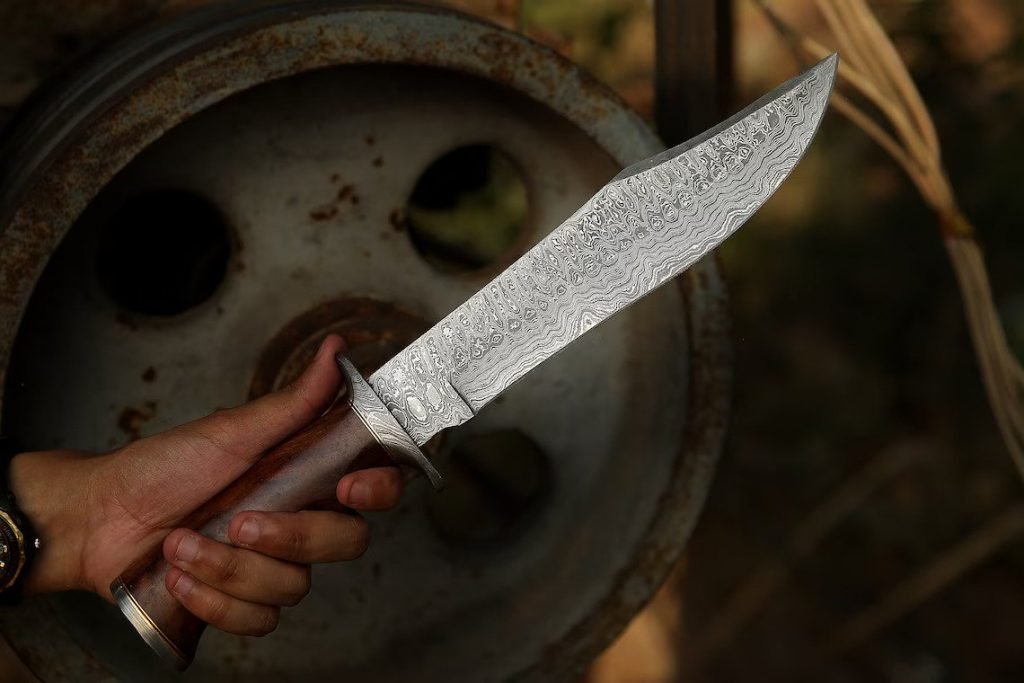
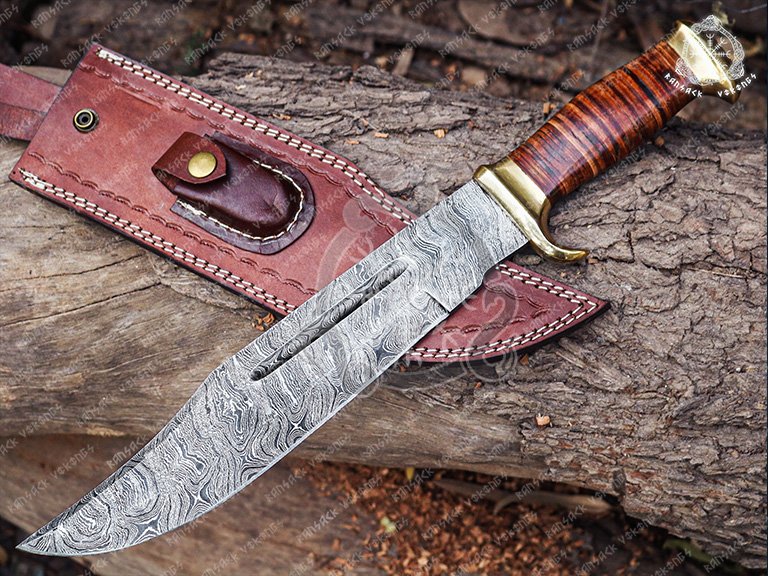
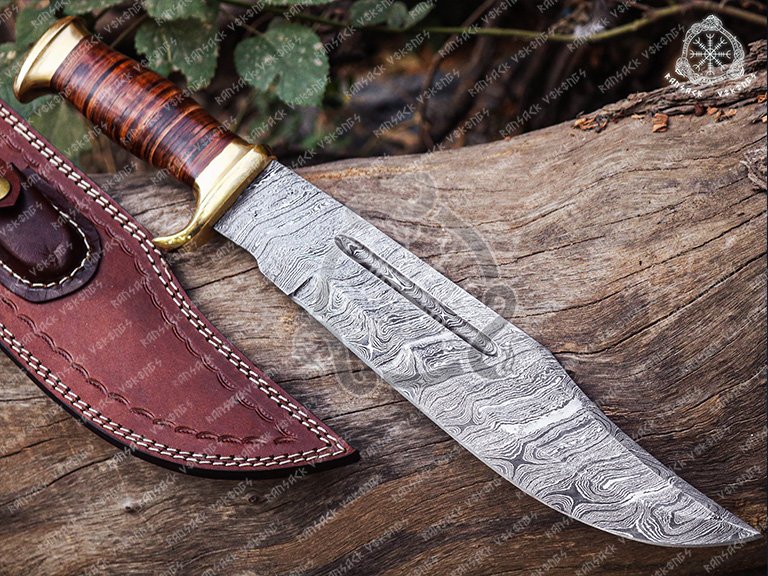
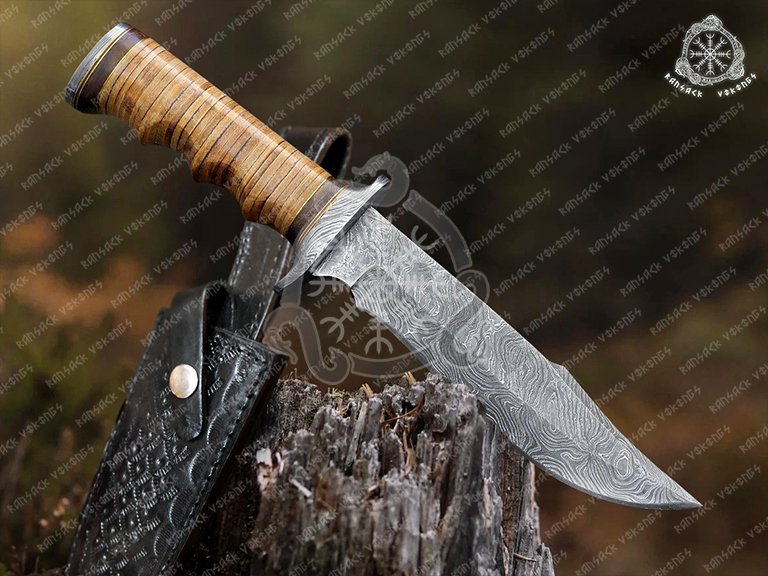
This knife is hand forged. It is not machine made and it is not bulk produced, so the piece that arrives will not be a pixel for pixel copy of the photograph. Every billet moves differently under the hammer, so the fire pattern in the steel is unique to your blade. Buffalo horn and ram horn are natural materials taken from individual animals, so the tone runs anywhere from near black to smoky grey to amber, the ram horn figure is never repeated, and the turquoise in the spacers varies in colour and matrix. The file work is cut by hand, so the spacing of the notches is close but not identical between knives.
The dimensions, the steel and the build are the same every time. The character is not, and that is exactly what a handmade knife is for.
Frequently asked questions
Is a 4.6 inch blade long enough for deer?
Yes, and for most people it is the better length. Field dressing and caping are control work close to the hand. A very long blade adds reach you do not need and makes the point harder to steer around bone and hide.
Does the hook get in the way of normal cutting?
Not in use. It sits well back on the spine, so the main edge and the point behave like an ordinary drop point knife. The only place you notice it is when batoning or pushing on the spine, which this knife is not built for anyway.
Is the handle solid horn or is it laminated?
It is built up in layers of buffalo horn and ram horn with turquoise and brass fibre spacers between them, then shaped and polished as one piece. That is a deliberate construction, not a shortcut.
Can I have a rune line cut into it as a gift?
Yes. The rune converter on this page turns a name or a date into Elder Futhark and we cut it before the knife ships. The blade flat is the usual place on this model.
Will my knife look like the one photographed?
The dimensions and the steel will match. The Damascus pattern and the colour of the horn will not, because both are individual to the material each knife was made from.
Is it legal to carry?
This is a fixed blade hunting knife and carry laws differ by state and by city, so check your local rules before carrying it anywhere other than while hunting or at camp. It ships with a belt sheath and is sold as a field and camp tool.
What is in the box
- One Hornreaver Damascus gut hook hunting knife, 8.7 inches overall
- Fitted natural leather sheath
- Protective packaging
- Forged and finished in the Czech Republic
Explore the range
Comparable pieces sit in hunting knives, Damascus skinner knives, Bowie knives and Viking knives. Background on the steel, the horn and the leather is in the guides.








Reviews
There are no reviews yet