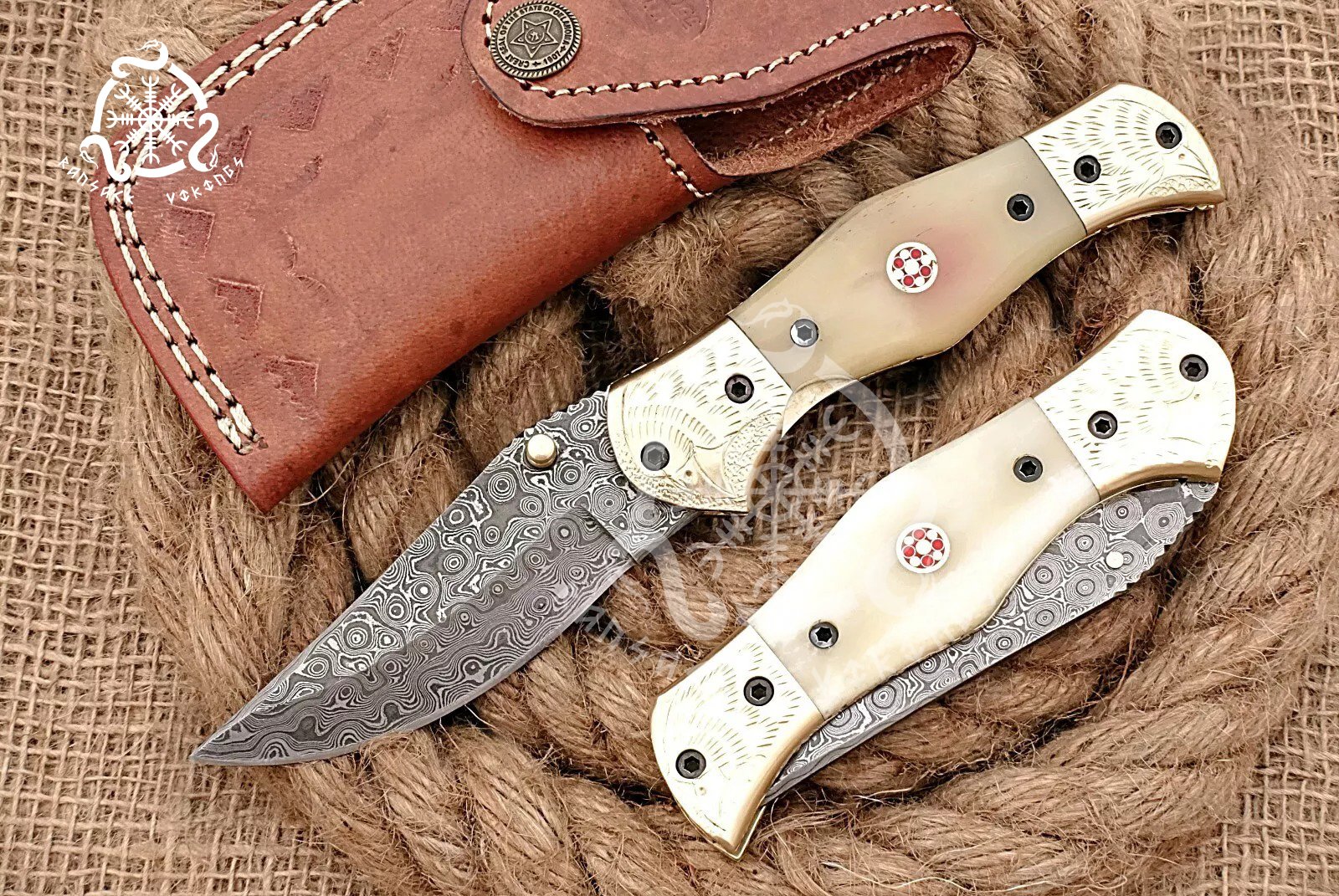
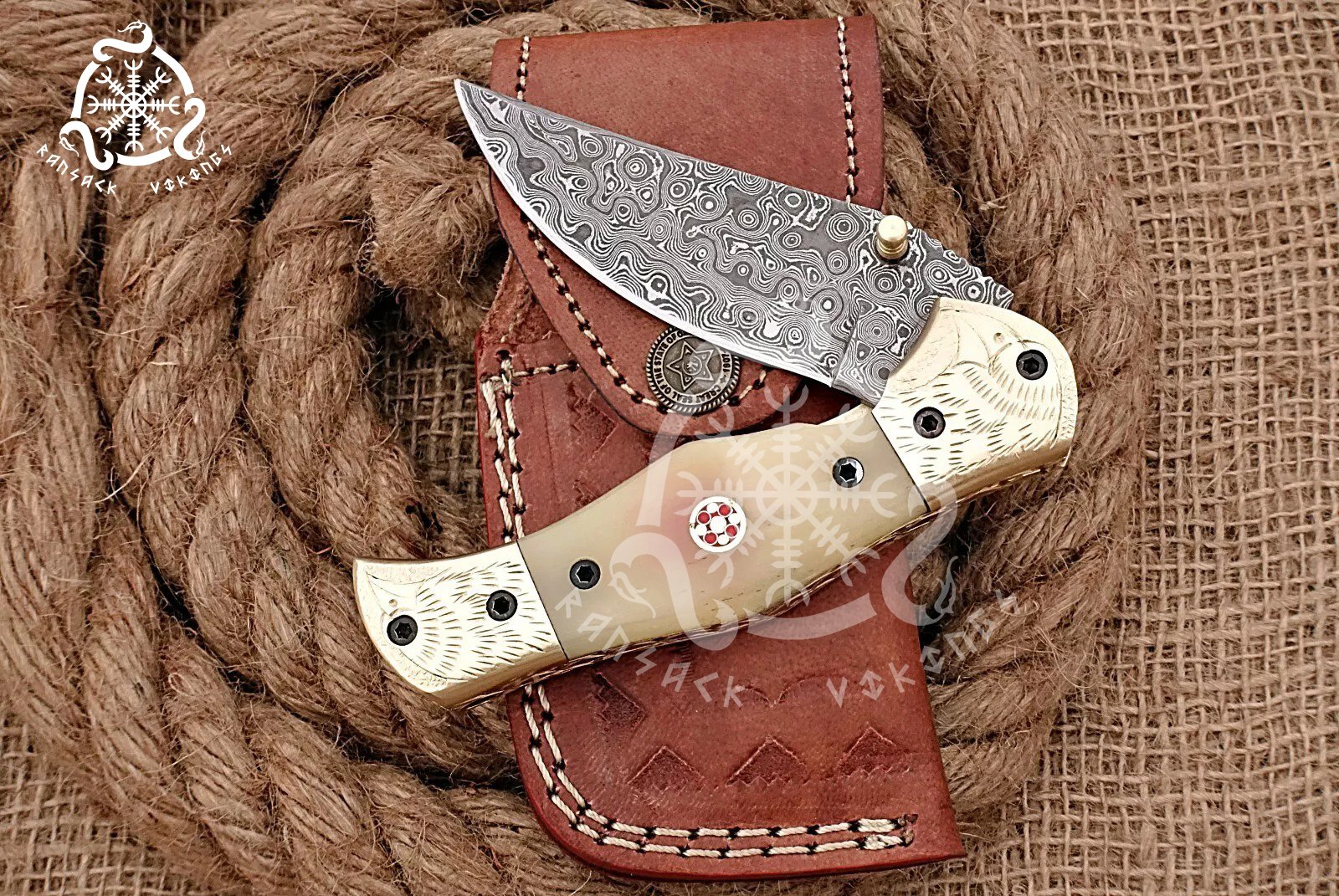
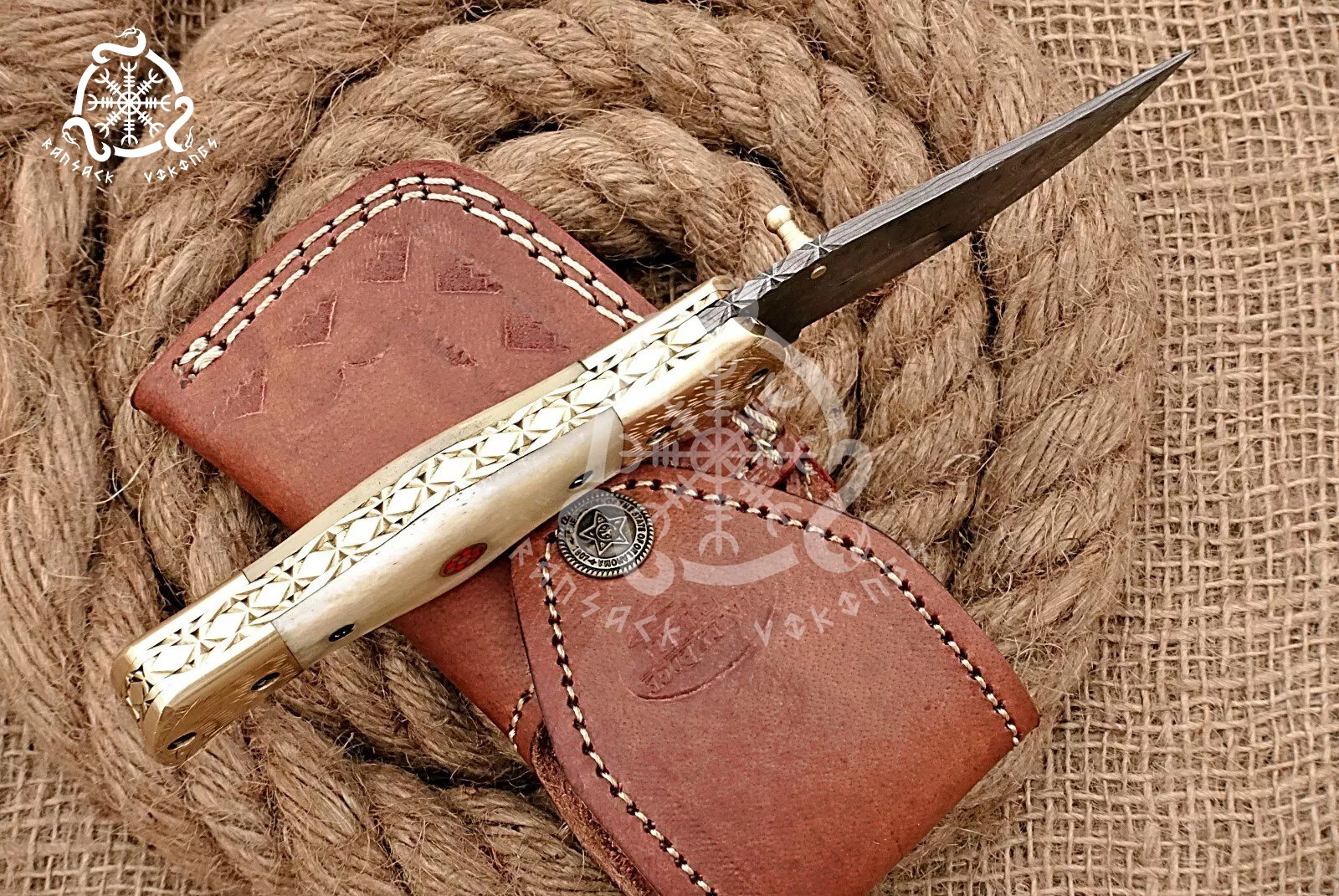
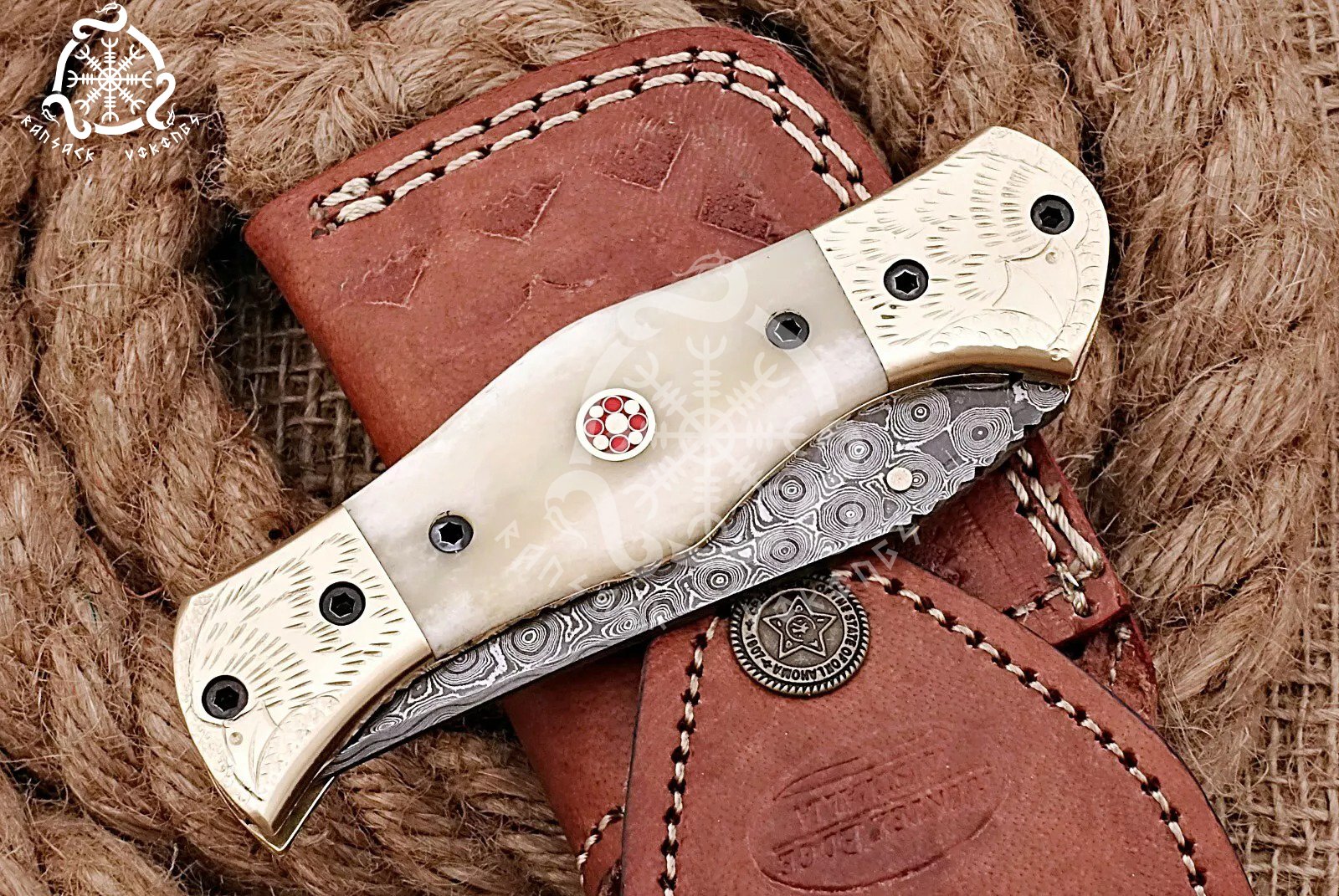
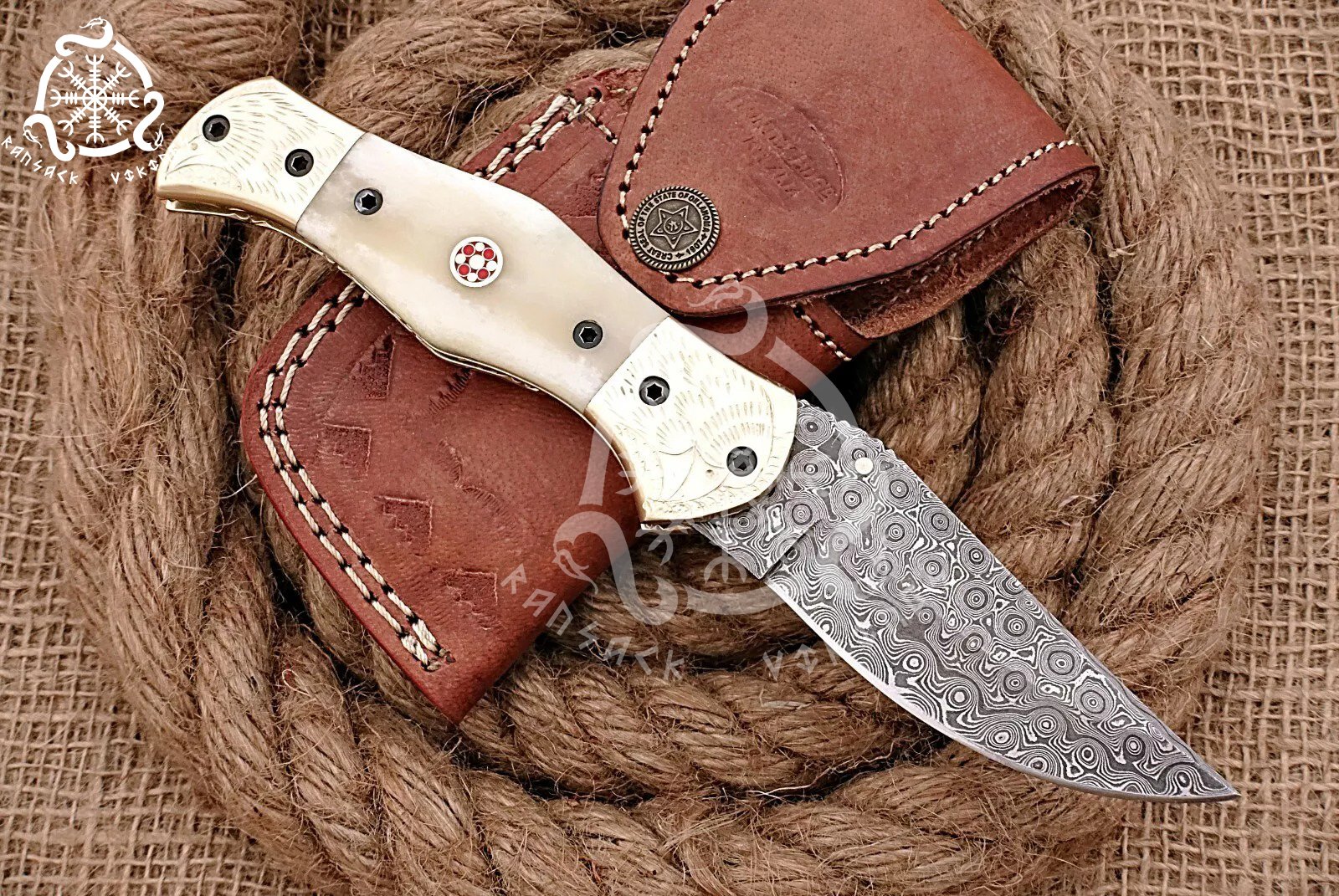
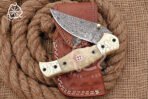
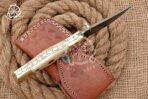
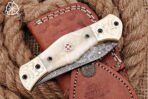
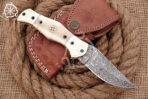
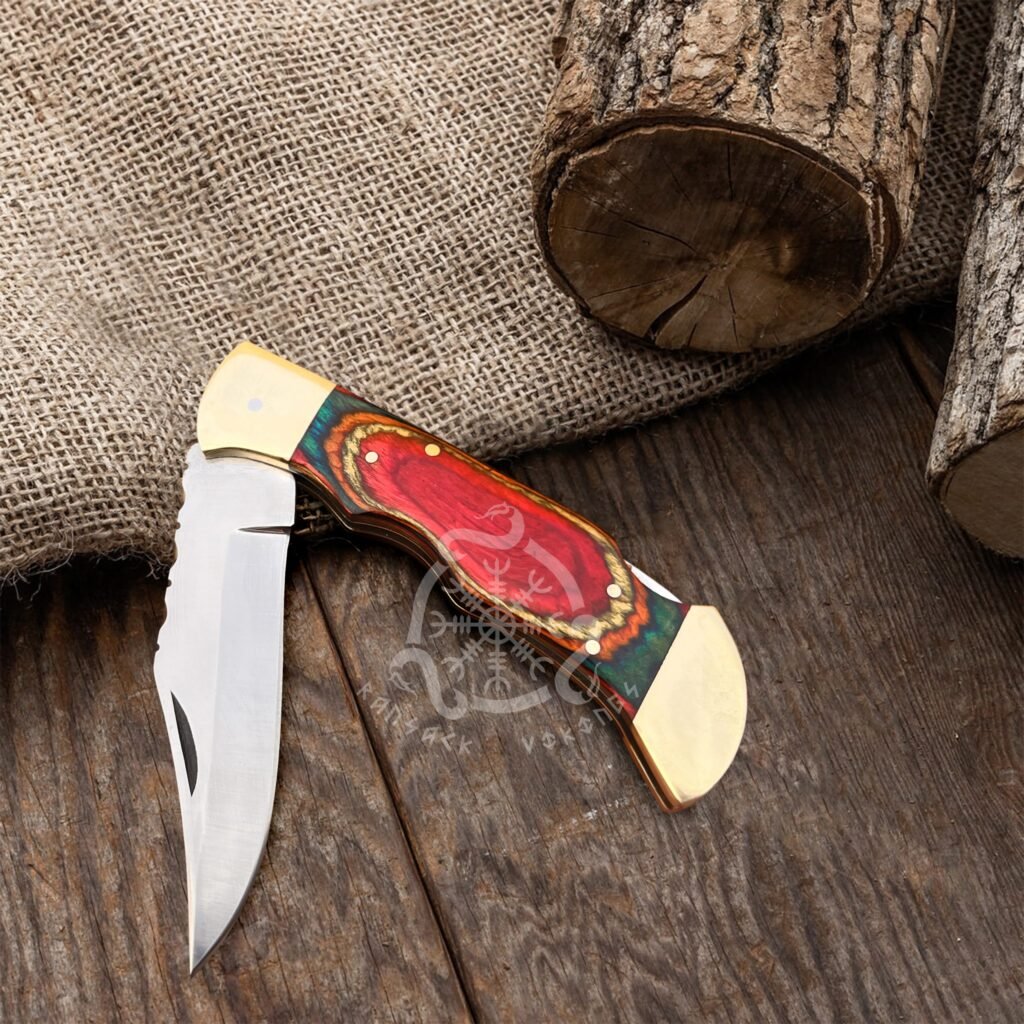
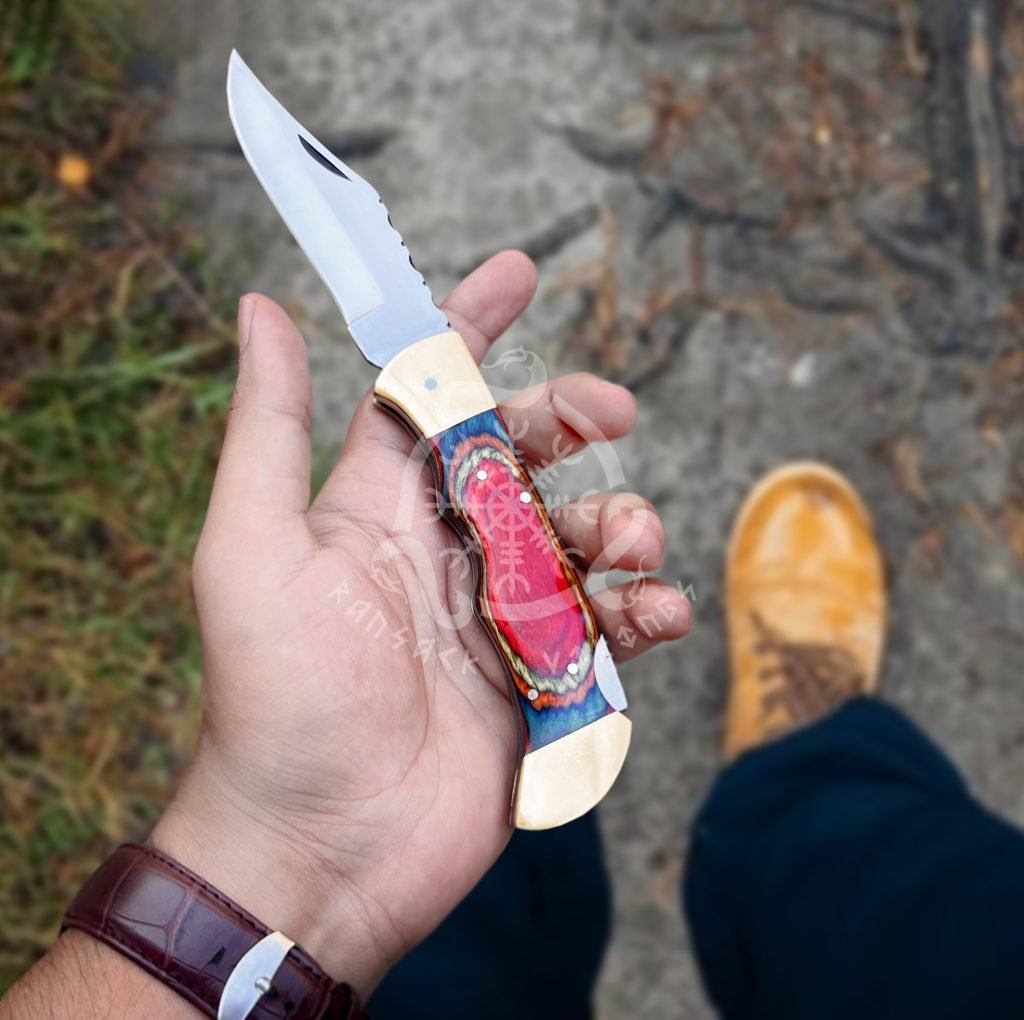
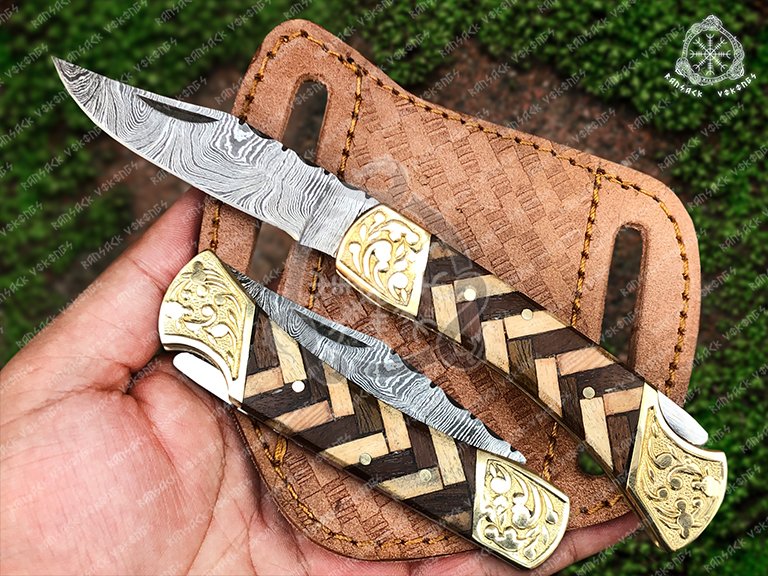
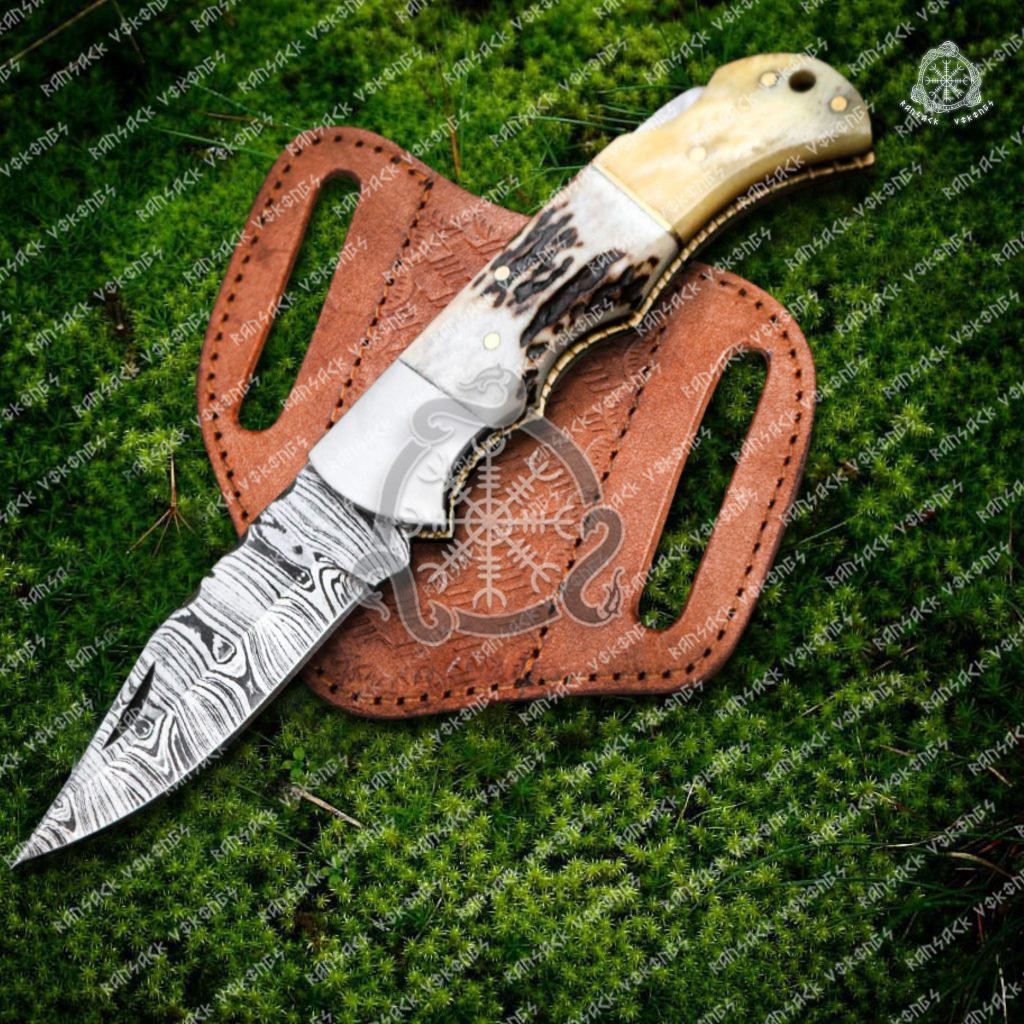
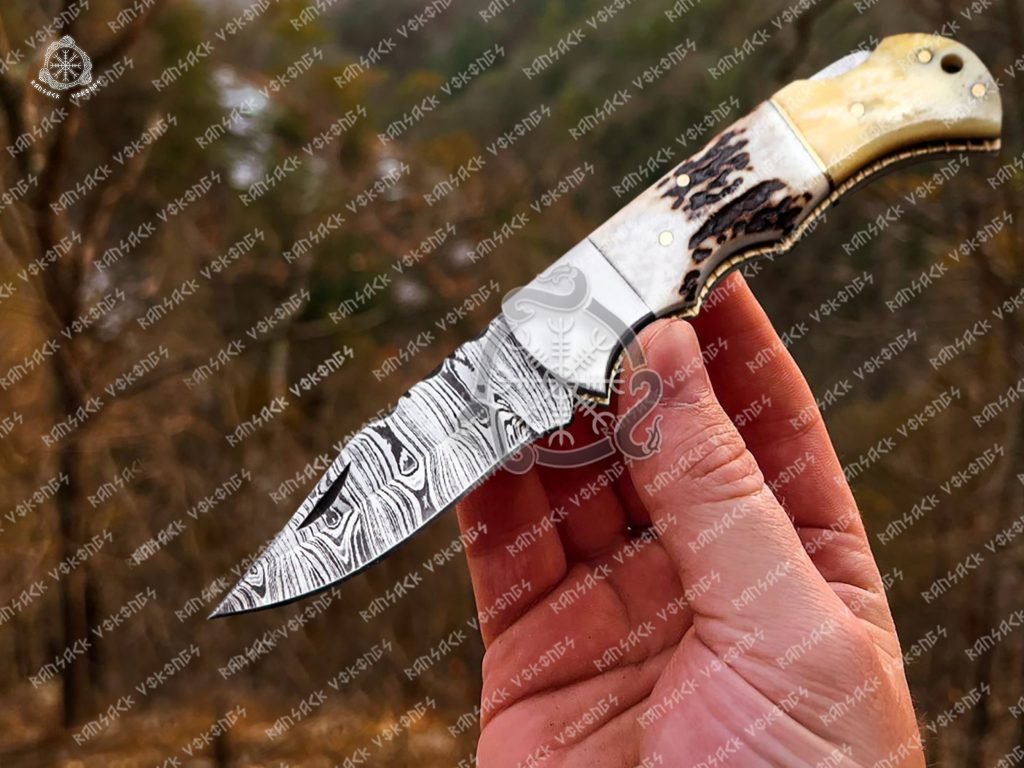
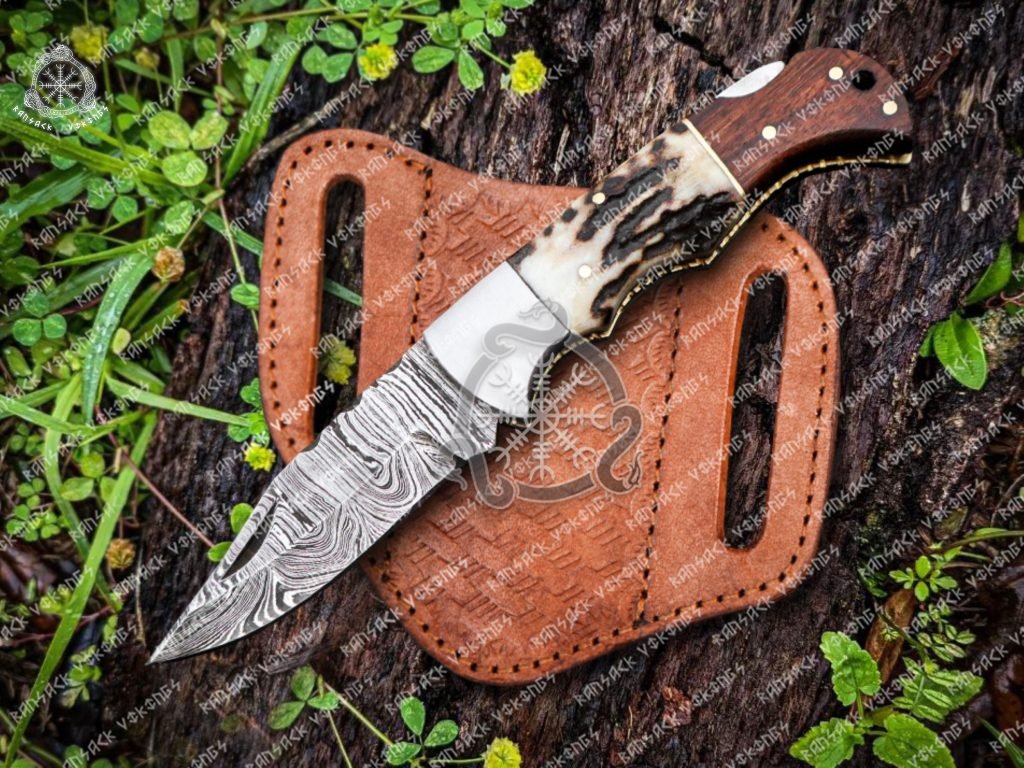
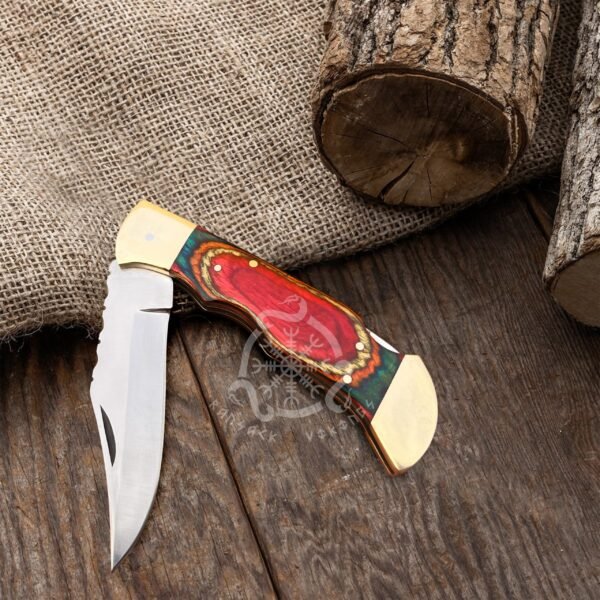
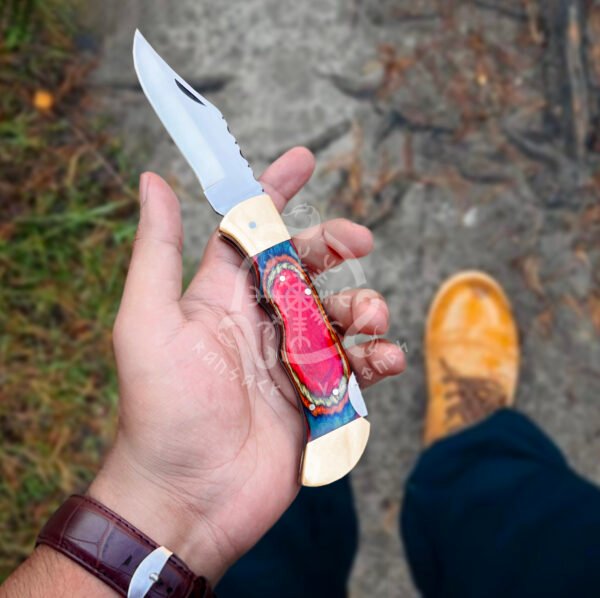
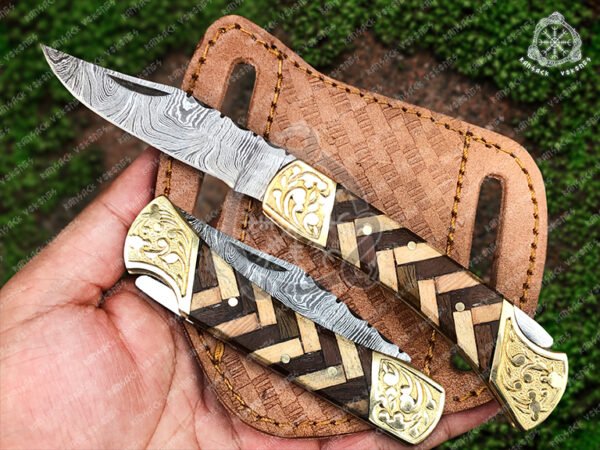
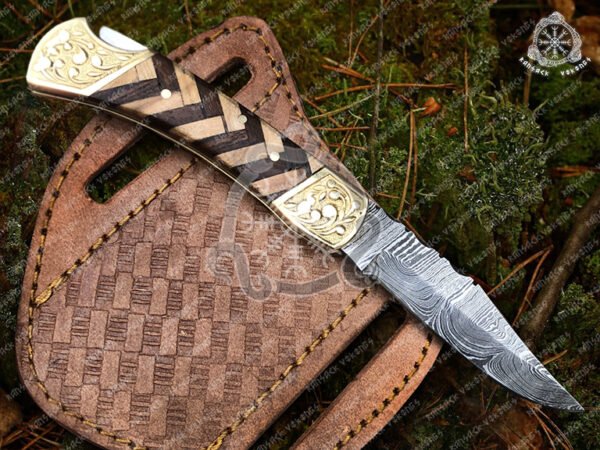
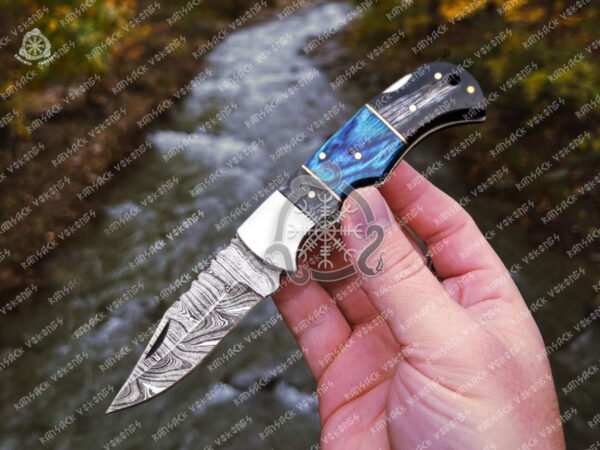
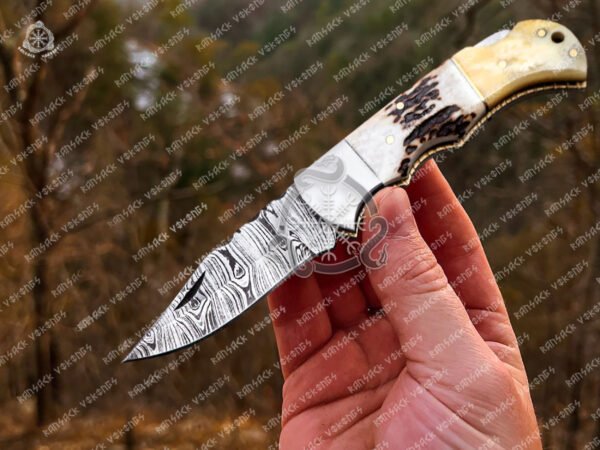
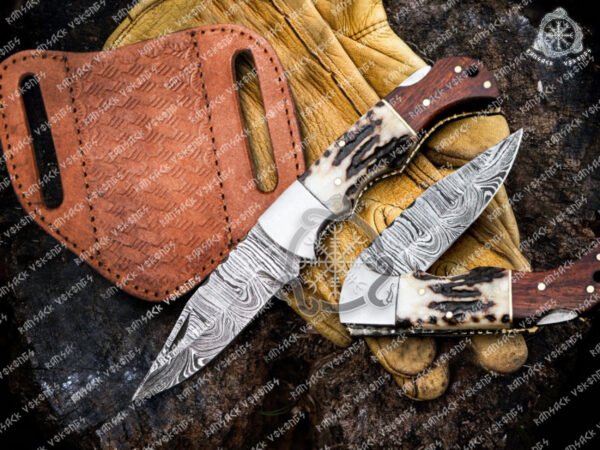
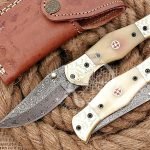
The Bonefold was forged, ground and fitted by one pair of hands. Damascus in the blade, natural bone at the grip, nine inches from butt to tip with the knife open, and an edge already set when it comes out of the shop. It is a folding pocket knife built the way folders were built before they were stamped. How this compares with the rest of the folding range is covered in the folding knives compared.
Bone is not a decorative afterthought on a pocket knife. It was the standard, for well over a century. The cutlery trades in Sheffield and later in New England settled on cattle shin bone because it was cheap, tough, dimensionally stable, warm in the hand and it could be dyed and textured. When makers wanted it to look like stag they invented jigging, cutting grooves and pits into the surface with a machine before dyeing it, and jigged bone became so familiar that most people now think of it as its own material rather than an imitation of another. What has never changed is why bone works: it is hard enough to resist wear, light enough not to unbalance a small knife, and it warms to the hand faster than any metal or resin.
This one is forged and finished in the Czech Republic, from the welding of the billet through heat treat, grinding, handle fitting and final sharpening. It ships as a knife in protective packaging with the edge set. There is no sheath, because it folds.
Specifications
| Steel | Hand forged Damascus, 1095 and 15N20 |
|---|
| Hardness | 58 to 60 HRC |
|---|
| Overall length | 9 inches open |
|---|
| Handle | Natural bone |
|---|
| Sheath | Not included, this is a folding knife |
|---|
| SKU | RK-686 |
|---|
Why bone became the pocket knife handle
Bone has a structure that suits a knife scale almost perfectly. The outer wall of a large leg bone is dense cortical material, laid down in layers, with a grain that runs along the length of the bone. Cut and shaped correctly, that gives you a panel that resists chipping across its width and takes a polish that goes deep rather than sitting on the surface. It is also porous enough to accept dye and stabilising treatments, which is why bone handles come in everything from bleached white to near black.
What it asks in return is that you do not treat it like plastic. Bone does not like prolonged soaking, and it does not like being left on a radiator or in a car in high summer, because sustained dry heat drives moisture out of it and can open a hairline crack. Keep it out of extremes and it is stable for decades. Wash the knife rather than soak it, dry the handle with the blade, and it stays as it left the shop. Because it is a natural material, the colour, the grain and the small variations in figure will differ from the piece in the photograph, which is the honest signature of a handle cut from an animal rather than pressed from a mould.
Why Damascus and not stainless
The blade is forge welded from 1095 and 15N20. The 1095 carries the carbon that lets the steel harden properly, and the 15N20 carries nickel, which resists the acid etch and shows as the bright bands in the finished pattern. Layers are welded, folded and drawn out until the pattern runs through the whole thickness of the blade, which is why grinding a bevel reveals the pattern instead of removing it. Hardened and tempered, it sits at 58 to 60 HRC.
Stainless would remove almost all maintenance, and that is its only advantage here. What you would lose is edge behaviour, because a soft stainless blade dulls faster in the same work and takes longer to bring back, and you would lose the pattern entirely, because there is nothing in a stainless alloy for an etch to differentiate. The trade with Damascus is straightforward: a harder, keener, more interesting blade in exchange for keeping it dry and giving it a wipe of oil. The comparison in full, including how to spot an etched print pretending to be forge welded steel, is in Damascus versus stainless.
The bone handle and how to look after it
Each handle is cut and shaped from a different piece of bone, so no two are the same colour or grain. It is polished by hand rather than coated, which means the finish can be refreshed at home instead of chipping off the way a lacquer does. An occasional wipe with a light oil keeps it from looking dry, and it takes about a minute. The principles are the same as for a wooden grip and are covered in wooden handle care.
Do not put the knife in a dishwasher. Heat and detergent will attack a natural handle long before they trouble the steel, and there is no way back from a cracked scale. Wash by hand, dry the handle and the blade, and leave the knife open until the pivot is dry.
Engraving, runes and your own design
Use the rune converter on this page to turn a name, a date or a short phrase into Elder Futhark and we will cut it into the steel or the handle. If you would rather have a Viking pattern than a rune line, choose your own design in the engraving option above the add to cart button and tell us whether it goes on the blade or the handle. Where a piece already carries an engraved design, your chosen engraving replaces it rather than sitting alongside it. Bone takes cut lettering beautifully, and on a folder the handle often reads better than the blade because the blade flat is broken up by the Damascus pattern. Layout and lettering examples are on the engraving page.
Care and sharpening
Damascus is high carbon steel under the pattern, so it behaves like carbon steel. Wipe it dry after use, especially after anything acidic, and put a thin film of light oil on the blade before it goes away for a long spell. A single drop of oil at the pivot once or twice a year, worked in by opening and closing the knife, keeps the action smooth. Never store it wet or closed and damp. The full routine is in steel care.
Sharpening is ordinary work. Match the existing bevel angle, work one side in overlapping passes until you can feel a burr along the whole edge, turn the blade over and match it, then strip the burr with light alternating strokes. A hard Damascus edge comes back quickly and holds. The full method is in sharpening with a whetstone.
Made in the Czech Republic
This piece is made by hand in the Czech Republic, in a workshop that still works the old way. The steel is forged, ground, heat treated and finished by smiths who learned the trade from the people before them, and the wood, horn and leather are cut and fitted by hand rather than pressed out on a line. That is also why no two pieces come out exactly the same.
Ransack Viking is a United States company. We import these pieces ourselves, check every one when it lands and ship from our warehouse in Memphis, Tennessee. Engraving is done here in the United States after the piece arrives, so your runes or your own design go on before it leaves for you.
A note on handmade variation
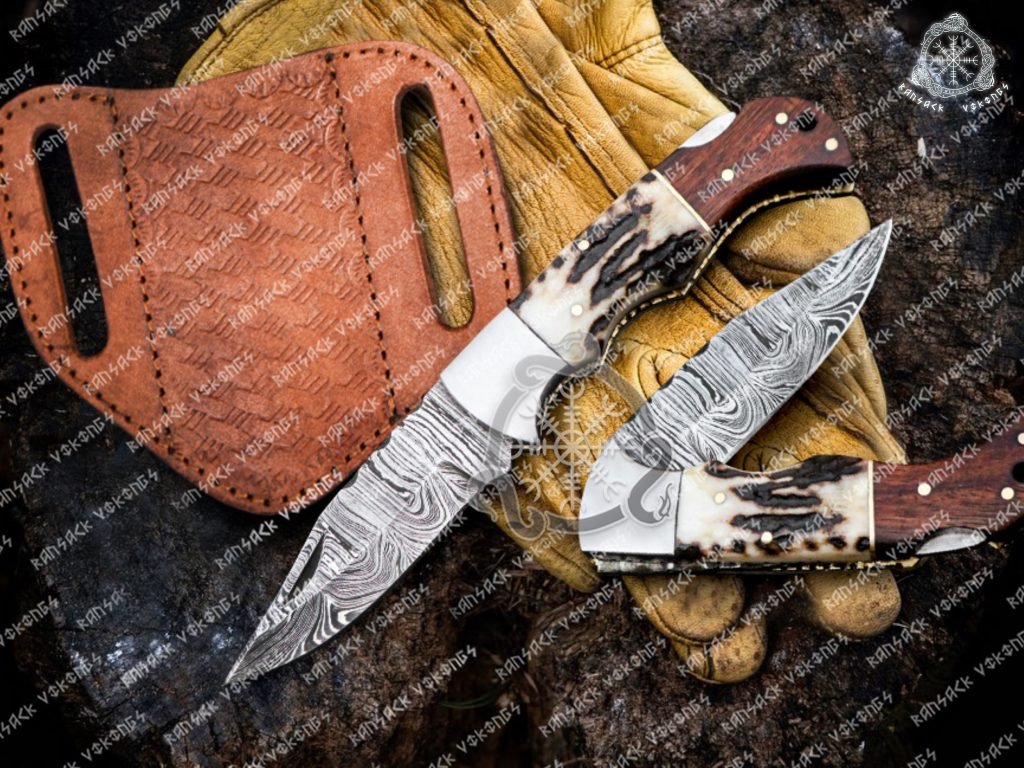
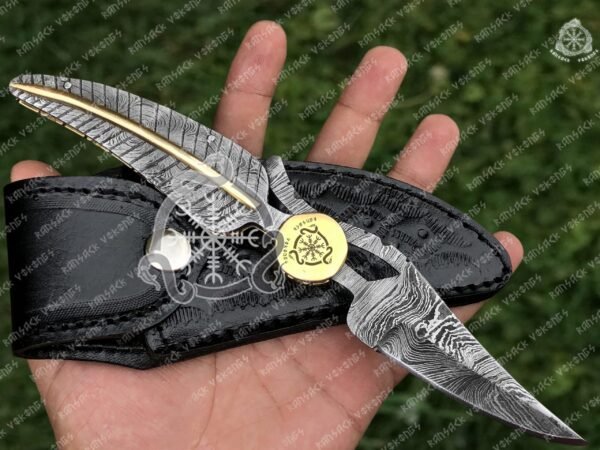
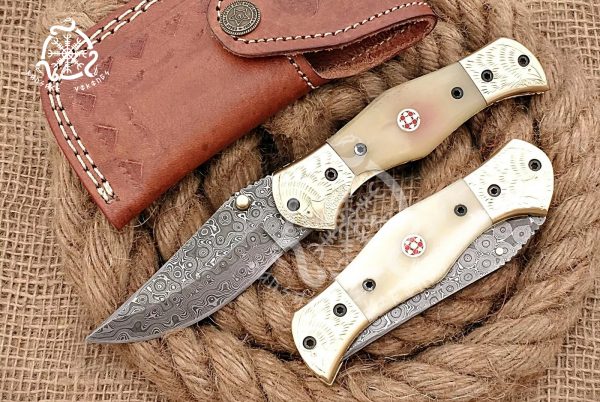
Every Bonefold is hand forged, not machine made and not bulk produced, so the knife that arrives will not be a pixel for pixel copy of the photograph on this page. The Damascus pattern depends on how that particular billet folded and where in the bar the blade was cut, and the bone brings its own colour and grain. The dimensions, the steel and the build are the same every time. The character is not.
Frequently asked questions
Is it sharp out of the box?
Yes. The edge is set by hand on a stone before the knife is packed and it will slice paper on arrival. It is a working edge rather than a mirror polish, which is what holds up best in everyday use.
Will the bone handle crack?
Not under normal use. Bone is stable as long as you keep it away from prolonged soaking and sustained dry heat, so do not put it through a dishwasher and do not leave it on a radiator or in a hot car. Wash by hand and dry it and it lasts decades.
Is the Damascus pattern real?
Yes. The blade is forge welded from alternating layers of 1095 and 15N20, so the pattern goes through the full thickness of the steel. A printed or laser etched pattern sits on the surface and vanishes under a file.
How do I stop it rusting?
Dry it and oil it. Damascus is high carbon steel underneath, so a wipe after use and a thin film of light oil before storage is all it takes. Do not put it away closed and damp, because the pivot slot holds moisture where you cannot reach it.
What is the difference between this and a bone handled fixed blade?
Carry and strength. A folder goes in a pocket and disappears, which means you actually have it with you, but the pivot is always the weak point. A fixed blade is stronger and takes harder work, and it needs a sheath and a belt. This is the everyday option.
Can I have a name or a date engraved on it?
Yes. Bone takes cut lettering very well. Use the rune converter above for an Elder Futhark line, or choose your own design in the engraving option and tell us whether you want it on the blade or the handle.
What is in the box
- One Bonefold hand forged Damascus folding pocket knife
- Protective packaging
- Forged and finished in the Czech Republic
Explore the range
You may also want to compare it against Folding Pocket Knives, Viking Knives, Hunting Knives and Engraved and Personalized. The reasoning behind the steel and the handle materials sits in the guides.









Reviews
There are no reviews yet