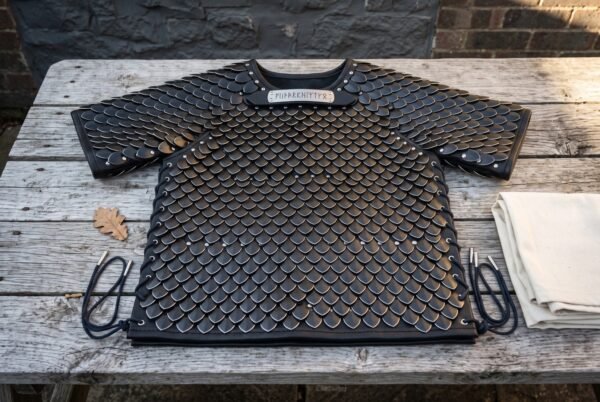
Viking armor here is the protective kit of the Norse world and the periods either side of it, split across ten sub categories: chainmail, medieval helmets, Roman and Greek helmets, round shields, kite shields and bucklers, shield bosses, leather armor, scale and lamellar, brigandine and gambeson, and full plate. Materials are mild steel rather than blade steel, worked in 14 to 18 gauge, and vegetable tanned cowhide at roughly 7 to 9 ounce weight.
Mail is butted rather than riveted, woven four in one from 8 to 9 mm rings in 16 gauge wire. Helmets are riveted up from formed panels in 16 or 18 gauge and run from about 4 lb on a spangenhelm to 9 lb on a great helm. Shields start at a 20 inch dished steel disc and reach 40 inch kite boards and scutums.
Every piece on this page is built for display, costume, film and light reenactment. None of it is rated for full contact combat, and each listing states its intended use in its own specification table. If you are building a kit rather than buying a single piece, the renaissance faire and reenactment kit guide sets out what to buy and in what order.
Free US shipping
On most pieces. Heavier and oversized ones carry a flat charge.
Hand Forged
Heated, hammered and ground by hand.
Engraving available
Names, dates or Norse runes on most pieces.
Ships from New York
Inspected and dispatched from our New York warehouse. No import duty, no customs delay on US orders.
Viking Armor
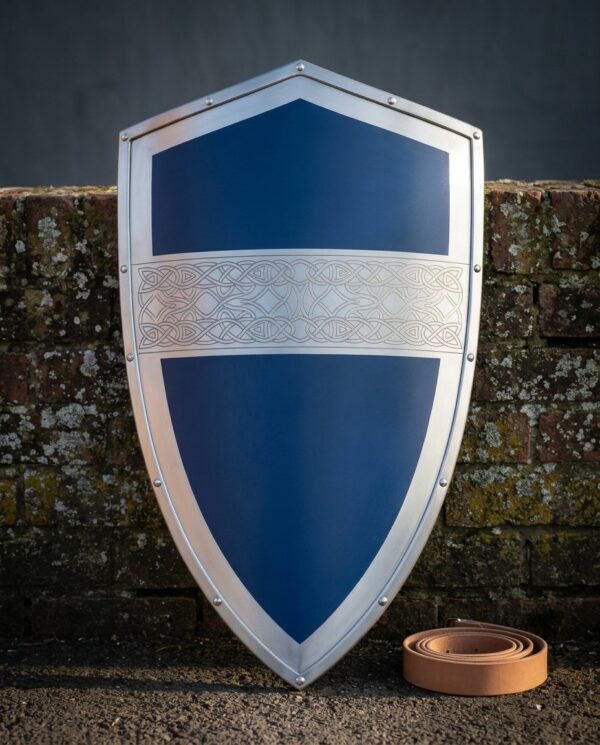
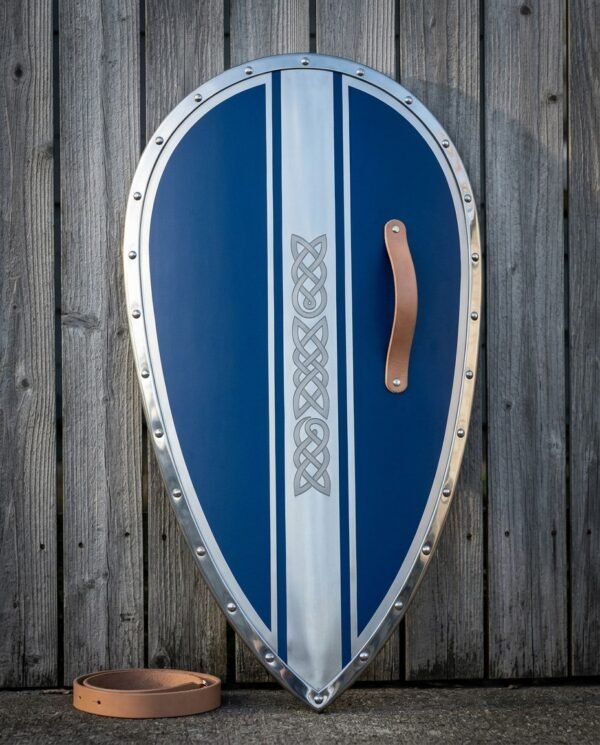
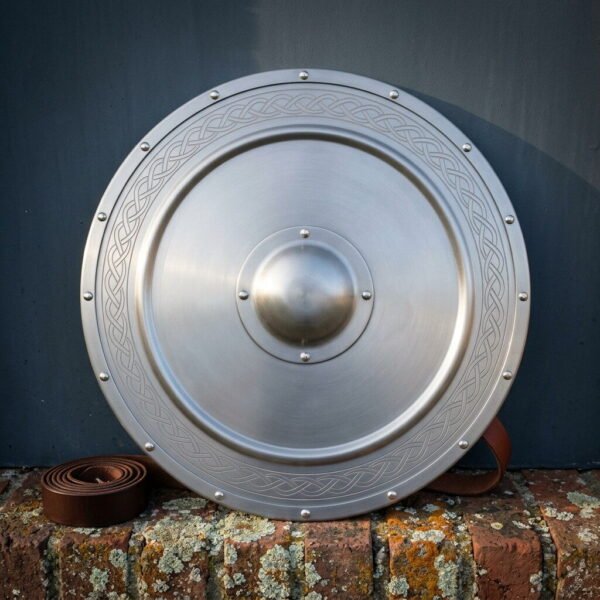
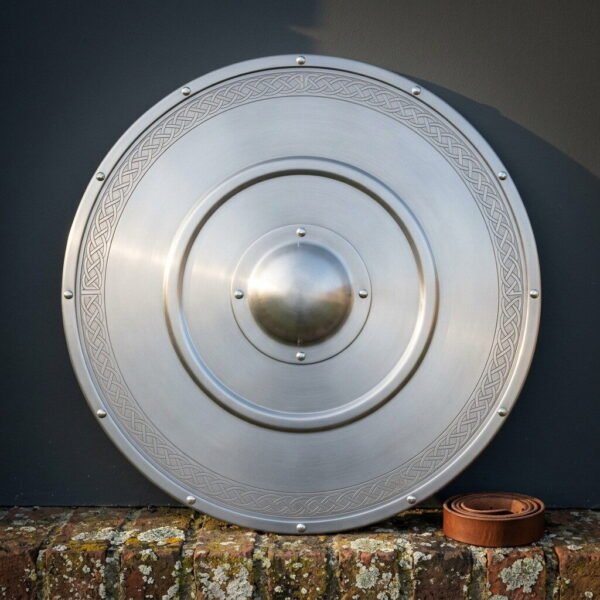
What a Norse fighter actually wore
Start with what the graves show, because it is less than the films suggest. The ordinary Norse fighter of the ninth and tenth centuries went to a fight with a shield and a spear, and often nothing else. Mail was expensive. A hauberk took a smith weeks of drawing wire, coiling it, cutting rings and closing them one at a time, and the finished garment represented the value of a small herd.
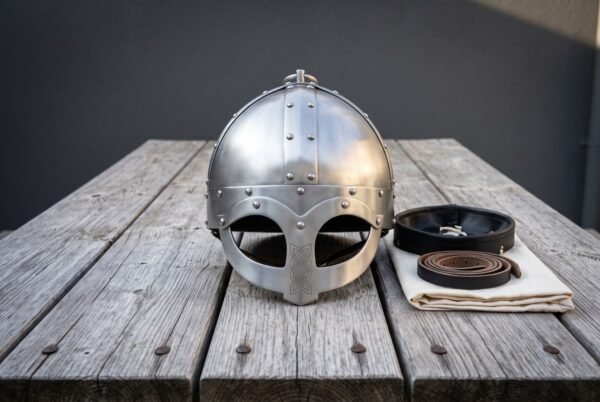
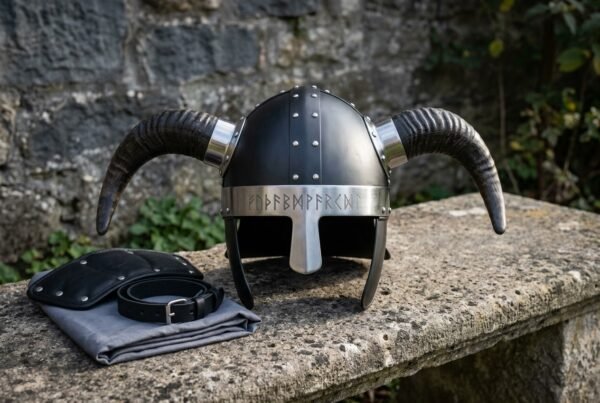
Helmets are rarer still in the archaeological record. One reasonably complete Norse helmet survives, the Gjermundbu find from Norway, a four panel iron bowl with a browband and a spectacle guard over the eyes. Fragments elsewhere suggest the pattern was not unusual, but the total surviving evidence for the whole Viking age fits on a table. The horned helmet is a nineteenth century stage invention and there is no archaeological support for it at all.
Body protection below the mail level was cloth and leather. Padded garments absorb the shock the mail passes through, and mail without padding under it is close to useless against a heavy blow, because rings stop a cut but not the impact. That relationship still governs how these pieces are worn and sized today.
The collection runs past the Norse period on both sides, into Roman and Greek helmets, kite shields, great helms and full plate, because most people buying Viking armor for display or costume are building a scene rather than reconstructing one grave.
The ten groups on this page
Ten sub categories sit under this hub. Knowing which one you want narrows a page of ninety odd pieces to a handful.
Chainmail
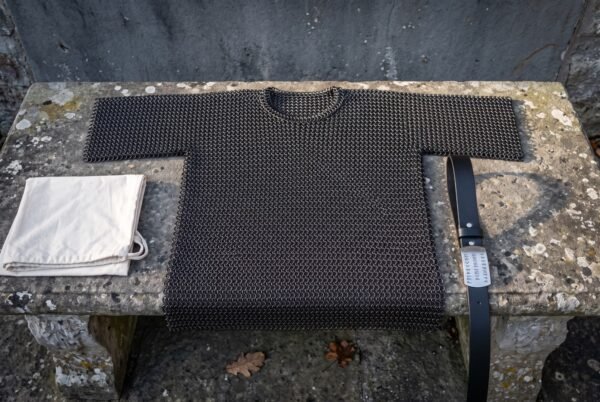
Shirts, hauberks, coifs and mitten gauntlets in mild steel wire, woven in the European four in one pattern where every ring passes through four others. Rings run about 8 to 9 mm internal diameter in 16 gauge wire. Shirts and hauberks here weigh roughly 16 to 28 lb depending on the cut, coifs around 5 to 5 lb 8 oz, and a pair of mail mitten gauntlets about 2 lb 6 oz. Finishes are bright polished or blackened and oiled. Every piece is worn over a padded garment, never against the skin.
Medieval helmets
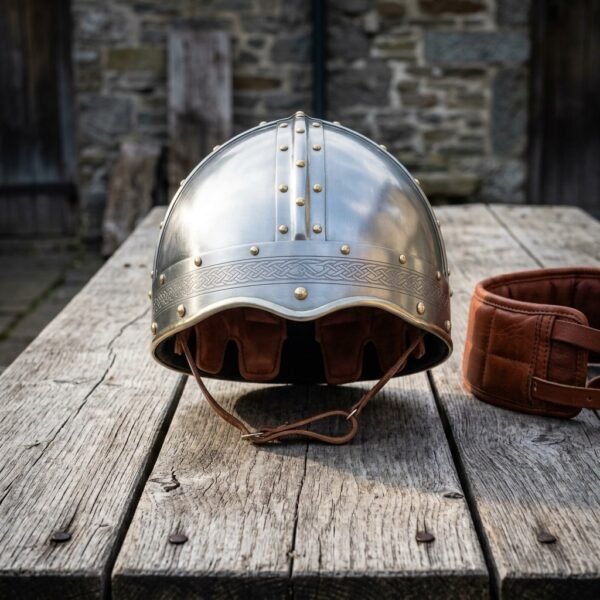
Spangenhelms, spectacle helmets, great helms and a kabuto sit in this group. Construction is riveted panels on a browband and ridge strip, in 16 or 18 gauge mild steel, generally with a suspension liner and a buckled chin strap fitted. Weights run from about 4 lb on a light spangenhelm to 7 to 9 lb on a riveted great helm. Most are built to a stated head circumference, so measure before ordering rather than after.
Roman and Greek helmets
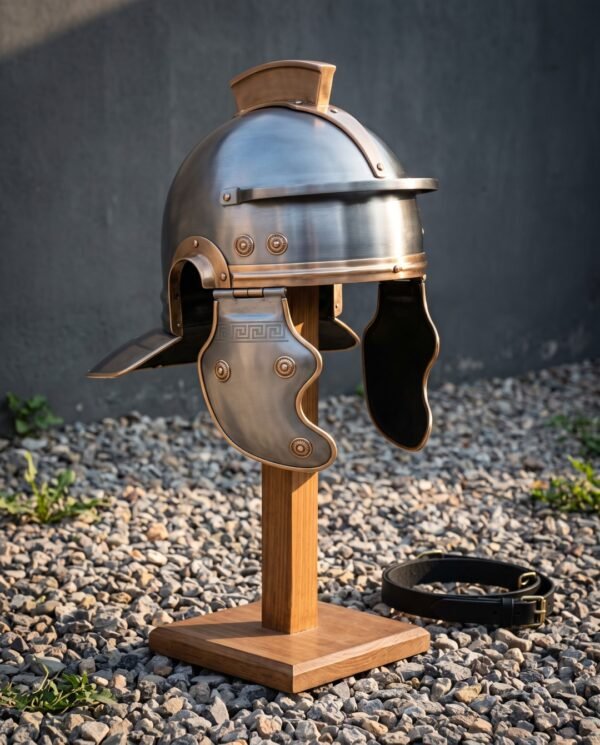
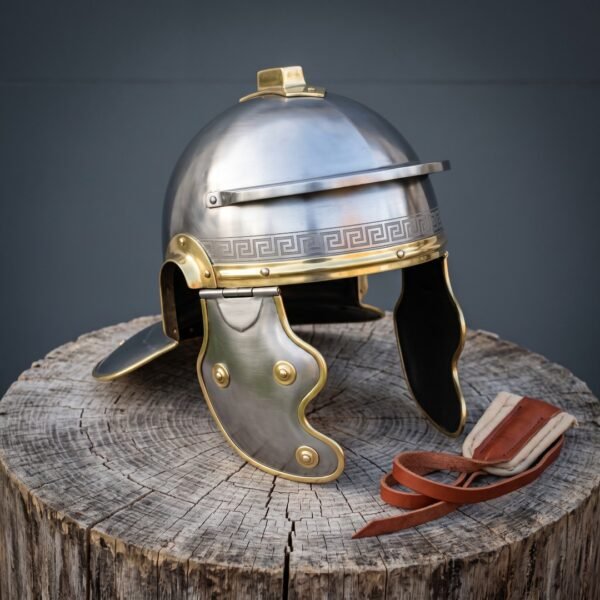
Imperial Gallic and legionary patterns with hinged cheek guards, brass trim and a crest holder on the crown, and Corinthian hoplite helmets raised from a single sheet in steel or brass. The Roman pieces here weigh about 4 lb 2 oz to 4 lb 4 oz complete with cheek guards. The Corinthian helmets carry no chin strap, because the cheek pieces and the flared neck hold them on the head by shape alone.
Round shields
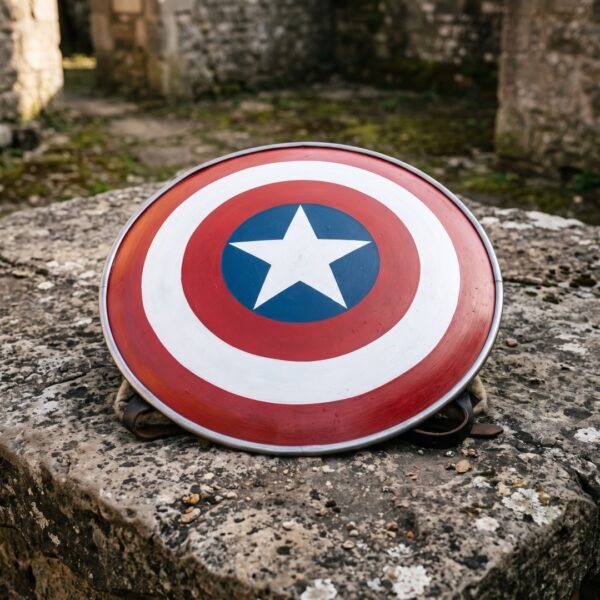
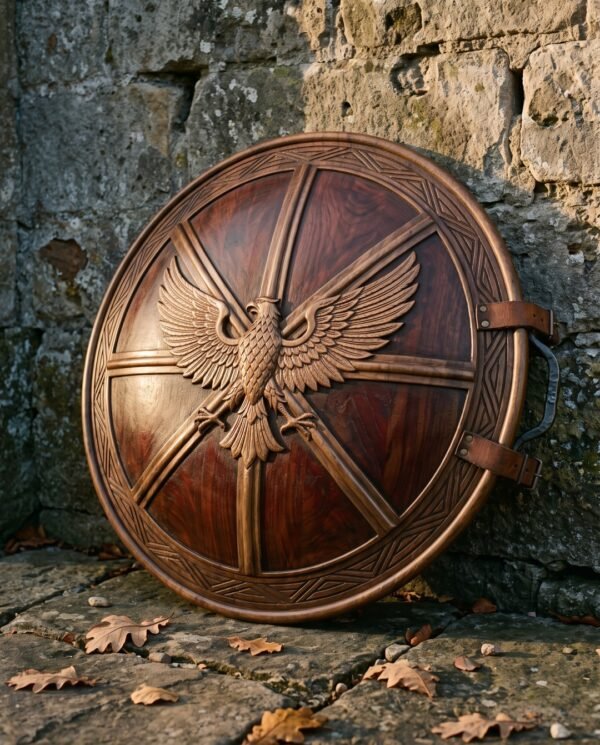
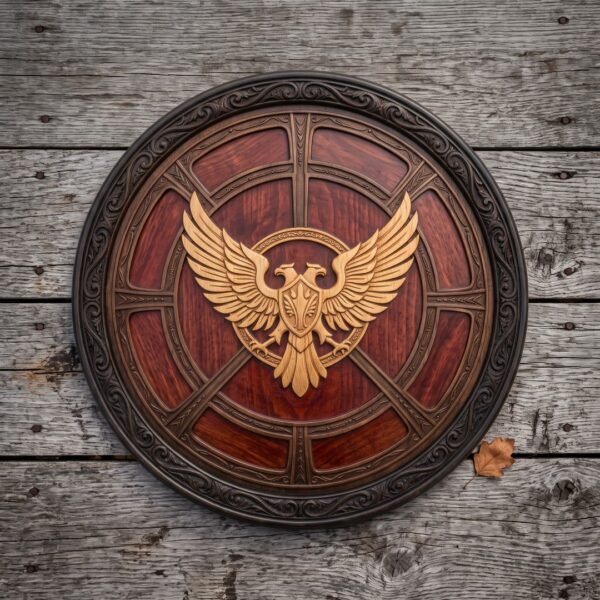
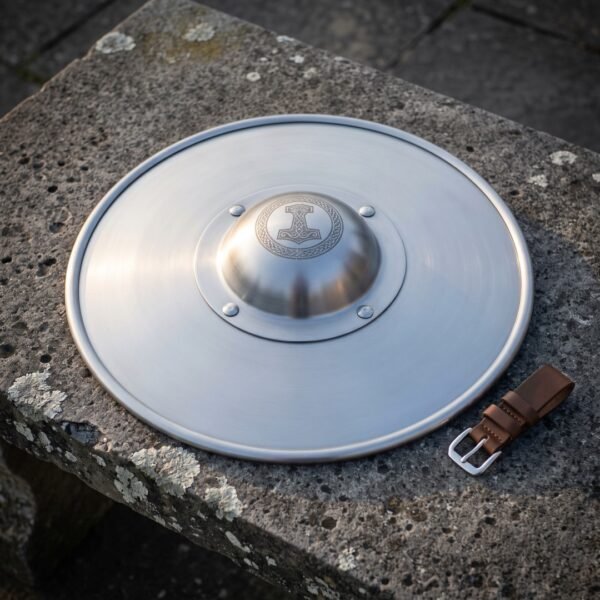
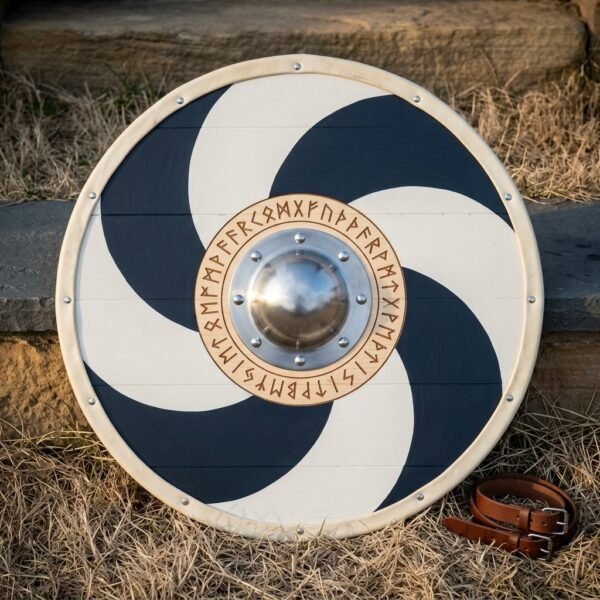
Two very different things share this group. Plank built boards of glued softwood around 12 mm thick, 24 inches across, with a domed steel boss riveted through the centre, rawhide edging and a timber grip bar behind the boss, at roughly 8 lb. And dished steel shields raised from a single 16 gauge disc, about 20 inches across, with a rolled rim and an etched face, at 9 to 11 lb. The timber board is the historical construction. The steel disc is a display and parade piece.
Kite shields and bucklers
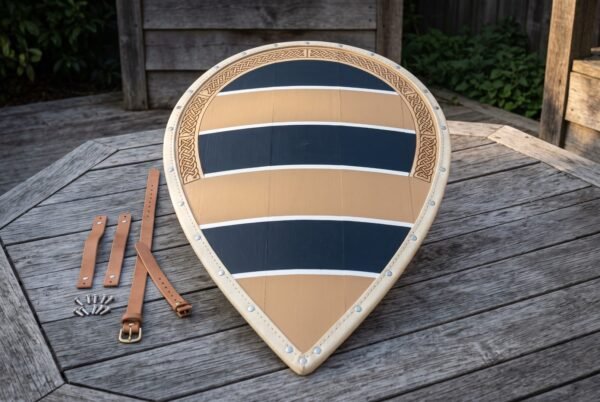
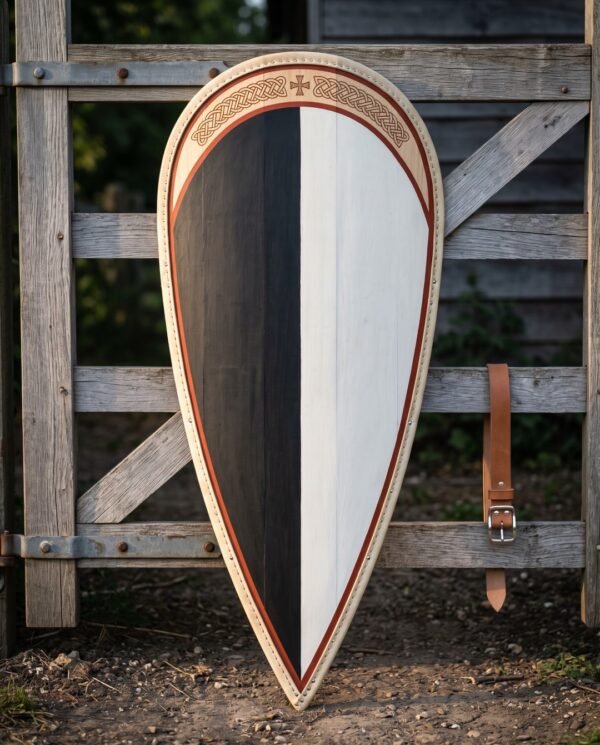
The kite shield is the Norman answer to fighting on horseback, long enough to cover a leg that a round shield leaves exposed. The boards here run about 34 to 40 inches tall by 22 to 26 inches across the shoulder, in 12 mm plank or laminated timber, canvas or linen faced and hand painted, with rawhide rim binding riveted all the way round. Weights sit between 9 and 11 lb, and the curved Roman scutum in the same group reaches 13 to 15 lb.
Shield bosses
The iron dome at the centre of a Norse shield, covering the hole cut for the hand. Bosses here are hand raised from 14 or 16 gauge mild steel, hemispherical or conical, on a flat flange with six pre punched rivet holes. A 14 gauge boss measures about 12 inches across the flange with a 6 inch dome and weighs about 1 lb 14 oz. Some are sold bare with rivets, others as a full fitting kit with rim binding, arm straps and a grip strap. None includes a board, which you build or buy separately.
Leather armor
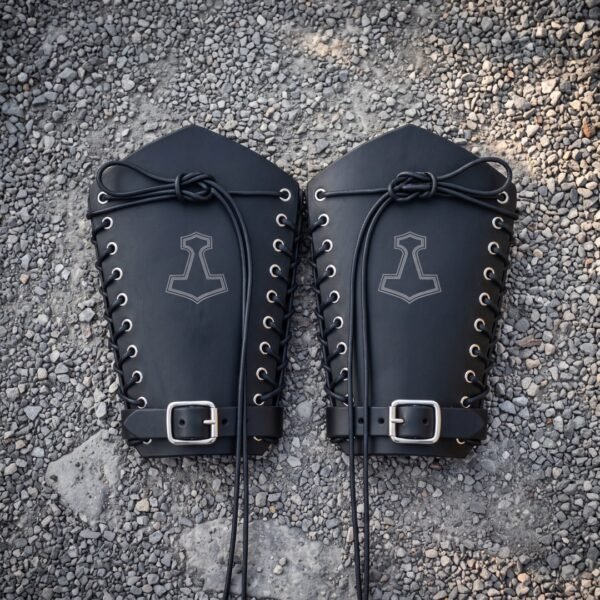
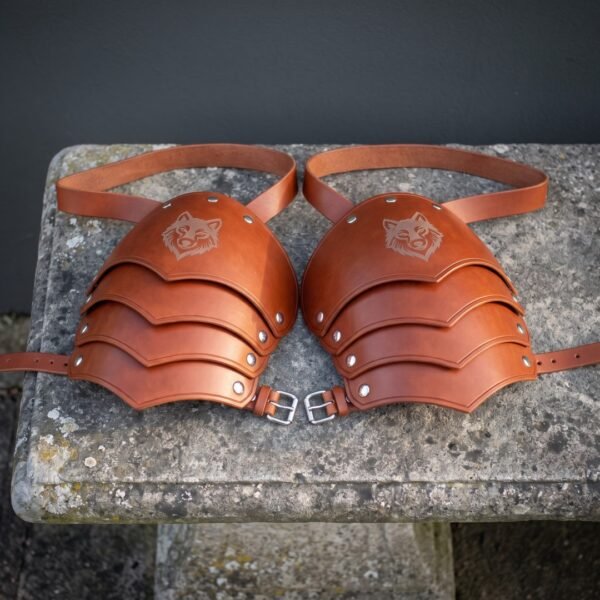
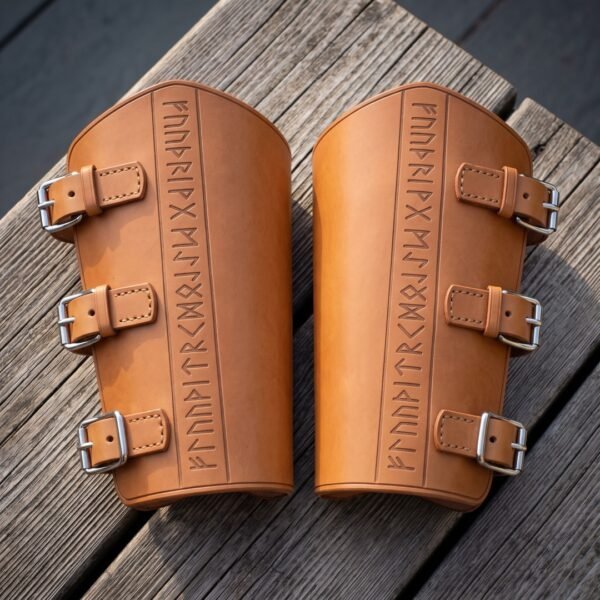
Bracers, pauldrons and cuirasses in vegetable tanned cowhide, dyed and burnished, at roughly 7 to 9 ounce weight, which is about 2.8 to 3.6 mm through the panel. Bracers close with steel eyelets and a lace or with two or three buckled straps, and a pair weighs 10 oz to 1 lb 2 oz. Articulated pauldrons of three lames a side run about 2 lb 4 oz for the pair. This is costume and light reenactment leather, not certified protective equipment.
Scale and lamellar
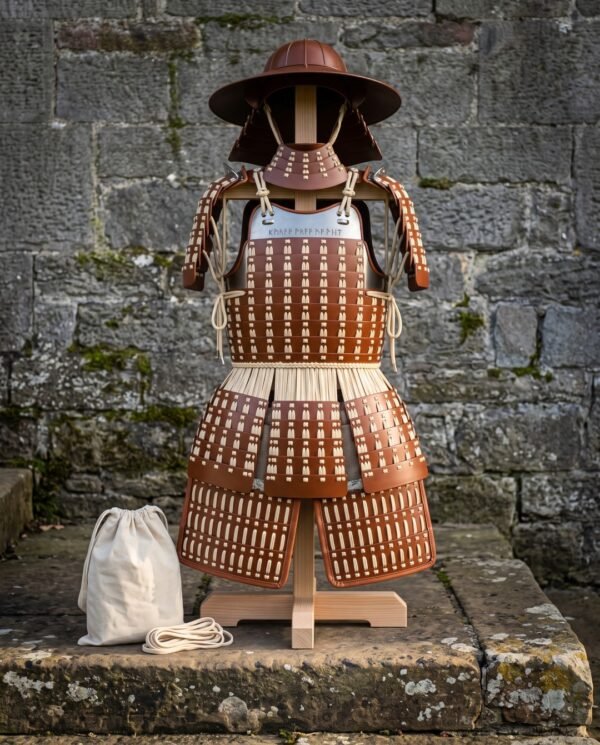
Small plates laced or riveted in overlapping rows. Scale here is round bottomed steel or leather scales riveted head first onto a backing, so each row laps the one below and sheds a blade downwards. Lamellar is laced plate to plate with cord and carries no backing at all. A full leather lamellar suit in this group weighs about 25 lb and covers head, body, shoulders, skirt and thighs.
Brigandine and gambeson
Brigandine is the reverse of plate. Steel bands are riveted to the inside of a leather or cloth shell, so what you see from outside is rows of rivet heads. The example here uses 18 gauge steel bands inside 8 to 9 ounce cowhide, buckles down the centre front and weighs 9 to 12 lb. Gambesons are quilted cotton or linen over wool batting, with a tall standing collar, made to a stated chest size and cut to be worn under mail or plate, at about 4 lb to 4 lb 8 oz.
Plate armor
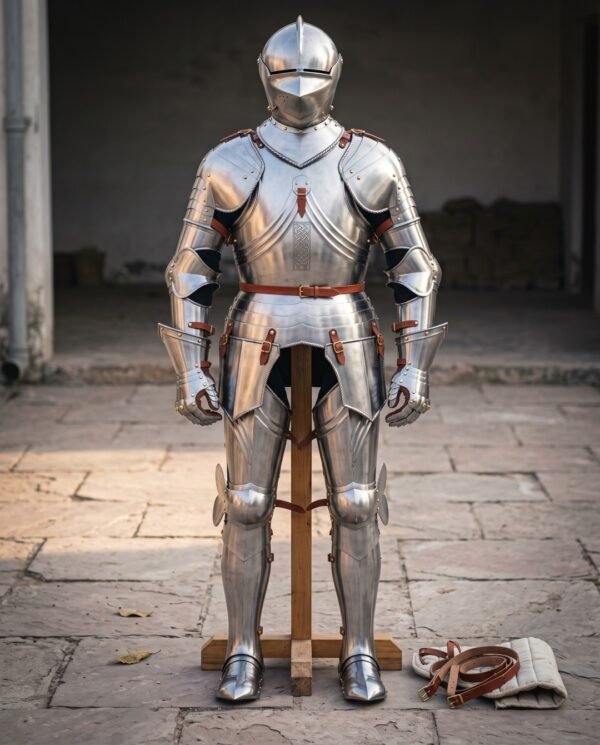
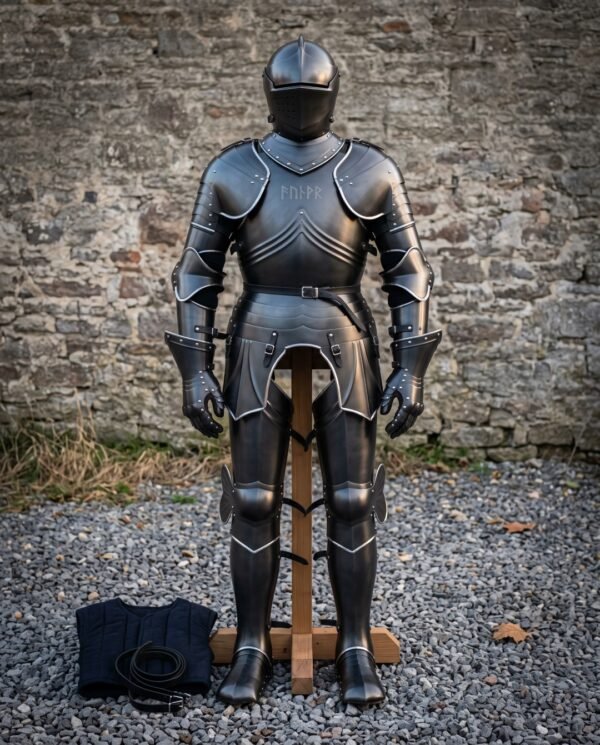
Full harness, from close helm and gorget down through cuirass, fauld and tassets to leg harness and sabatons. Both suits here are 18 gauge mild steel throughout, which is display and light reenactment weight rather than combat weight, and they run about 48 to 50 lb complete. Articulation is on sliding rivets, and an arming doublet with points is needed underneath and is not included.
Sizes, gauges and weights across the range
Every figure below is taken from the specification panel of a product on this page. Nothing is estimated, and where a listing gives a range rather than a number, the range is what appears here.
| Piece | Material and gauge | Key dimension | Weight | Group |
|---|---|---|---|---|
| Nightweave blackened chainmail hauberk | Mild steel wire, 16 gauge, blackened | 9 mm rings, four in one, about 40 in long | About 24 to 28 lb | Chainmail |
| Ravenmail blackened chainmail coif | Mild steel wire, 16 gauge, blackened | 8 mm rings, full hood with shoulder mantle | About 5 lb 8 oz | Chainmail |
| Skyglass Viking spectacle helmet | Mild steel, 18 gauge, about 1.2 mm | Four panel skull, 22 to 24 in head | About 4 lb | Medieval helmets |
| Grimward great helm | Mild steel with brass cross, 16 gauge | Riveted plate, built to a stated head size | About 7 to 9 lb | Medieval helmets |
| Stormwheel Viking round shield | Glued plank softwood, about 12 mm | 24 in diameter, rawhide rim, steel boss | About 8 lb | Round shields |
| Palewing Norman kite shield | Glued plank softwood, about 12 mm | About 40 in tall by 22 in at the shoulder | About 11 lb | Kite shields and bucklers |
| Domewarden Viking shield boss | Mild steel, 14 gauge, about 2 mm | 12 in flange, 6 in dome, 2.5 in deep | About 1 lb 14 oz | Shield bosses |
| Steelmarch full plate harness | Mild steel, 18 gauge, about 1.2 mm | 40 to 44 in chest, 5 ft 9 to 6 ft 0 | About 48 lb | Plate armor |
| Rivetward riveted leather brigandine | 8 to 9 oz cowhide over 18 gauge steel bands | Built to a stated chest measurement | About 9 to 12 lb | Brigandine and gambeson |
| Silkscale leather lamellar suit | Veg tan leather scales, about 2 mm each | About 36 to 44 in chest, cord adjusted | About 25 lb | Scale and lamellar |
Gauge numbers run backwards, which catches people out. An 18 gauge sheet is about 1.2 mm and a 14 gauge sheet is about 2 mm, so the lower the number the thicker and heavier the steel. Helmets and full harness here are mostly 16 or 18 gauge, which is the right weight to wear for an afternoon and the wrong weight to take a real blow.
Butted mail, riveted mail and why it matters
All the mail on this page is butted. Each ring is bent from wire and its ends are closed against one another, edge to edge, with nothing holding them shut but the spring of the metal. Historical mail was riveted: every ring was overlapped and pierced, and a tiny rivet was set through the overlap so the ring could not pull open. A hauberk of 30,000 riveted rings is weeks of work, which is why riveted mail costs several times what butted mail costs.
The practical difference is simple. Butted rings open under a thrust or a hard pull. That makes butted mail unsuitable for full contact combat and completely suitable for what these pieces are sold for, which is display, costume, film work, photography and light reenactment. Every mail listing here says so in its own specification table, and it is worth reading that line before you buy rather than after.
Weave and ring size are the other two numbers. Four in one European is the standard pattern and the one used throughout this group: each ring passes through four neighbours, giving an even fabric that drapes. Ring size at 8 to 9 mm internal diameter in 16 gauge wire is a middle weight.
Fit, layering and the padding underneath
Armor is worn in layers and the order does not change. Padding goes on first, then mail, then any plate or scale over the top. A gambeson under mail is not optional if you plan to wear the mail for any length of time, because the padding carries the weight across the shoulders instead of letting the rings hang off your collarbones, and it absorbs the shock that mail transmits straight through.
That means sizing has to account for the layer under it. A hauberk cut for a 46 inch chest fits a 42 inch chest wearing a gambeson, not a 46 inch chest in a shirt. The listings here state whether a chest measurement is over a padded garment or bare, and the ones built to order ask for the measurement rather than a size label. Measure over what you actually intend to wear underneath.
Helmets follow the same rule. A helmet built to a 22 to 24 inch head circumference expects a padded arming cap inside it, which takes up roughly half an inch of that. Coifs are worn over an arming cap too, and mail gauntlets over a padded glove. If a piece arrives snug with no padding at all, it is too small rather than correctly fitted.
Care, storage and where these pieces are made
Mild steel rusts faster than blade steel and mail is the worst case, because a hauberk is thousands of separate surfaces with air between them. Keep mail lightly oiled and store it dry, hanging on a broad shoulder form or laid flat rather than balled in a bag. If a piece comes back from an outdoor event damp, dry it before it goes into storage. The traditional fix for surface rust on mail is tumbling it with sand and oil, which works because the rings scour one another.
Helmets and plate want a wipe and a light film of oil on the inside as well as the outside, since sweat sits in the bowl. Leather wants a conditioner once or twice a year and no direct heat, because a bracer left on a radiator goes hard and cracks at the fold. Painted timber shields are the least demanding item here as long as they stay indoors and out of direct sun, which fades a hand painted face over a couple of summers.
Everything on this page is made by hand in the Czech Republic. Finished pieces are imported into the United States, inspected by Ransack Viking in North Babylon, New York, and shipped from there, with engraving added after arrival. Hand raised steel and hand dyed leather vary a little between two pieces of the same name, which is what hand work looks like.
Browse every armor category
- Chainmail shirts, hauberks, coifs and gauntlets in four in one weave
- Medieval helmets, spangenhelms, spectacle helms and great helms
- Roman legionary and Greek Corinthian helmets
- Round shields in plank timber and dished steel
- Kite shields, bucklers and Roman scutums
- Shield bosses and complete shield fitting kits
- Leather bracers, pauldrons and cuirasses in veg tanned cowhide
- Scale and lamellar armor in steel and leather plates
- Brigandines and quilted gambesons for wearing under mail
- Full plate harness in 18 gauge mild steel
- Viking helmets gathered in one place
- Viking shields, boards, bosses and fittings together
- Norse arms, from spears and axes to polearms
- Swords across every period and shape
- Viking axes, bearded, Dane and battle patterns
Guides worth reading first
- What Norse fighters actually wore, and what the graves show
- Chainmail, plate and lamellar compared side by side
- How to clean, oil and store chainmail without rust
- Round shield or kite shield: which one you want and why
- What Viking helmets really looked like, from the Gjermundbu find
- Where the horned helmet myth came from
- Renaissance faire and reenactment kit, what to actually bring
Frequently asked questions
What armor did Vikings actually wear?
Most carried a shield and little else. Those who could afford it wore a mail hauberk over a padded garment, and a small number wore an iron helmet. Only one reasonably complete Norse helmet survives, the Gjermundbu find, which is a four panel bowl with a browband and a spectacle guard. Horns are a nineteenth century invention.
Is the chainmail here riveted or butted?
Butted. Each ring is closed edge to edge by hand rather than overlapped and pierced for a rivet. That makes it far less costly and far quicker to build, and it is why every mail listing states display, costume, film and light reenactment as the intended use rather than full contact combat.
How heavy is a chainmail shirt?
The pieces on this page run from about 16 lb for a short sleeved hip length shirt to 24 to 28 lb for a full blackened hauberk that reaches mid thigh. A coif adds about 5 lb and a pair of mail mitten gauntlets about 2 lb 6 oz. A padded garment underneath makes all of it far easier to carry.
Do I need a gambeson under mail?
Yes if you intend to wear it rather than hang it. Padding spreads the weight across the shoulders and absorbs the shock that mail passes straight through. It also changes your size, so measure over the gambeson when you order mail rather than over a shirt.
Can any of this armor be used for full contact fighting?
No. Everything on this page is built at display and light reenactment weight, mostly 16 to 18 gauge steel with butted mail, and every listing says so in its own specification table. It is made for display, costume, stage, film, photography and living history.
What does 18 gauge mean on a helmet?
It is the thickness of the sheet, and the scale runs backwards, so a higher number is thinner. An 18 gauge helmet is about 1.2 mm, a 16 gauge helmet about 1.6 mm, and a 14 gauge shield boss about 2 mm. Thinner steel is lighter to wear and less able to take a blow.
How do I stop mail and steel armor rusting?
Keep a light film of oil on the steel, dry anything that gets damp before it goes away, and store mail hanging or laid flat rather than compressed in a bag. Surface rust on mail comes off by tumbling it with sand and oil, or with an oiled rag and a stiff brush on smaller pieces.
Where is this armor made?
It is made by hand in the Czech Republic, then imported, inspected and shipped by Ransack Viking from North Babylon, New York, with engraving added in the United States after arrival.