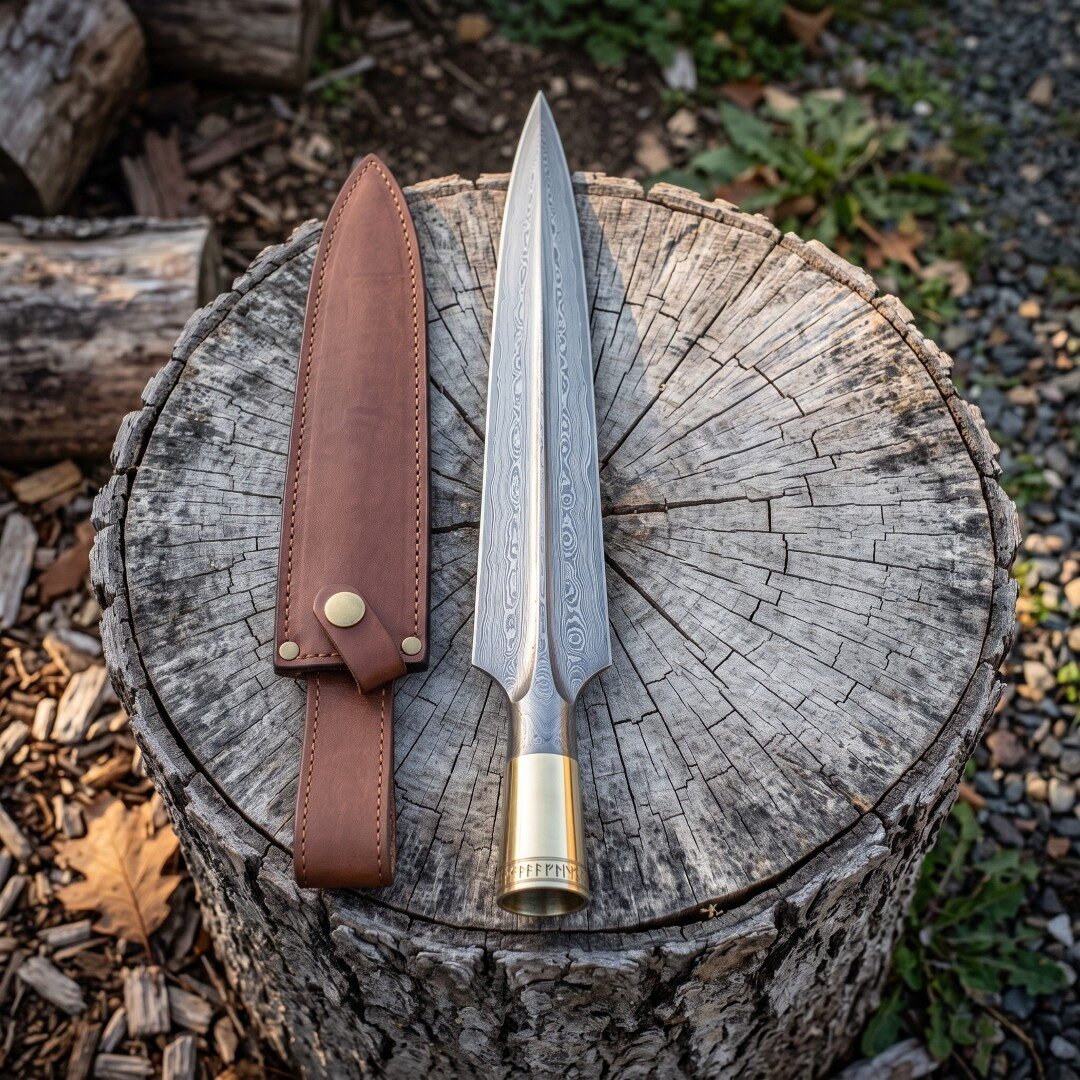
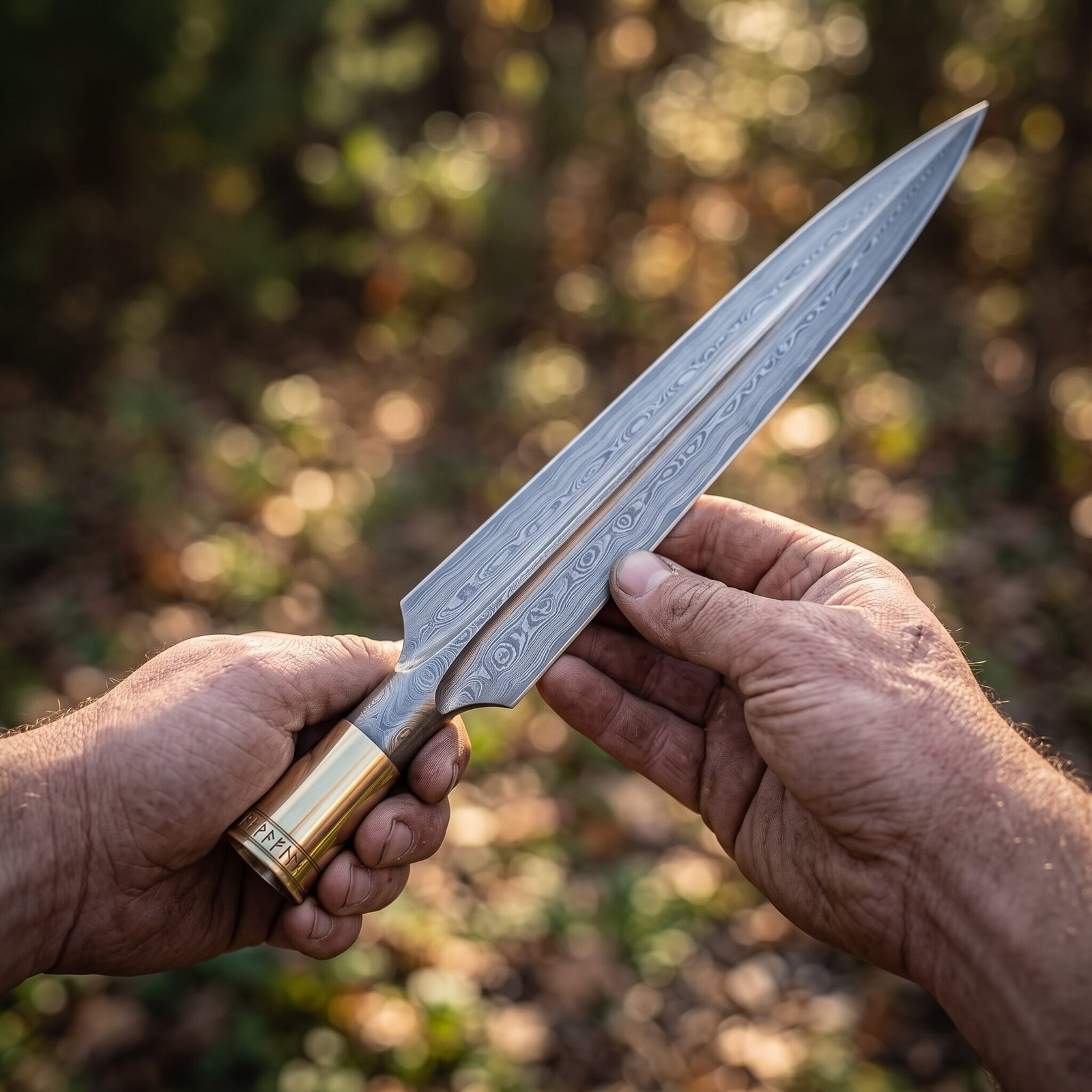
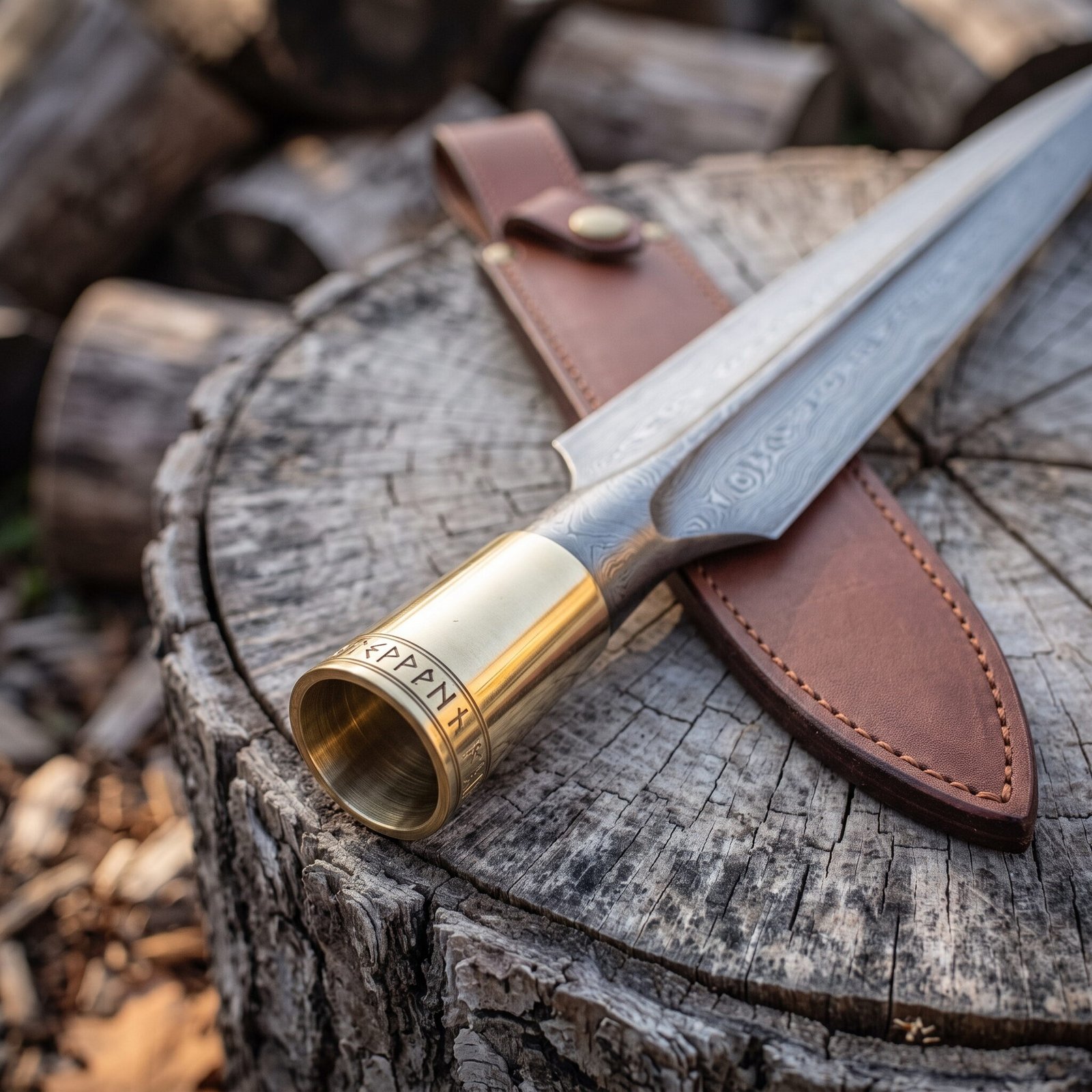
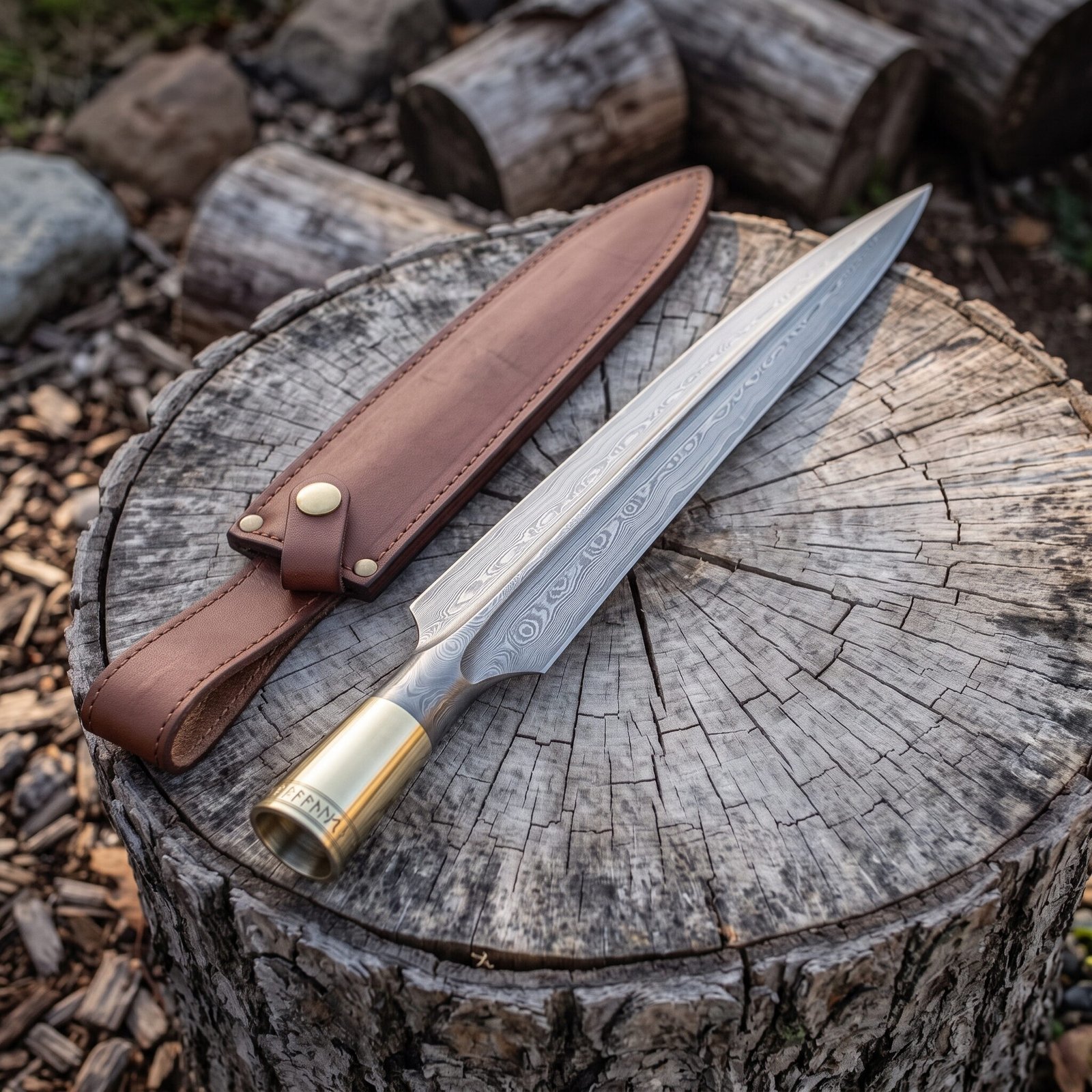
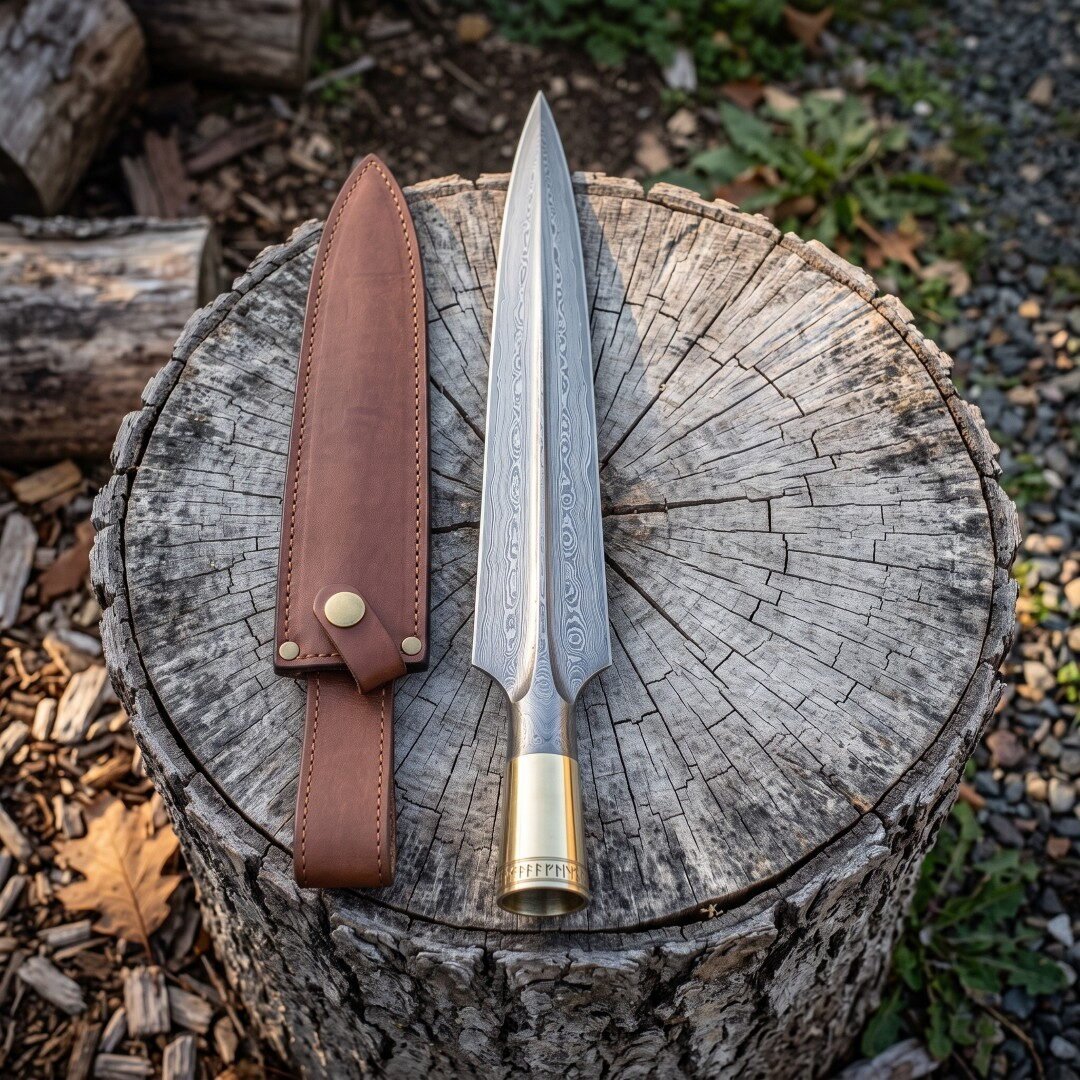
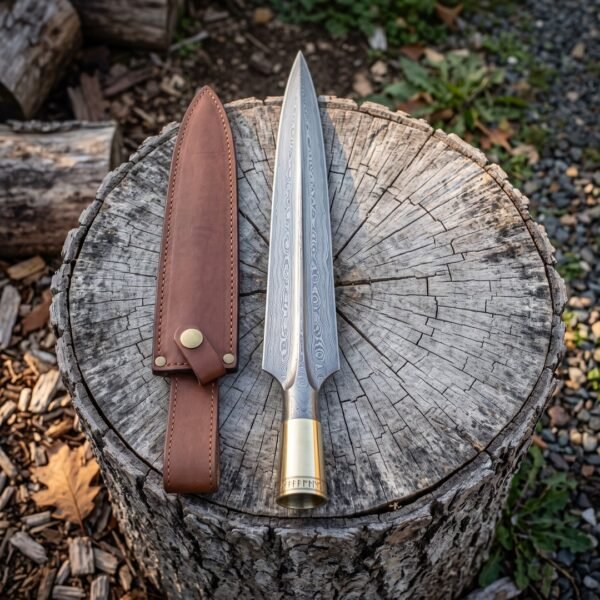
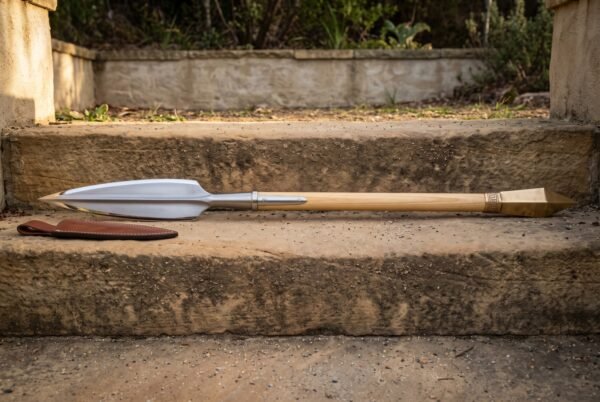
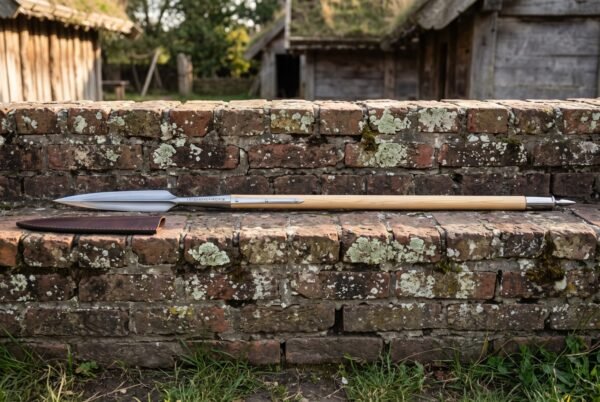
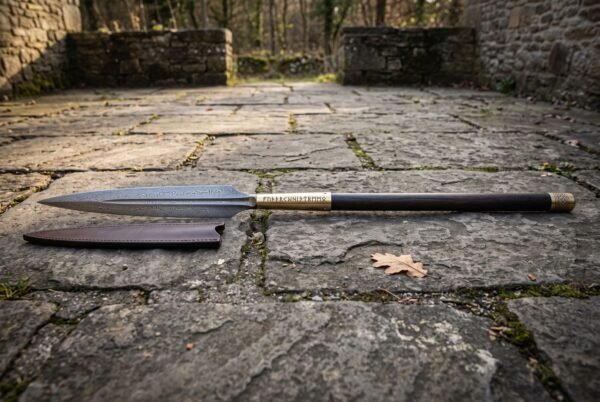
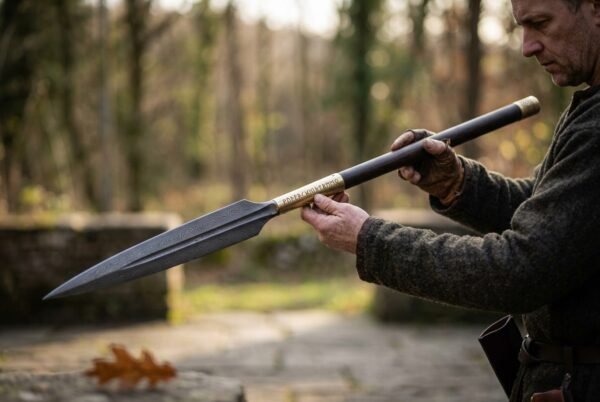
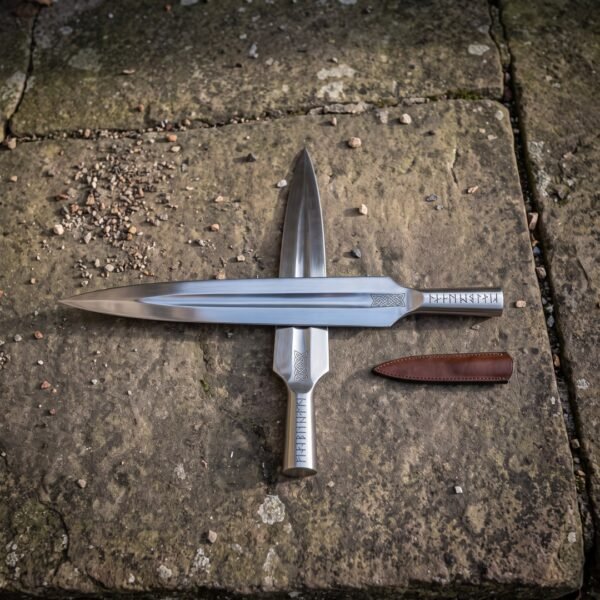
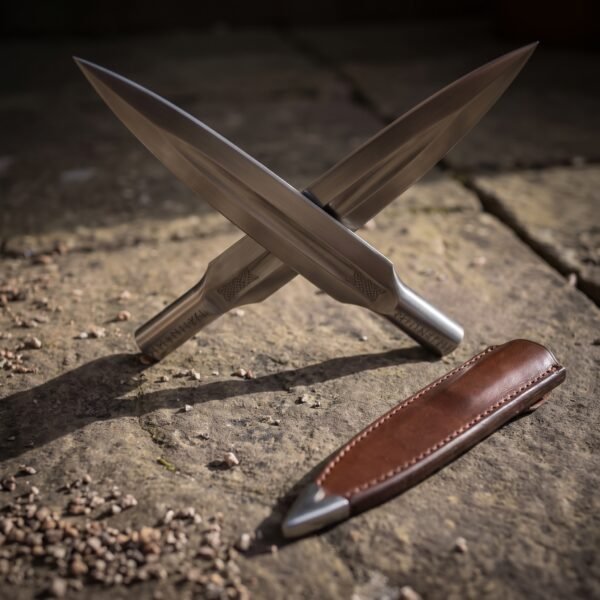
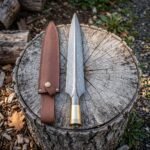
A long, narrow spearhead in pattern welded Damascus with stepped shoulders, forged with a raised central rib running from the socket to within an inch of the point, a rune engraved brass collar at the mouth of the socket and a fitted leather sheath to cover the edges in transit. The pattern here is genuine layered steel rather than an etched surface print. You can see it in the way the lines swing out and form closed rings where the bevel grind cuts down through the stack, which is a thing only real layers do, and something no surface etch can fake.
The spear, not the sword, armed the Norse world. Swords were expensive and comparatively rare. Spears were what most men owned, what most men fought with, and what turns up in most graves, and the finest Migration and Viking Age heads found in Scandinavia are pattern welded exactly like this one, because a spearhead is small enough that a smith could afford to spend his best steel and his best day on it. This one is forged, ground, etched and fitted in a Czech Republic workshop, and it ships with the brass collared socket finished and the leather sheath made to the blade. The tree stump and the woodland in the photograph are scenery, and the spearhead ships without a shaft so you can cut and fit your own. The spear was the arm most Norsemen actually carried, and our piece on the Viking spear covers the types.
Specifications
| Blade material | Pattern welded Damascus in 1095 and 15N20, hardened to 58 to 60 HRC |
|---|
| Pattern | Layered wave and raindrop figure, hand etched to raise the contrast |
|---|
| Blade form | Long narrow blade with stepped shoulders, a raised central rib and a full length bevel each side |
|---|
| Overall length | Approximately 14 to 15 inches from point to socket mouth |
|---|
| Socket | Forged steel socket sized for a shaft of about 1.1 inches, rivet hole for a shaft pin |
|---|
| Collar | Solid brass collar at the socket mouth, engraved with an Elder Futhark rune band |
|---|
| Sheath | Brown vegetable tanned leather blade sheath with a snap stud strap |
|---|
| Shaft | Not included, fit your own ash or hickory shaft |
|---|
| SKU | RK-1511 |
|---|
Why a spearhead is socketed rather than tanged
Look at the base of this head. It is not a spike driven into a hole. It is a socket, a cone of steel forged around a mandrel and closed, that slides over the outside of the shaft. That choice is the whole reason the spear outlived every other polearm of the period. A tang splits wood. Every thrust drives a wedge deeper into the end grain and a shaft with a tang in it eventually opens like a peeled stick. A socket does the opposite. It grips the shaft from outside, so the harder you drive the head the tighter the wood is squeezed into the cone, and the shaft carries the load in compression along its length rather than being split apart.
The brass collar at the mouth of the socket is not decoration alone. The mouth is the thinnest and most stressed part of the socket, the place a spearhead cracks if it is ever going to, and a collar reinforces the rim while it hides the join line. The single rivet hole through the socket wall takes a pin or a wood screw that stops the head walking off the shaft on the pull back, which matters far more than most people expect the first time a head is pulled out of a target.
The Damascus and what the layers do
The billet is 1095 high carbon steel folded with 15N20, a nickel bearing steel that resists the etch and therefore reads bright against the darker 1095. Forge welded, drawn out, cut, restacked and drawn again, then forged to shape so the layers follow the outline of the blade rather than being ground across them. Heat treated to 58 to 60 HRC, which is hard enough to hold a cutting edge on a thrusting head and still tough enough that the point will not chip if it meets something it should not.
The etch that shows the pattern also makes the steel slightly more eager to rust, because acid opens the surface. That is the trade for the figure and it is why the care section below matters more on a Damascus piece than on a plain one. Do not confuse this with a laser etched or acid printed pattern on plain steel. Those exist, they are cheaper, and they wear off. This one is layers all the way through, so a resharpening reveals more of the same pattern rather than cutting it away.
Engraving, runes and your own design
Use the rune converter on this page to turn a name, a date or a short phrase into Elder Futhark and we will cut it into the steel or the leather. If you would rather have a Viking pattern than a rune line, choose your own design in the engraving option above the add to cart button and tell us where it goes. Where a piece already carries an engraved design, your chosen engraving replaces it rather than sitting alongside it. On a Damascus spearhead we usually put the cut on the socket or the brass collar rather than the patterned blade, because a rune line fights the figure, and we are always happy to put a longer line on the leather sheath. There are photographs of both at the engraving page.
Mounting and hafting
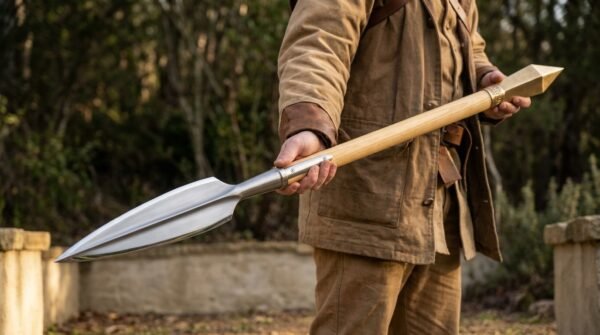
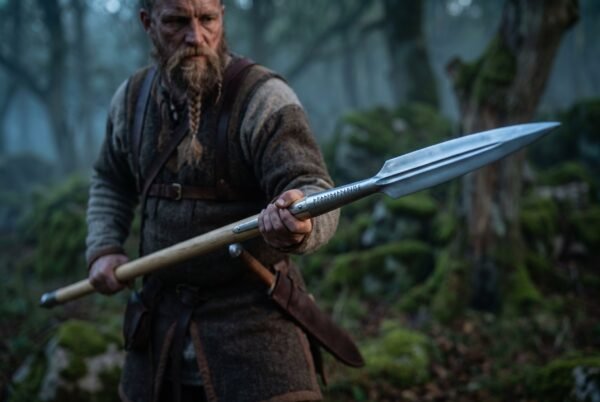
This is a working head sold without a shaft, which is how most people want it, because shaft length is a personal decision. For a one handed spear used with a shield, most reenactors cut between six and seven feet. For a two handed hewing spear, seven to eight. Ash is the traditional choice and hickory is tougher and heavier. Turn or plane the top of the shaft to a slight taper, test fit dry, and take the wood down until the socket stops about a quarter inch short of seating, then drive it home so the last of the fit is an interference fit. Drill through the rivet hole and pin it. If you want it purely for display, a wall mount or a simple oak plaque works and the leather sheath keeps the edge covered when it is handled.
Care
Wipe the blade down after handling. Skin acid is the fastest way to put a fingerprint shaped rust bloom into an etched Damascus surface, and it can happen overnight in a humid room. Keep a light film of mineral oil or camellia oil on the steel. Store the head out of its sheath, not in it, because leather holds moisture and a sheathed blade left in a drawer for a season is a blade you will be sanding. Feed the sheath twice a year with a neutral dressing. Brass takes any metal polish. Fuller notes on rust, oils and storage are on steel care. Etched steel wants its own routine, which is on the Damascus care page.
Made in the Czech Republic
This is a handmade piece from the Czech Republic, made in a workshop that still forges, grinds and finishes by hand instead of stamping parts out. The smiths there have kept the older way of working, and the wood, horn and leather are shaped and fitted by hand as well. Two pieces of the same design will never be identical, and that is part of what you are buying.
Ransack Viking is a United States company. We handle the import ourselves, look over every piece when it lands and ship from our warehouse in Chicago, Illinois. Engraving is done in the United States after the piece arrives, so your design goes on before we send it out.
A note on handmade variation
This is hand made, not machine made or bulk produced, so what arrives will not be a pixel for pixel copy of the photograph. No two Damascus billets ever draw out the same way, so your pattern will be its own, and hammer texture, etch depth, the exact line of the shoulders and the tone and grain of the leather will all differ a little because every piece is worked by hand from natural materials. The dimensions, the material and the build are the same every time. The character is not.
Frequently asked questions
Is this real Damascus or an etched pattern
Real forge welded Damascus. The billet is 1095 and 15N20 folded and drawn, and the giveaway is the closed rings the pattern makes where the bevel cuts through the layers. An etched print sits on the surface and sands off. This does not.
Does it come with a shaft
No. The head and the leather sheath ship on their own. Shaft length is personal and long timber is punishing to ship without damage, so we leave the hafting to you and size the socket for a standard shaft of about 1.1 inches.
Is it sharp when it arrives
Yes. It arrives with a working edge and a fine point. If you want it blunted for a reenactment group that requires rebated edges, say so in the order notes and we will roll the edge before it ships at no cost.
Will it rust
It can, like any high carbon steel, and the etched surface is a little more willing than plain steel. Keep it oiled, keep it out of the sheath in storage and wipe your fingerprints off, and it will stay clean for decades.
Can I use it for hunting
Physically it is a capable head, but spear hunting is regulated differently in every state and some prohibit it outright. Check your own regulations before you fit it to a shaft with that in mind.
How long until it ships
Processing is one to two weeks because every billet is forged and every sheath is cut to the blade it covers, then shipping is free inside the United States.
What is in the box
- One pattern welded Damascus spearhead with a brass collared socket
- Fitted vegetable tanned leather blade sheath with a stud strap
- Care sheet for etched Damascus
- Lifetime warranty against defects in forging, grind, heat treat and fittings
- Forged and finished in the Czech Republic
Explore the range
See more in viking spears, Norse arms, viking axes and hunting knives, or read the guides for hafting and care.
Also in this part of the catalogue
Sitting beside it in the catalogue is the Twinfang Viking spear. Another in the same line is the Ashfang Viking spear, 60 inches overall. Next along the rack is the Skyrend Viking spear, pattern welded Damascus.
Fitting out further, the Wyrmtooth Norse arms belongs with it. Or start from a blank sheet on the custom Norse arms page.

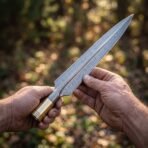
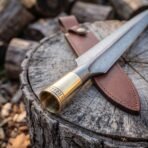
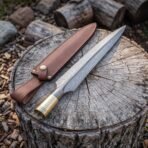
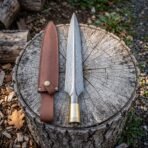
Absolutely blown away by this polearm. Steel head is heavy in a good way. You can tell it’s not hollow. This will be a family heirloom for sure.
Five stars isn’t even enough honestly. Great for reenactment or just display. Either way it looks amazing. Love that this is Czech craftsmanship and shipping from the US meant it showed up in just a few days. This shop clearly takes pride in their work.
Bought this on a whim and it turned out to be one of my favorite purchases this year. Great for reenactment or just display. Either way it looks amazing. Steel head is heavy in a good way. You can tell it’s not hollow. Beyond happy with how this turned out.
This polearm is fine. Just didn’t wow me. Decent for the price but not the heaviest build I’ve seen. Ransack Viking is hit or miss it seems. This one landed in the middle. It’s okay for the price.
Can’t stop showing this off to everyone who comes over. Came in solid packaging and arrived in perfect condition. Finish on the metal is even and clearly hand forged. Couldn’t be happier with this.