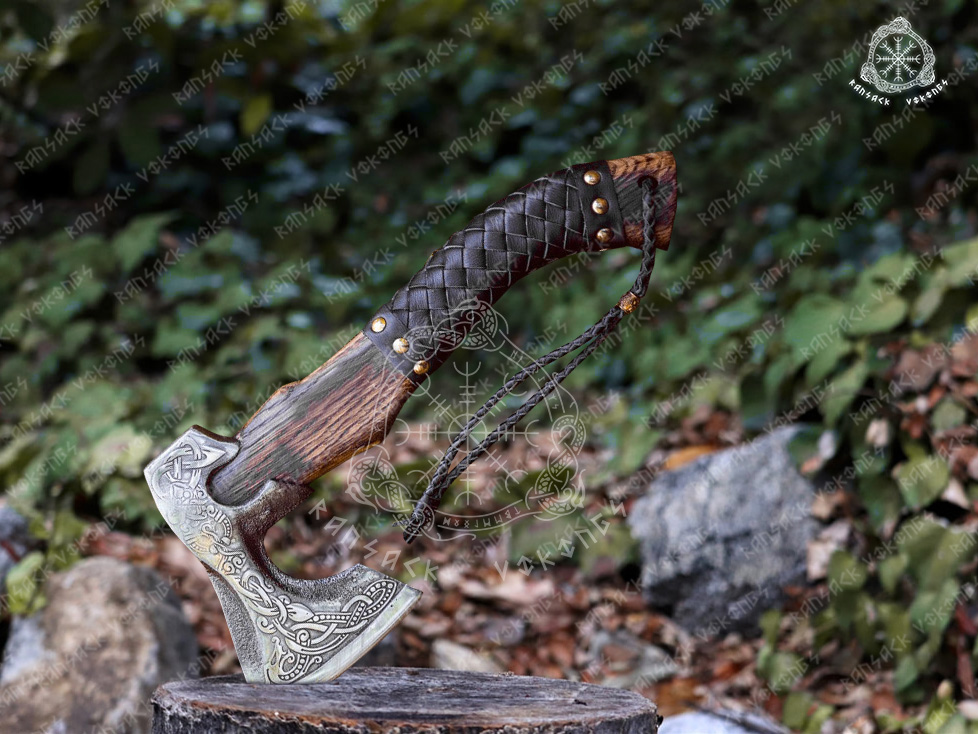
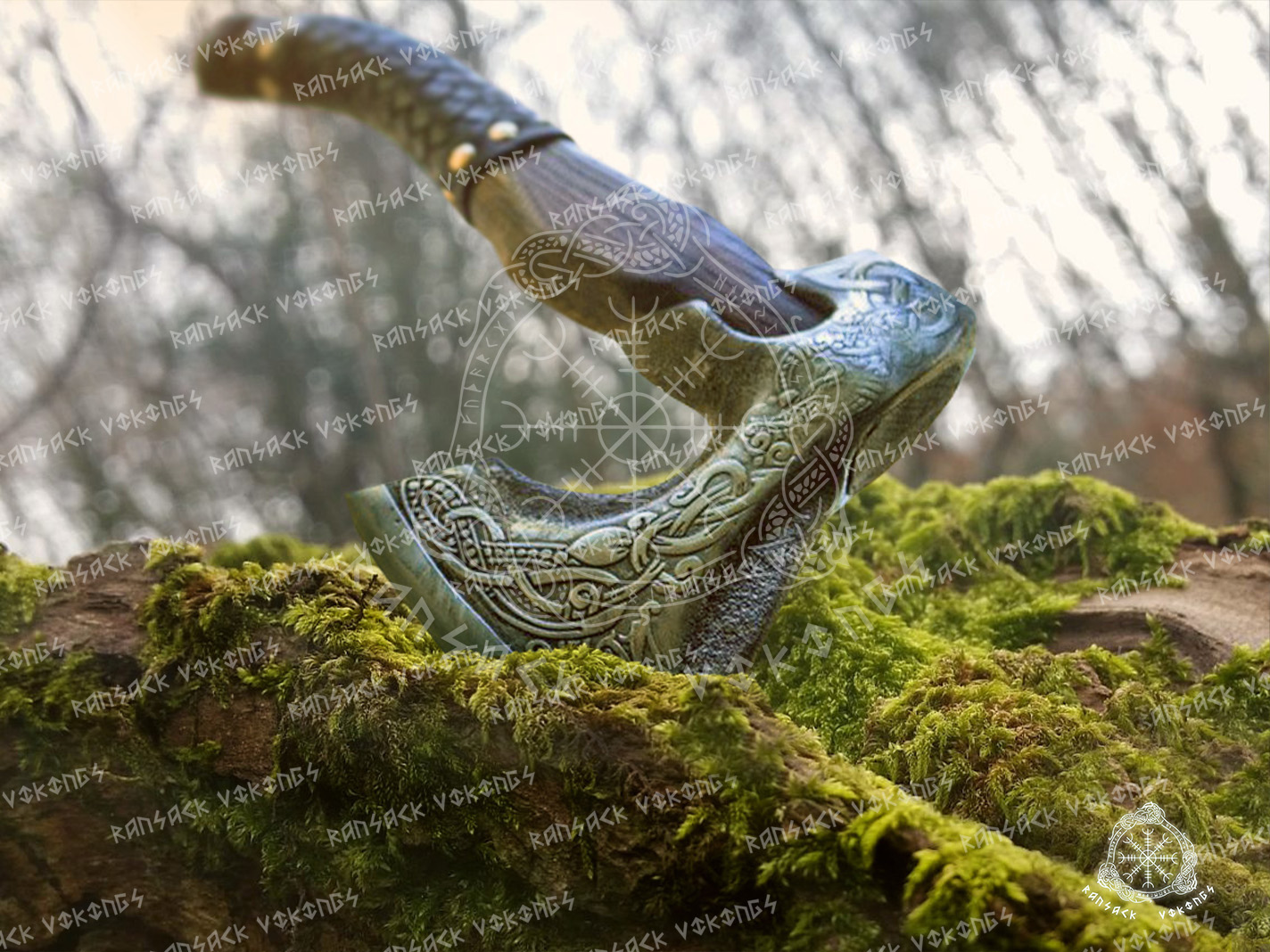
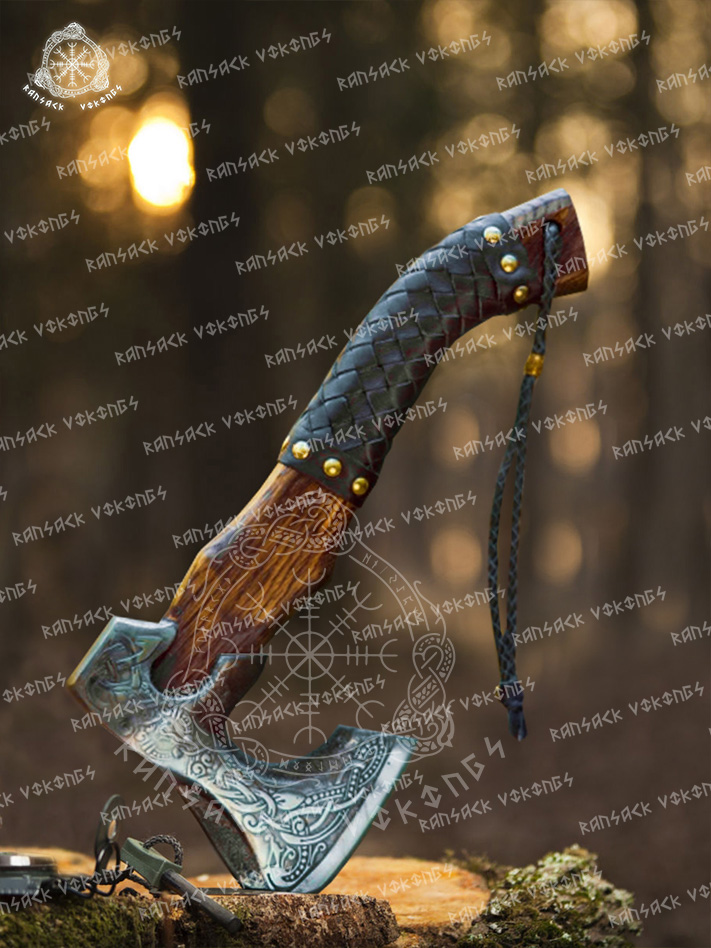
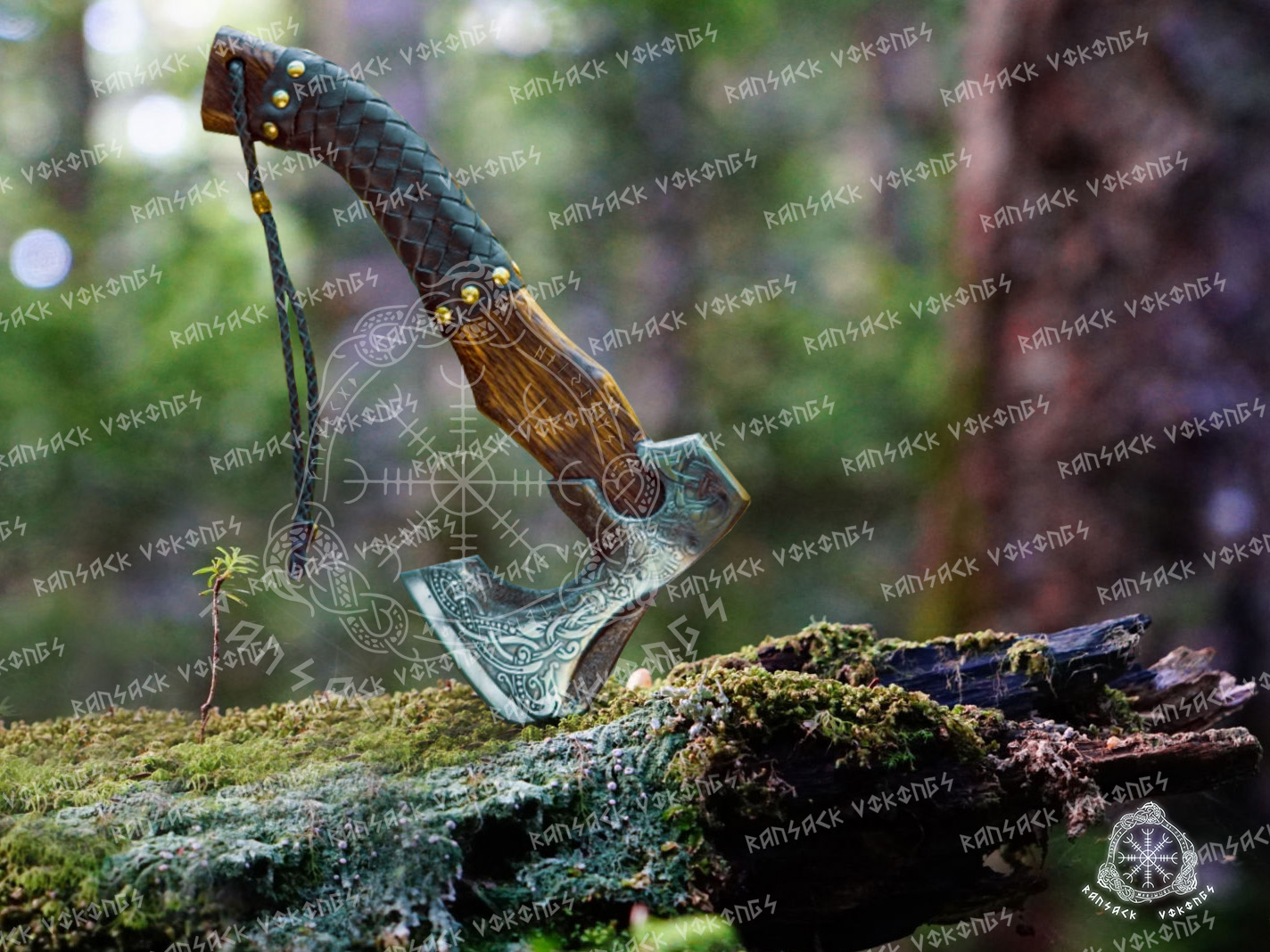
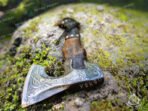
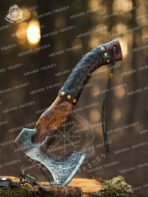
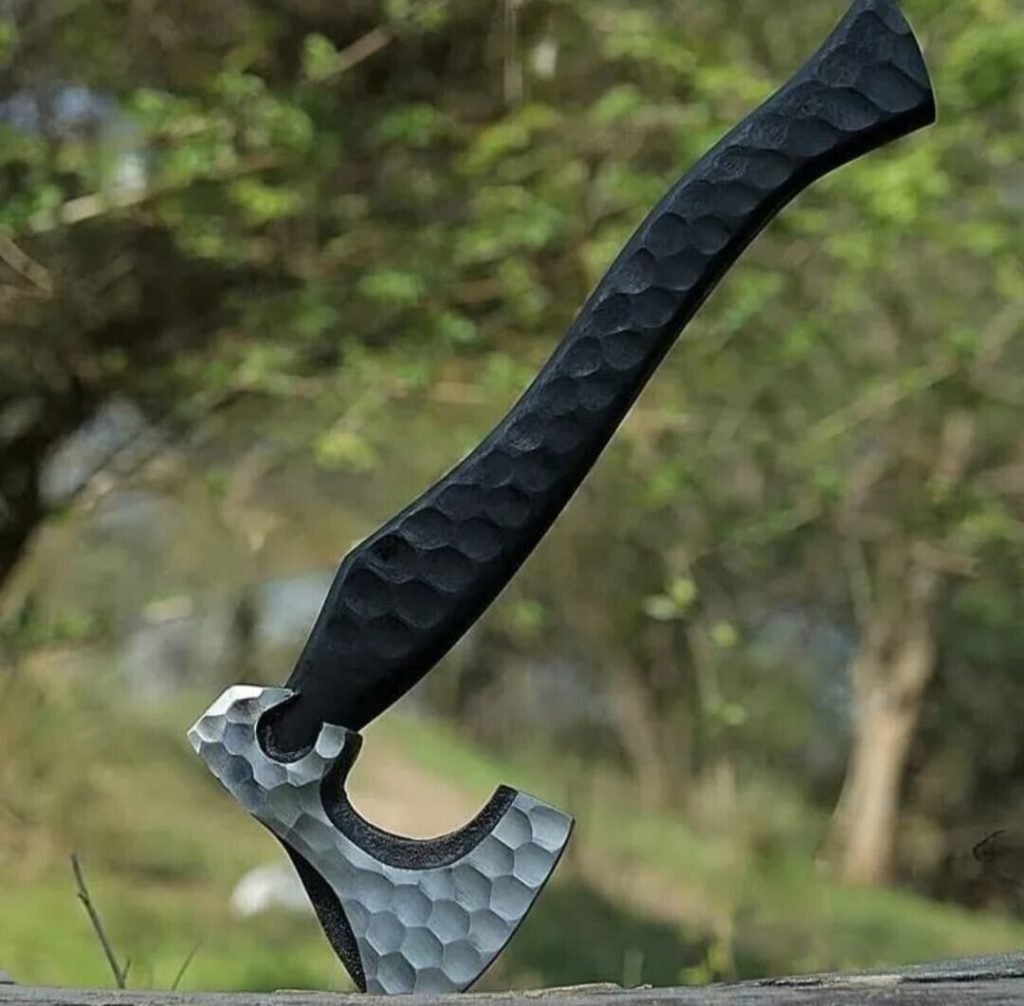
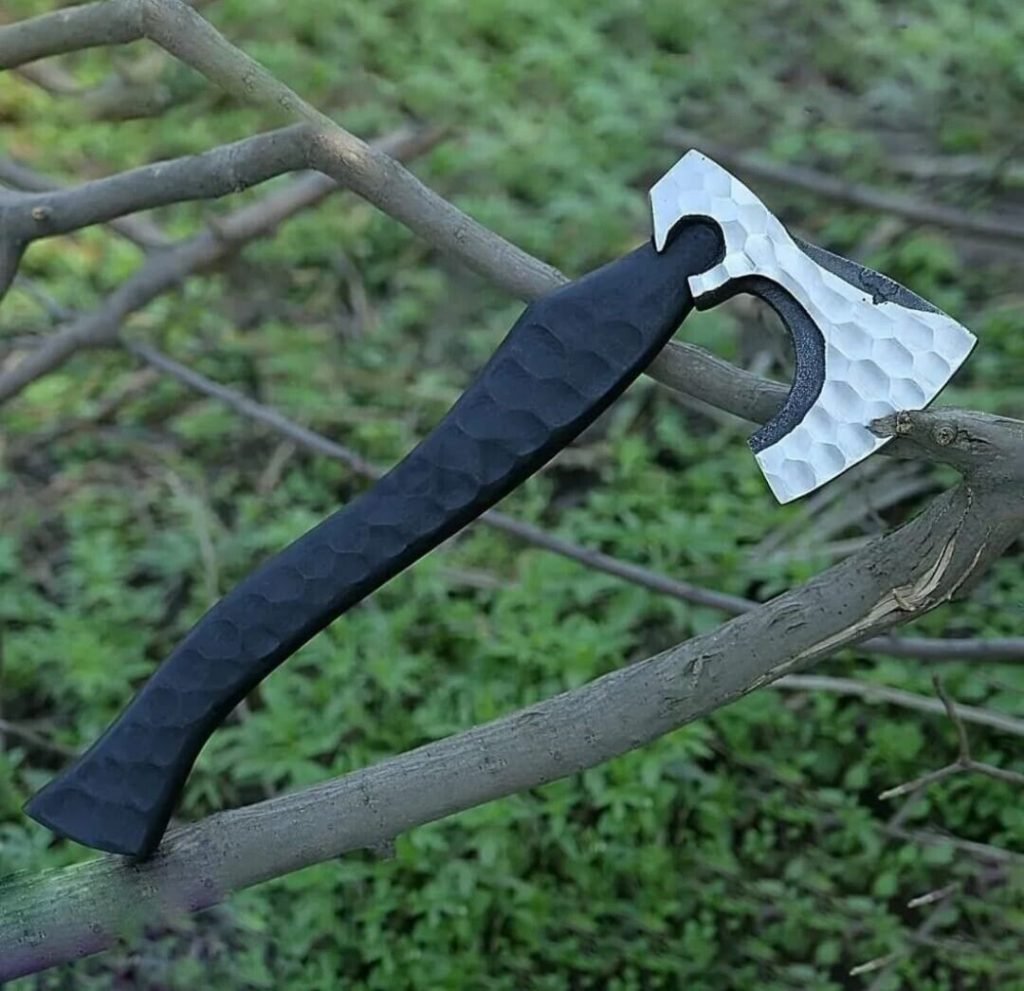
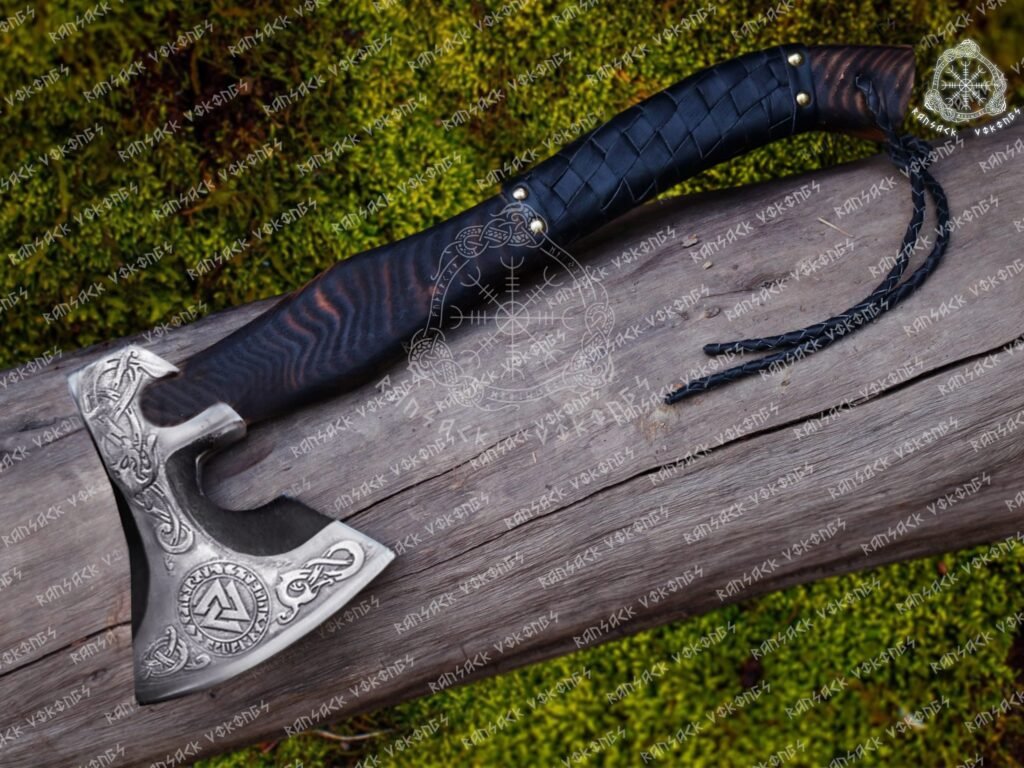
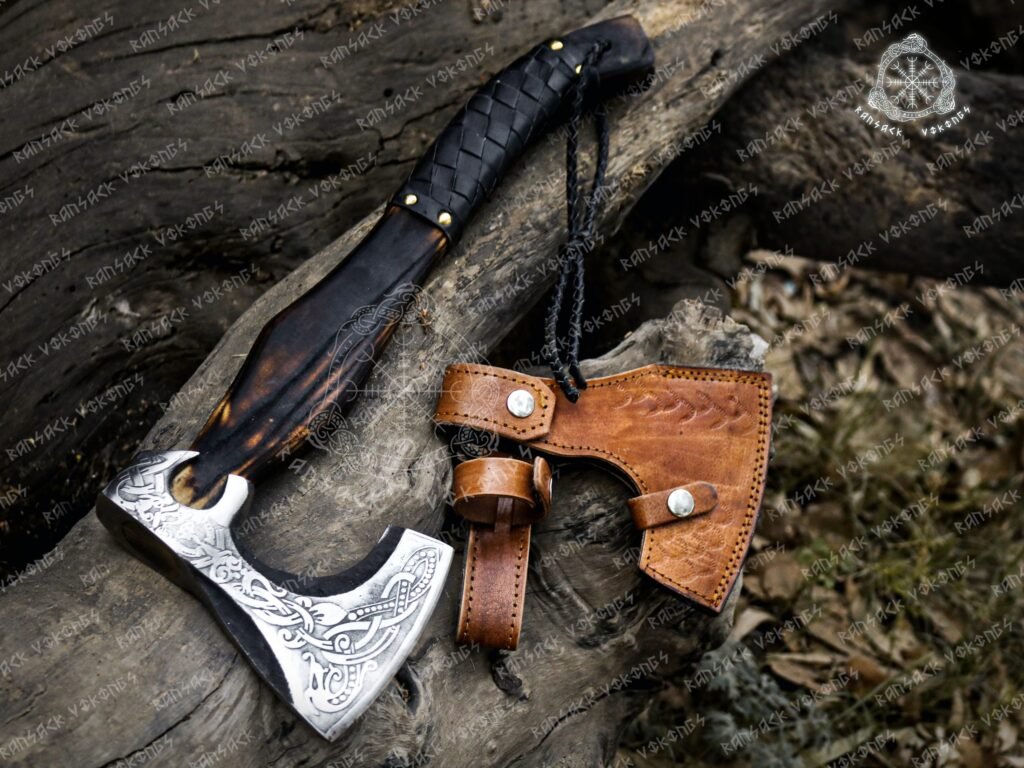
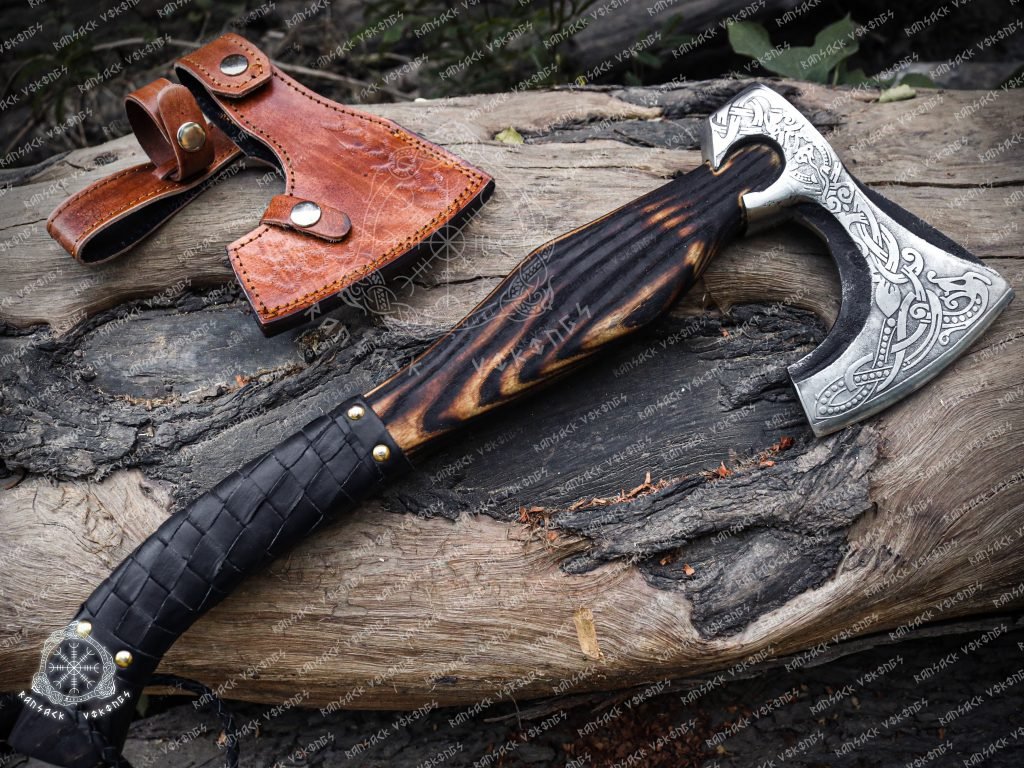
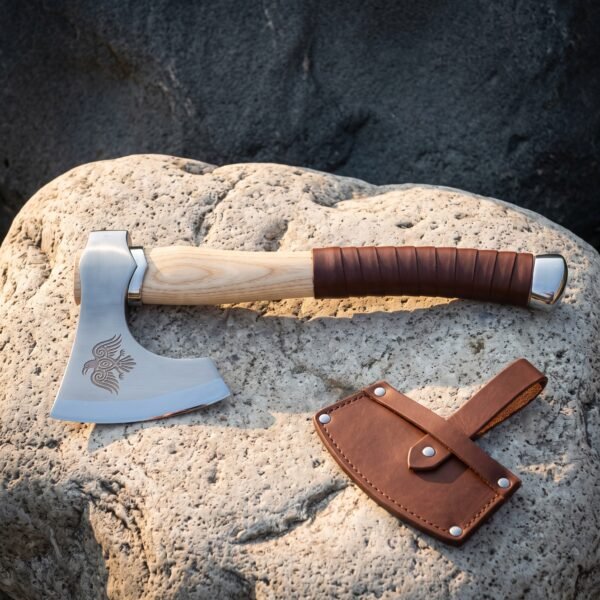
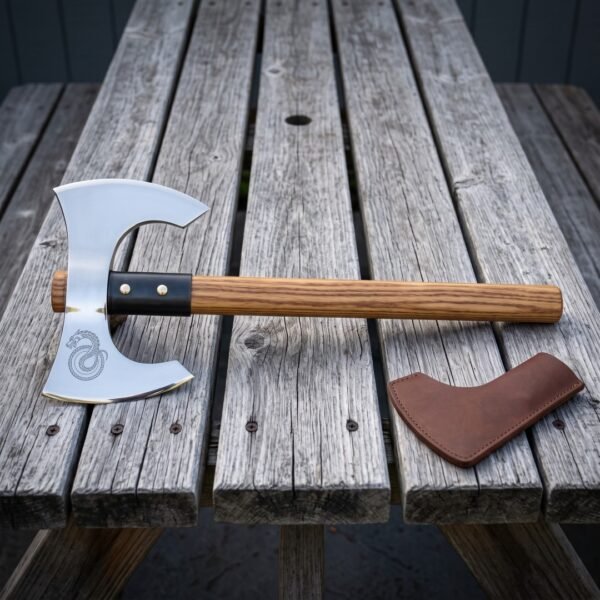
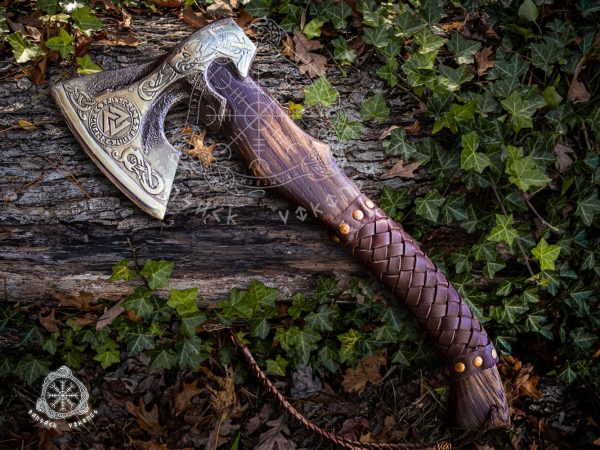
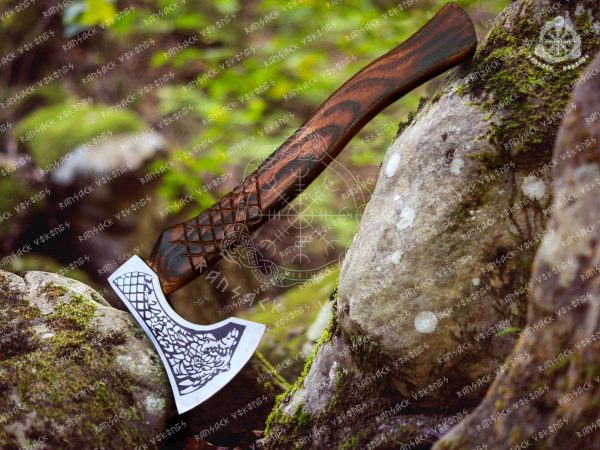
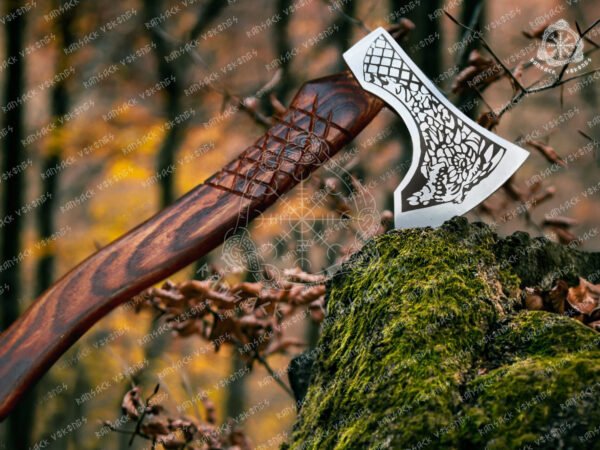
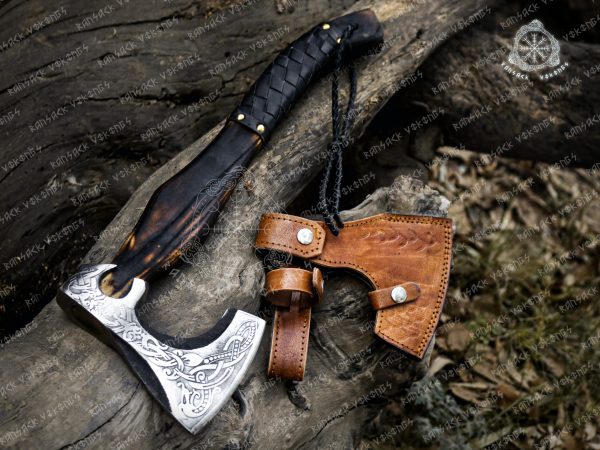
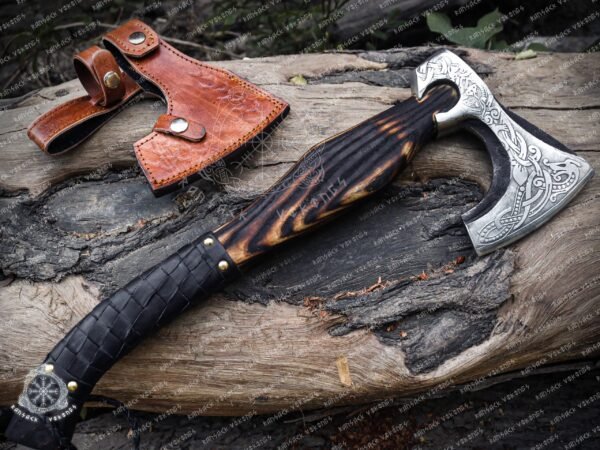
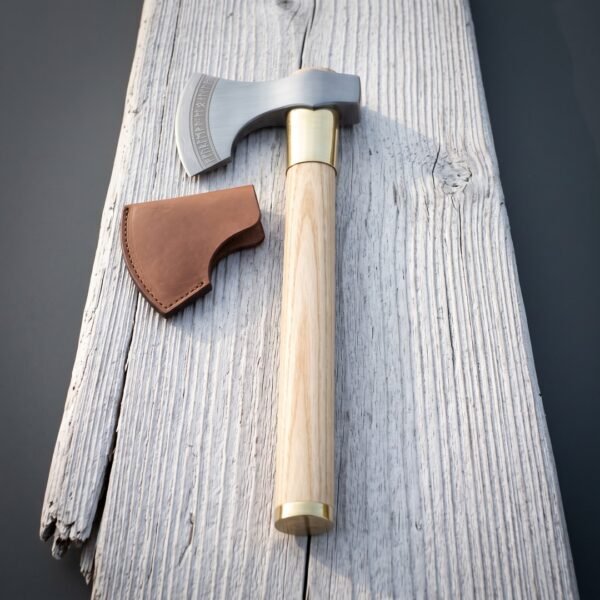
Frostbirch is a Viking bearded axe in the old Norse pattern, forged from high carbon steel and hung on a birch wood handle. The head carries a 5.3 inch cutting edge, the axe stands 19 inches overall and the whole thing weighs 1.23kg. It arrives with the edge already set, because it is built as a tool first and a display piece second. The reasoning behind that hook of steel under the edge is set out in what makes an axe bearded.
If you want one fact that explains why this shape survived, it is this: axes turn up in far more Viking age graves than swords do. A pattern welded sword was the property of a wealthy man and represented months of a smith’s time. An axe was what an ordinary farmer already owned, because it built his house, split his winter fuel and cleared his land, and it could be carried to a fight without buying anything new. The bearded profile is the shape that came out of a thousand years of people needing one tool to do both jobs.
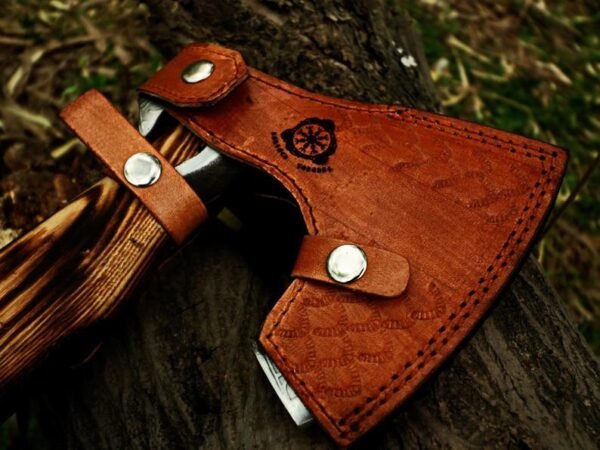
Every stage of this axe happens in the Czech Republic. It ships with a leather blade cover and a gift box, free within the United States.
Specifications
| Steel | Hand forged high carbon steel |
|---|
| Hardness | 58 to 60 HRC |
|---|
| Overall length | 19 inches |
|---|
| Cutting edge | 5.3 inches |
|---|
| Weight | 1.23kg |
|---|
| Handle | Birch wood |
|---|
| Sheath | Leather blade cover, gift box included |
|---|
| SKU | RK-357 |
|---|
The beard, the hang, and where this axe wants to cut
Two things define a bearded axe and most descriptions only mention one of them.
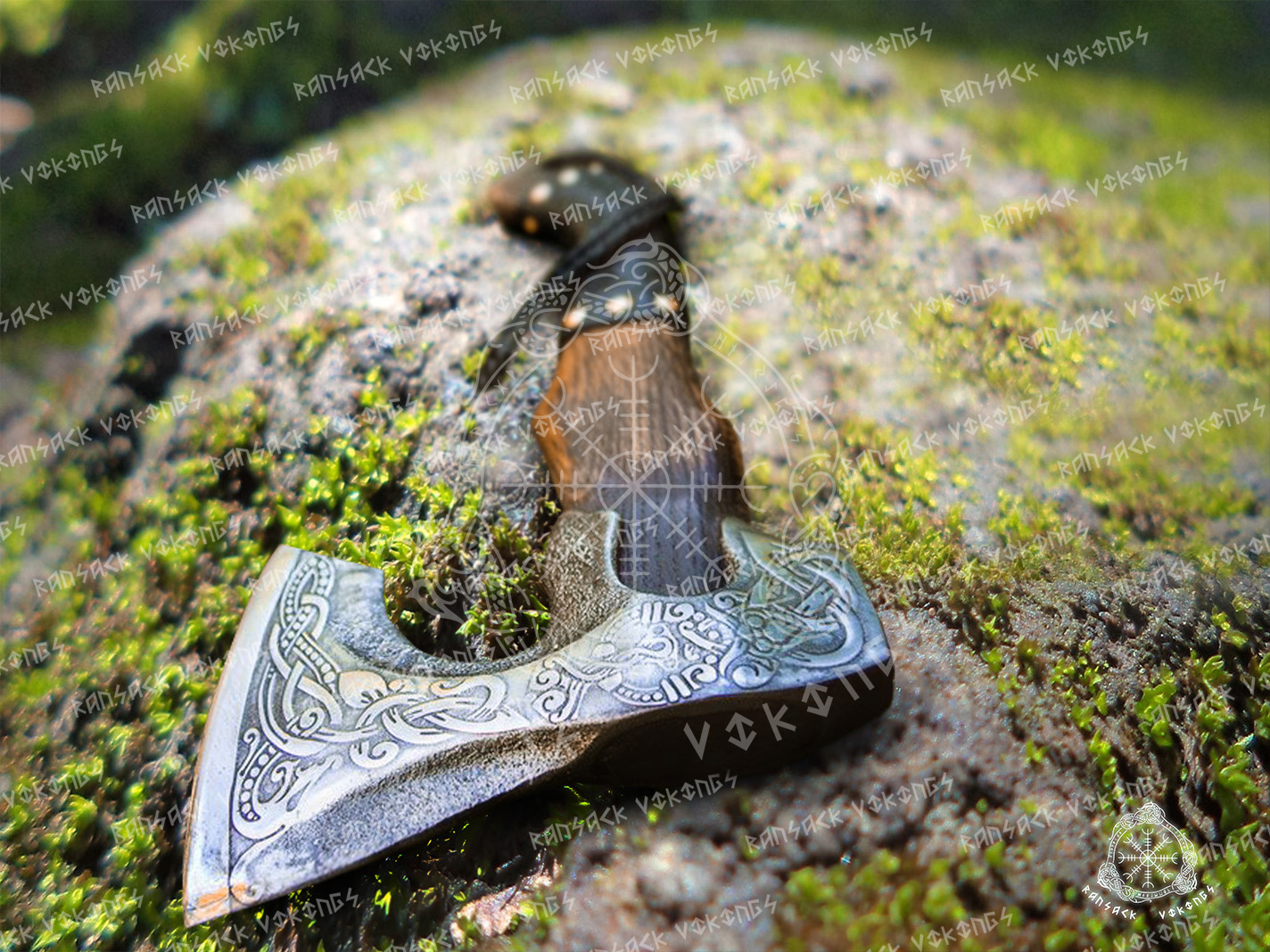
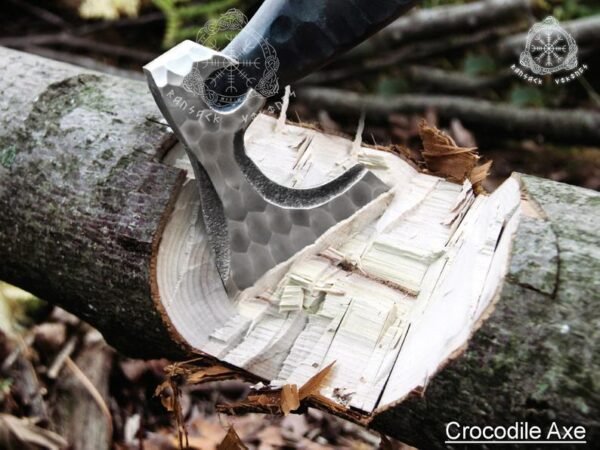
The obvious one is the beard, the part of the bit that drops below the eye. It buys you cutting edge without buying weight, which is why 5.3 inches of edge sits on a head this light. More usefully, it leaves a gap between the steel and the haft, so you can put your hand right up under the head with your fingers behind the bit. In that grip the axe becomes a carving tool. It is how you point a stake, take the bark off a pole, shape a tent peg or rough out a spoon blank, and it is the single job a straight bitted axe cannot do at all.
The one people miss is the hang. Hang is the angle at which the edge sits relative to the handle, and it decides whether the bit lands flat or on a corner. Stand the axe on a flat surface resting on the toe of the bit and the end of the haft. On a correctly hung axe the heel of the bit sits just clear of the surface and the edge points along the line of the handle, so when you swing naturally the whole edge arrives together. A badly hung head lands corner first, glances, and buries a third of the edge instead of all of it. Each head here is fitted and wedged to the individual haft with that in mind, which is a slower way to build an axe than pressing a head onto a machined stick.
What the shape is not is a splitter. The bit is thin and the cheeks are flat, so this axe slices through green wood and limbs beautifully and will bind in a seasoned round. Keep a maul for that and this stays sharp.
Why high carbon steel and not stainless
This head is plain high carbon steel, forged, hardened and tempered by hand rather than run through an induction line. Plain carbon is what working blades were made from for the entire period before stainless existed, and it is still what most axe makers reach for, because it does two things stainless does not.
The first is that it sharpens fast. Ten passes of a mill file on a carbon bit does more than a long session with a stone on a chromium rich stainless one, and an axe is a tool you resharpen in a field rather than at a bench. The second is that it fails gracefully. When a carbon edge meets a knot or a buried stone it rolls over, and a rolled edge files straight in a couple of minutes. Stainless at axe hardness is more inclined to chip, and a chip means grinding metal away until the edge line is behind the damage.
What carbon steel asks in return is a wipe of oil. It will grey over with a patina, which is a protective oxide layer and not damage, and it will rust if it is put away wet. If you want the full comparison of a rust resistant blade against a harder edged one, it is set out in Damascus versus stainless, and the same logic applies to plain carbon against stainless.
The birch handle
Birch is the northern handle wood. It is light, pale, fine grained and stiff, and it has been used for tool handles across Scandinavia for as long as there have been tools there, largely because it grows everywhere they were and because it takes shock without being heavy. On a 19 inch axe that lightness is worth something specific: it keeps the balance point forward, near the head, which is what gives an axe its bite. A heavy haft makes a light axe feel dead.
Birch is also more open grained than rosewood or walnut, so it wants feeding. A light coat of boiled linseed or plain mineral oil once or twice a year keeps the fibres from shrinking, which is what loosens a head over a dry heated winter. It takes five minutes and the method is in wooden handle care. If the head ever does move, wedge it again properly rather than soaking the axe in water.
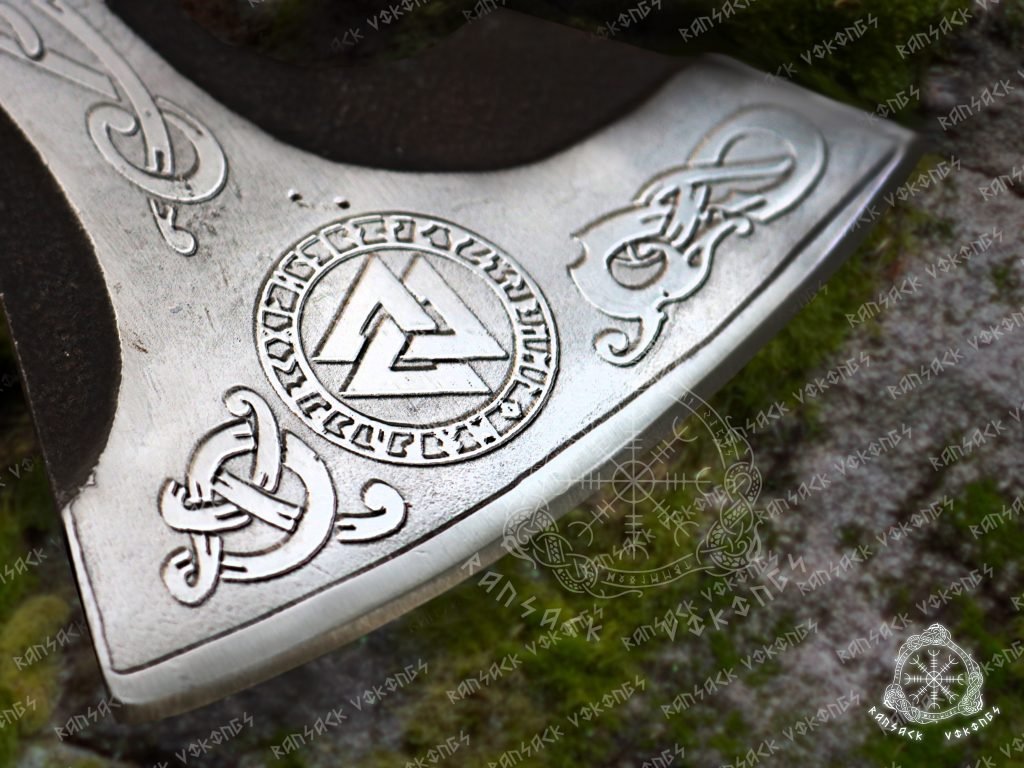
Engraving, runes and your own design
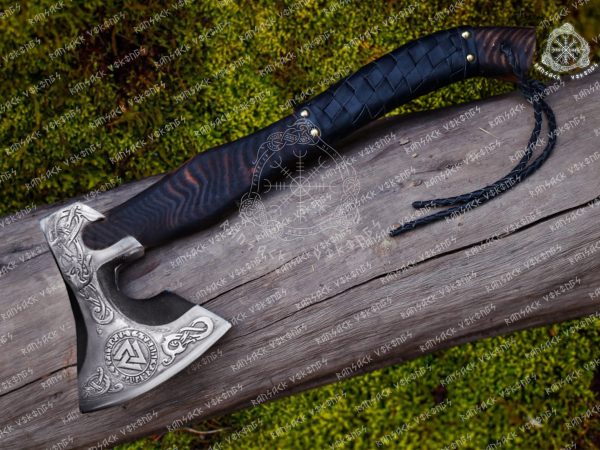
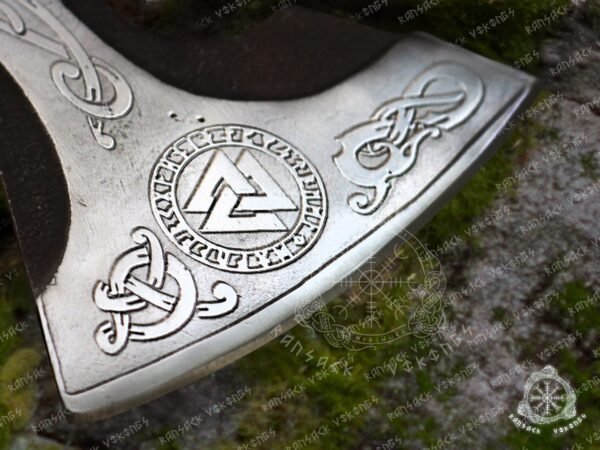
Use the rune converter on this page to turn a name, a date or a short phrase into Elder Futhark and we will cut it into the steel or the handle. If you would rather have a Viking pattern than a rune line, choose your own design in the engraving option above the add to cart button and tell us whether it goes on the blade or the handle. Where a piece already carries an engraved design, your chosen engraving replaces it rather than sitting alongside it. Pale birch shows a cut line particularly well, so a longer inscription often reads better on the handle of this axe than on the cheek of the head. Sizes and placement are on the engraving page.
Care and sharpening
A file resets an axe edge faster than any stone. Clamp the head, run a mill file from the toe of the bit towards the beard following the existing bevel, keep the bevel convex rather than flat, then refine with a puck or a coarse stone and finish on the fine side. A convex edge on an axe resists chipping in a way a flat knife grind does not. Avoid a bench grinder unless you can keep the steel cool, because blued steel has lost its temper and has to be filed away before the edge will hold again.
Dry the head after use, especially after green wood, and put a thin film of oil on it before the cover goes on. Store it hanging or on its side rather than standing on the bit. The oils that work and the ones that go sticky are covered in steel care, and the geometry behind a good edge is in sharpening with a whetstone.
Made in the Czech Republic
This is a handmade piece from the Czech Republic, made in a workshop that still forges, grinds and finishes by hand instead of stamping parts out. The smiths there have kept the older way of working, and the wood, horn and leather are shaped and fitted by hand as well. Two pieces of the same design will never be identical, and that is part of what you are buying.
Ransack Viking is a United States company. We handle the import ourselves, look over every piece when it lands and ship from our warehouse in Memphis, Tennessee. Engraving is done in the United States after the piece arrives, so your design goes on before we send it out.
A note on handmade variation
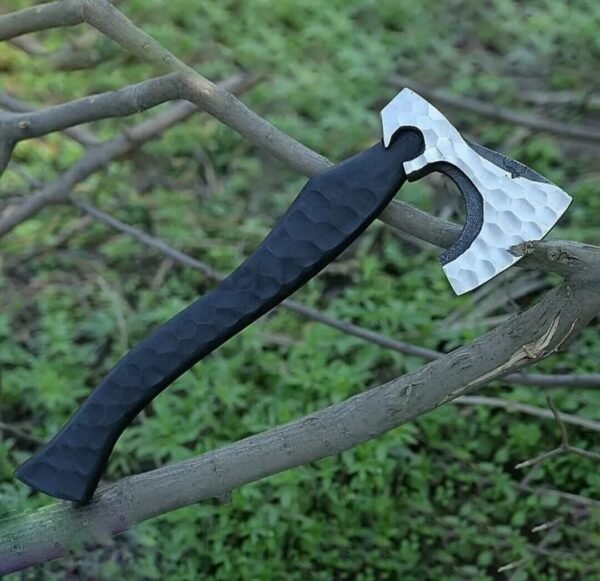
This axe is hand forged, not machine made and not bulk produced, so the axe that arrives will not be a pixel for pixel copy of the photograph on this page. The forge finish across the cheeks varies in tone and texture depending on how the scale came off. Hammer marks fall where the smith placed them. Birch is a natural material and boards differ, so one handle may run almost white and straight grained while the next carries darker flecking. The line of the beard and the sweep of the bevel move by a hair, because they are ground by eye against the shape rather than by a machine against a stop.
The dimensions are the same every time, the steel is the same every time and the build is the same every time. What changes is the character, and that is what separates a forged axe from a moulded one.
Frequently asked questions
Is it sharp when it arrives?
Yes. The bit is filed and honed before the axe is boxed and it will cut green wood the day it lands. It is put on as a working axe edge rather than a shaving edge, because a bit ground too thin folds on the first knot.
What is the difference between this and a plain hatchet?
A hatchet has a straight bit and a hard shoulder, so you cannot get your hand close to the edge. The beard on this head leaves a gap under the bit, which gives you a choked carving grip and a longer edge on a lighter head.
Can I throw it?
You can into a softwood target. Check the haft for cracks after every session and accept that any thrown axe eventually needs a new handle. Never throw at anything with a hard backstop.
How do I keep the head from working loose?
Oil the handle once or twice a year, especially through a dry heated winter, and store the axe somewhere with stable humidity. If it ever does move, wedge it again. Do not soak it in water as an old shortcut suggests, because that swells the wood temporarily and rots the fit permanently.
Can I have runes cut into the birch rather than the steel?
Yes, and on this axe that is usually the better choice. Pale birch shows an engraved line clearly and there is more room for a full phrase on the handle than on the cheek of the head.
How long does delivery take?
One to two weeks of processing plus transit time, free within the United States, with a 7 day return window from delivery.
What is in the box
- One Frostbirch high carbon steel Viking bearded axe, 19 inches overall
- Leather blade cover
- Gift box
- Protective packaging
- Forged and finished in the Czech Republic
Explore the range
Other heads and sizes sit in Viking axes, bearded axes, throwing axes and camping axes and hatchets. The reasoning behind the steel and the hang is written up in the guides.









Happy with this one for the most part. Birch Wood handle looks great though it’s a little smaller than I imagined. Blade quality is solid. Arrived a bit less sharp than expected but a few passes on a strop fixed it. Glad I made this purchase.
Did not expect this level of quality for the price. It’s handmade in the Czech Republic but ships from a US warehouse so it arrived quicker than I expected. Weight and balance make it feel like a real functional piece not some cheap replica. Edge retention has been great even after regular use. Can’t recommend this enough.
This is exactly what I wanted and then some.
My husband was speechless when he opened this. It’s handmade in the Czech Republic but ships from a US warehouse so it arrived quicker than I expected. The birch wood handle feels amazing and the balance is perfect. Love it.
Been eyeing this axe for months and it did not disappoint. The birch wood handle feels amazing and the balance is perfect. This is going straight into my display case. You can tell it’s real Czech blacksmith work and shipping from the States made delivery painless.