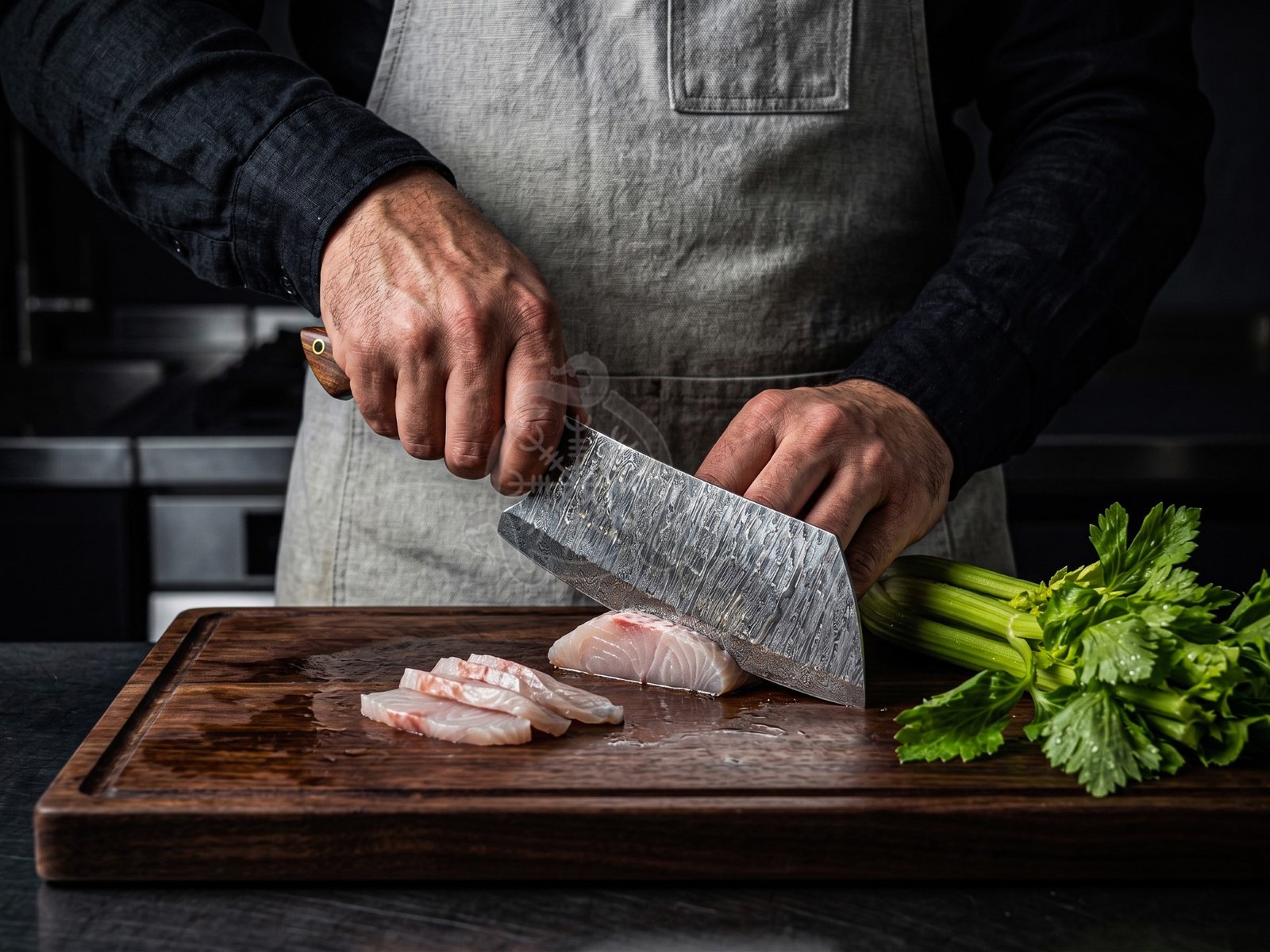
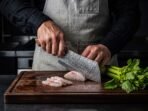
Ask a professional cook how they hold a chef knife and you will get the same answer every time: not by the handle. The pinch grip puts thumb and forefinger onto the blade itself, just in front of the bolster, with the remaining fingers wrapped round the handle. It gives you control over the edge that holding the handle alone never will, and it is the reason the balance point of a chef knife matters so much. A knife that balances at or just ahead of the bolster sits still in a pinch grip and does what you tell it. A handle heavy knife has to be steered, and a tip heavy one drops through the board.
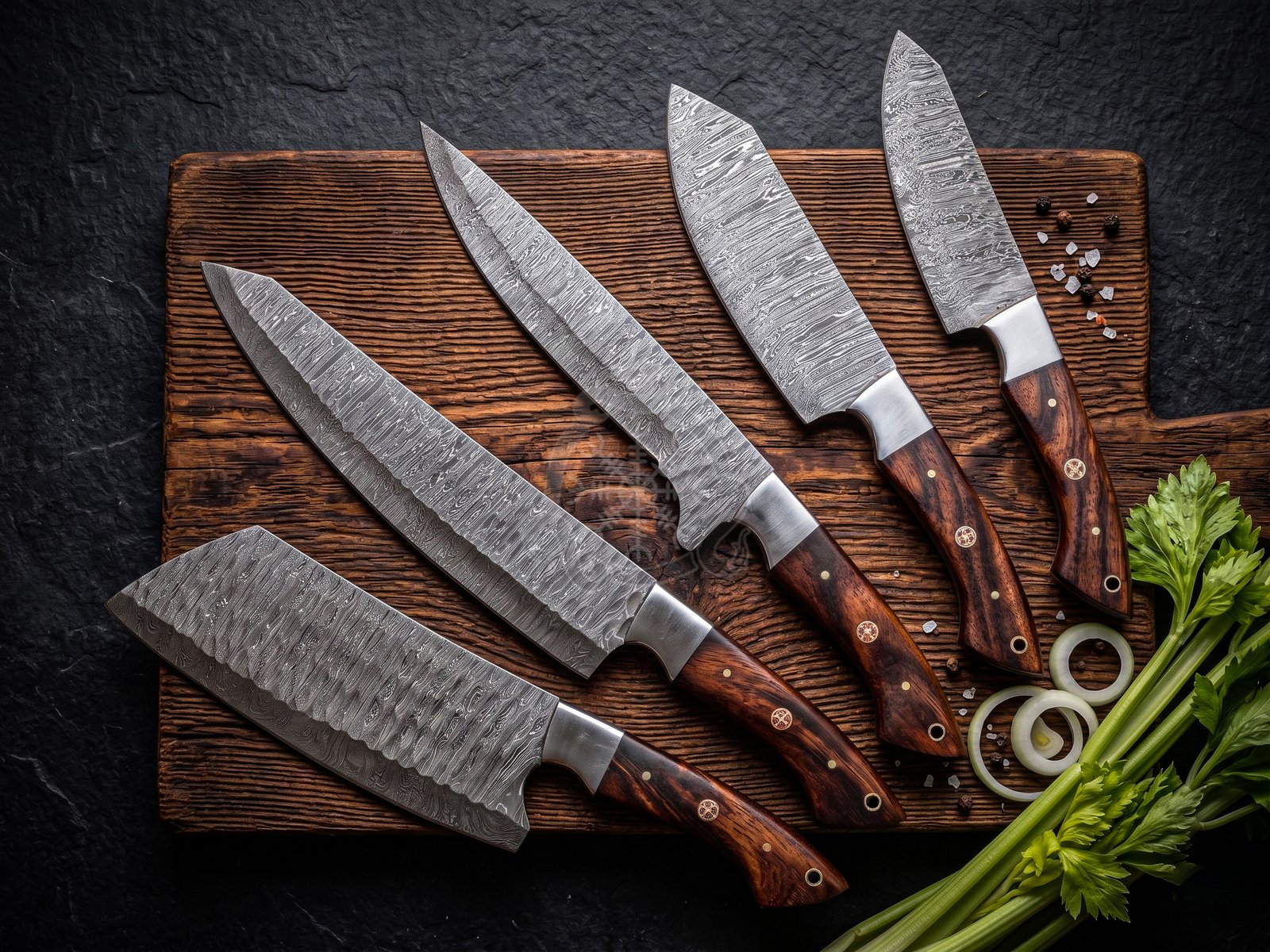
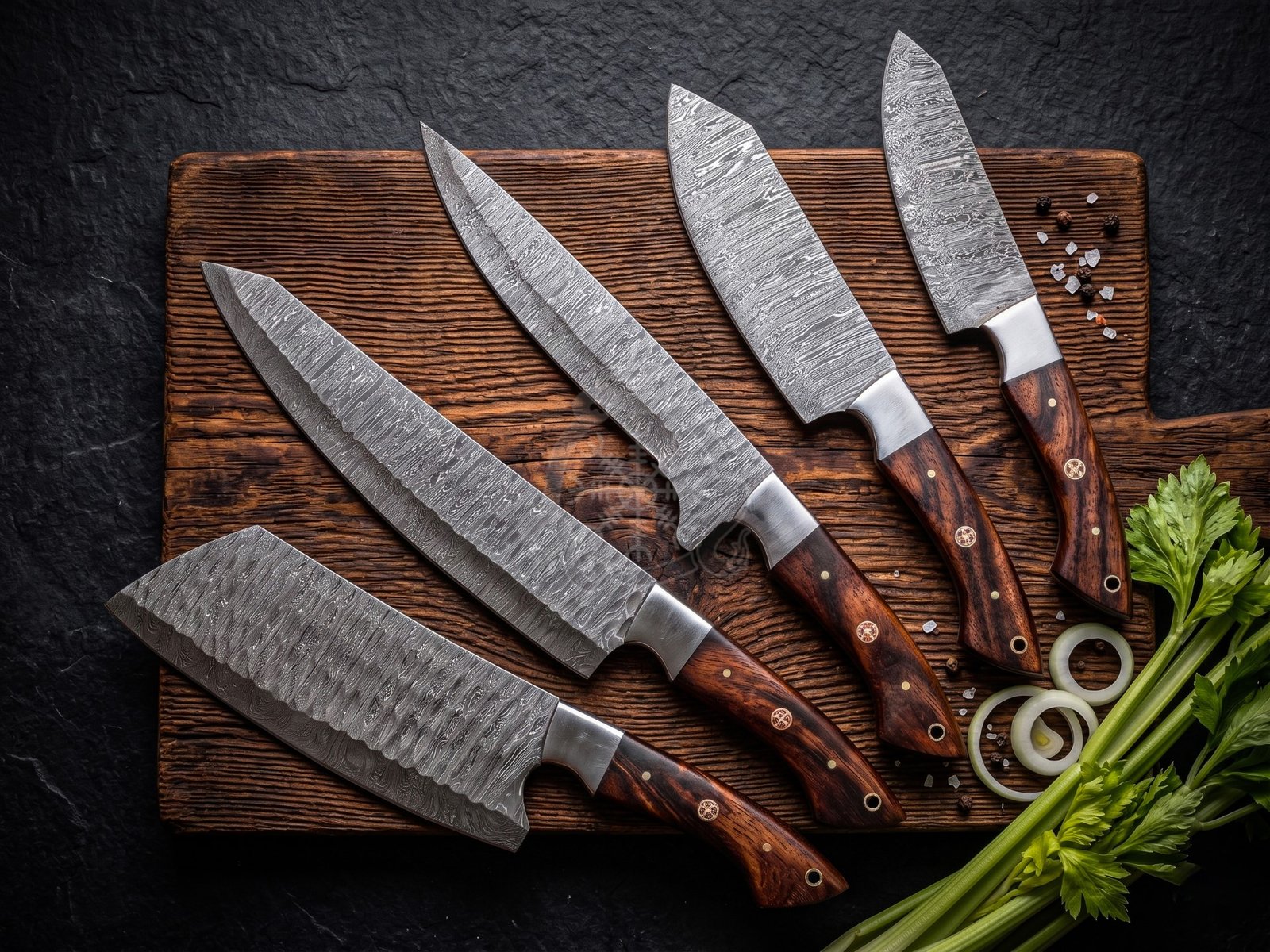
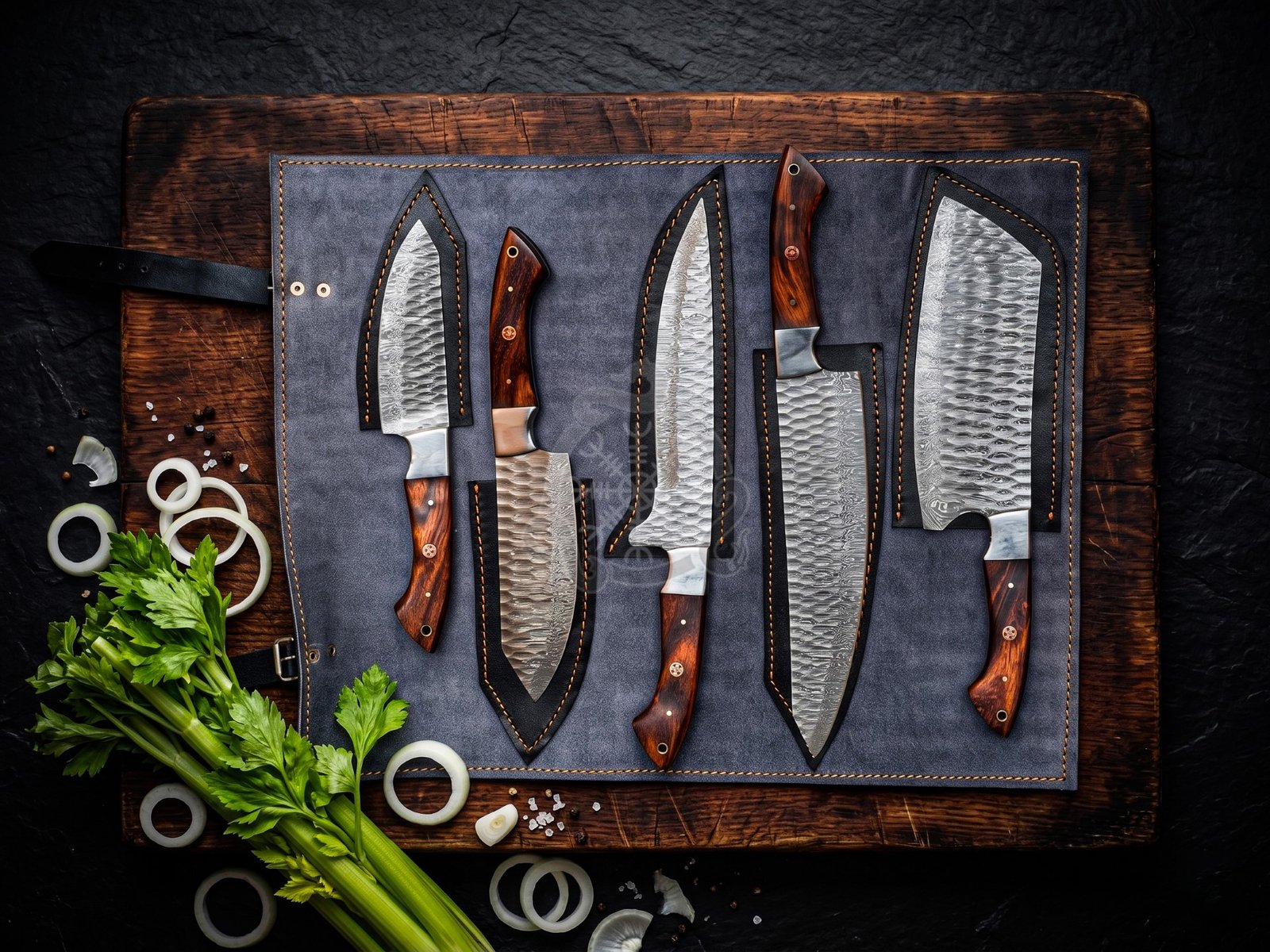
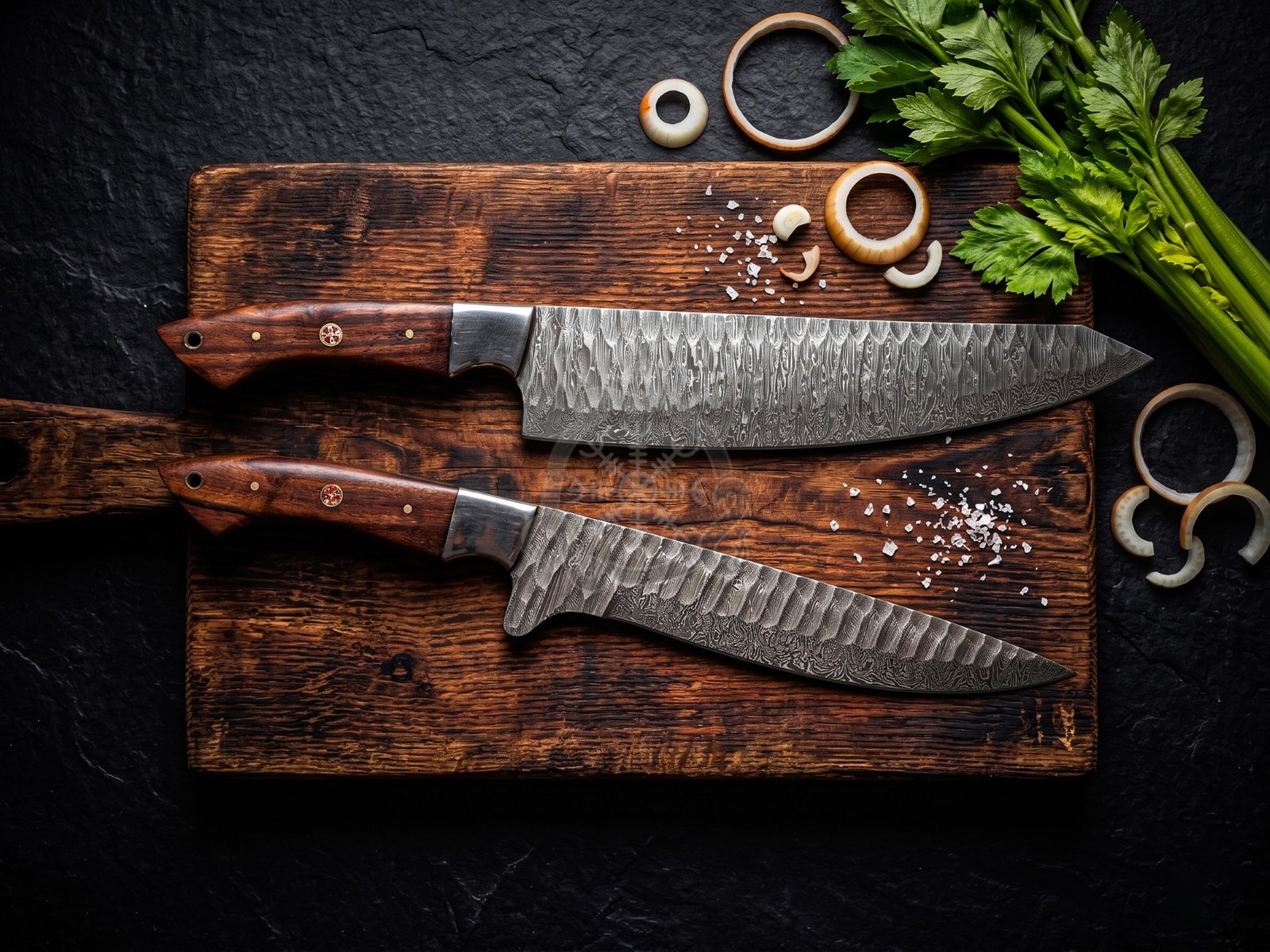
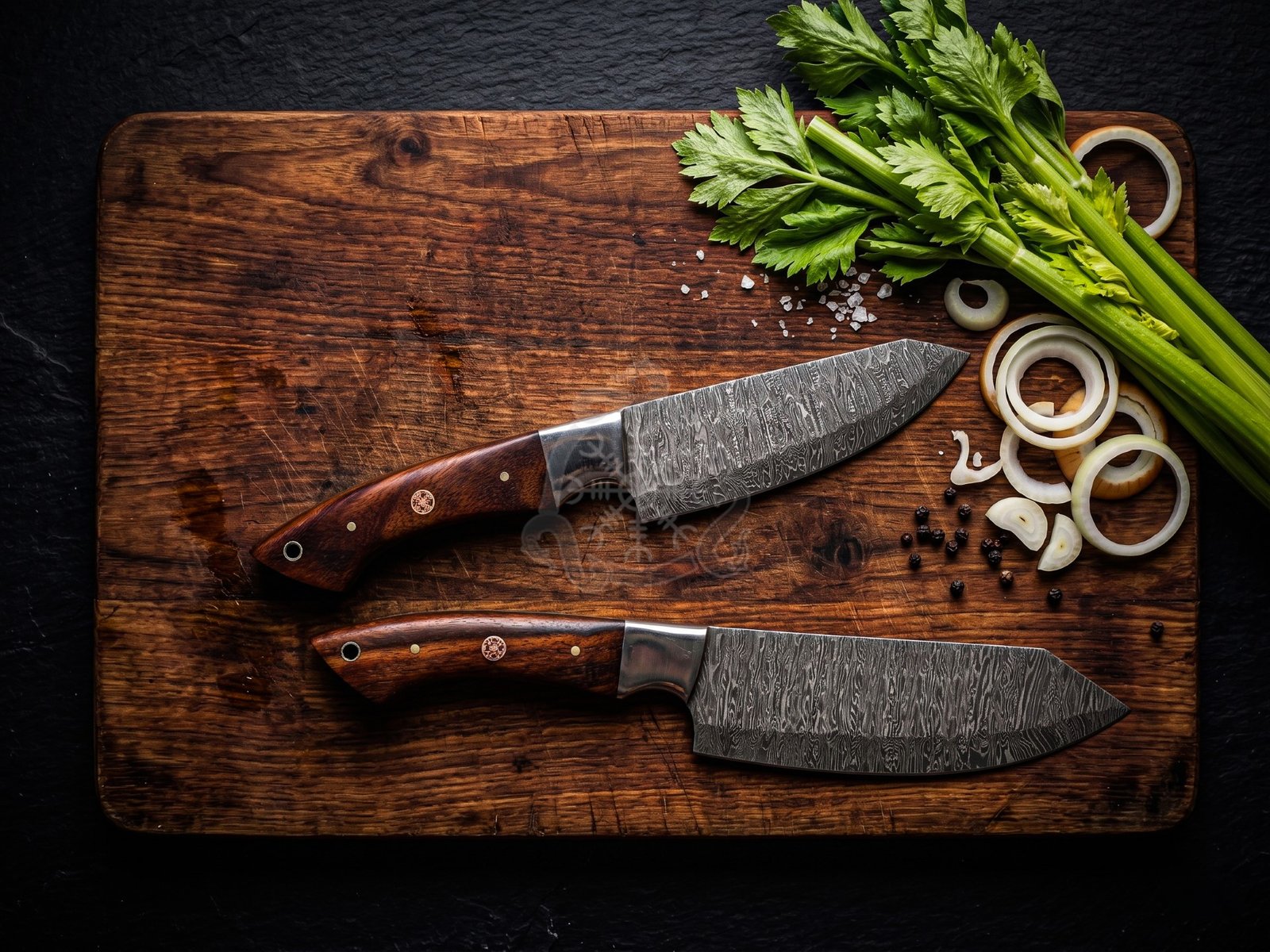
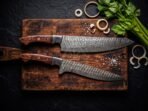
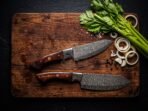
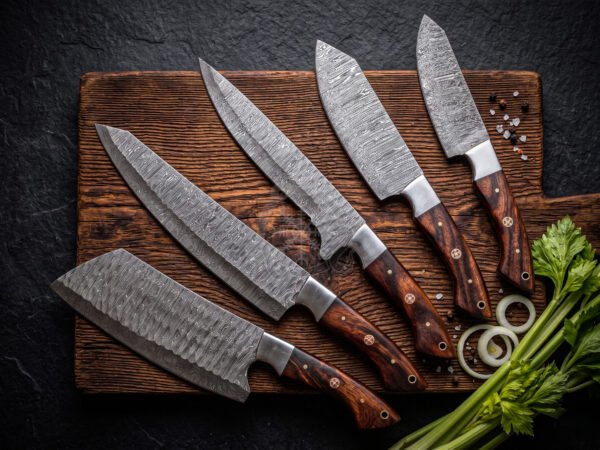
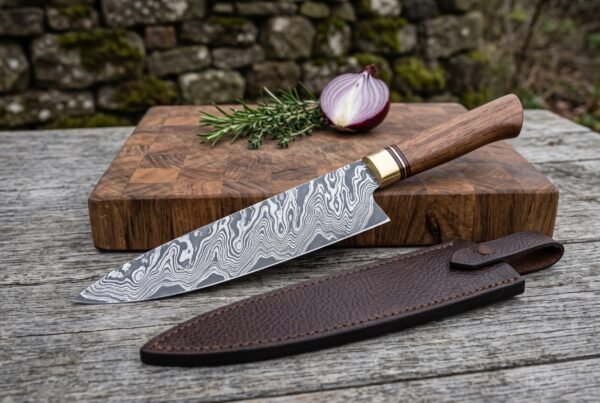
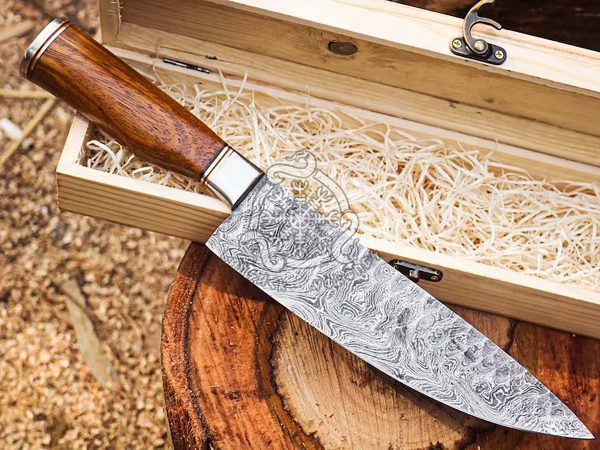
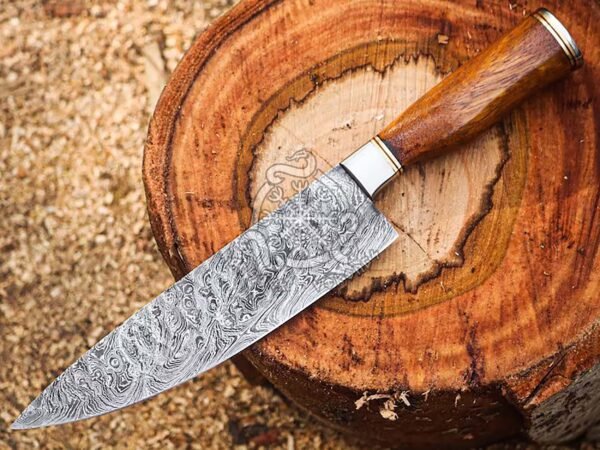
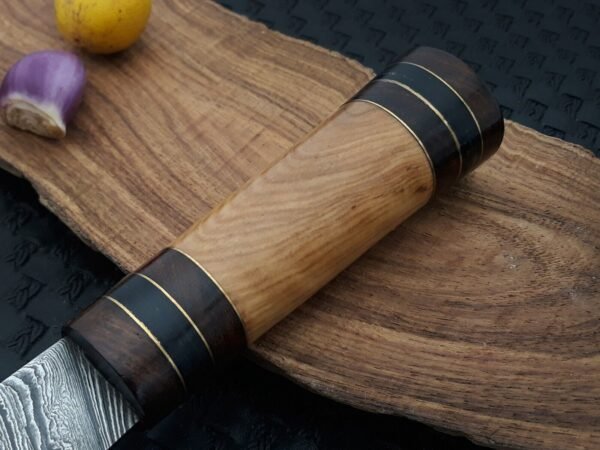
The Rosechef is built to balance in the hand rather than in a photograph. Damascus runs through the blade, forge welded from 1095 and 15N20 at 58 to 60 HRC, 7 inches long on a knife that runs 12 inches overall. The 5 inch handle is rosewood with a Damascus steel bolster and a mosaic pin, and the bolster is where a good part of that balance comes from.
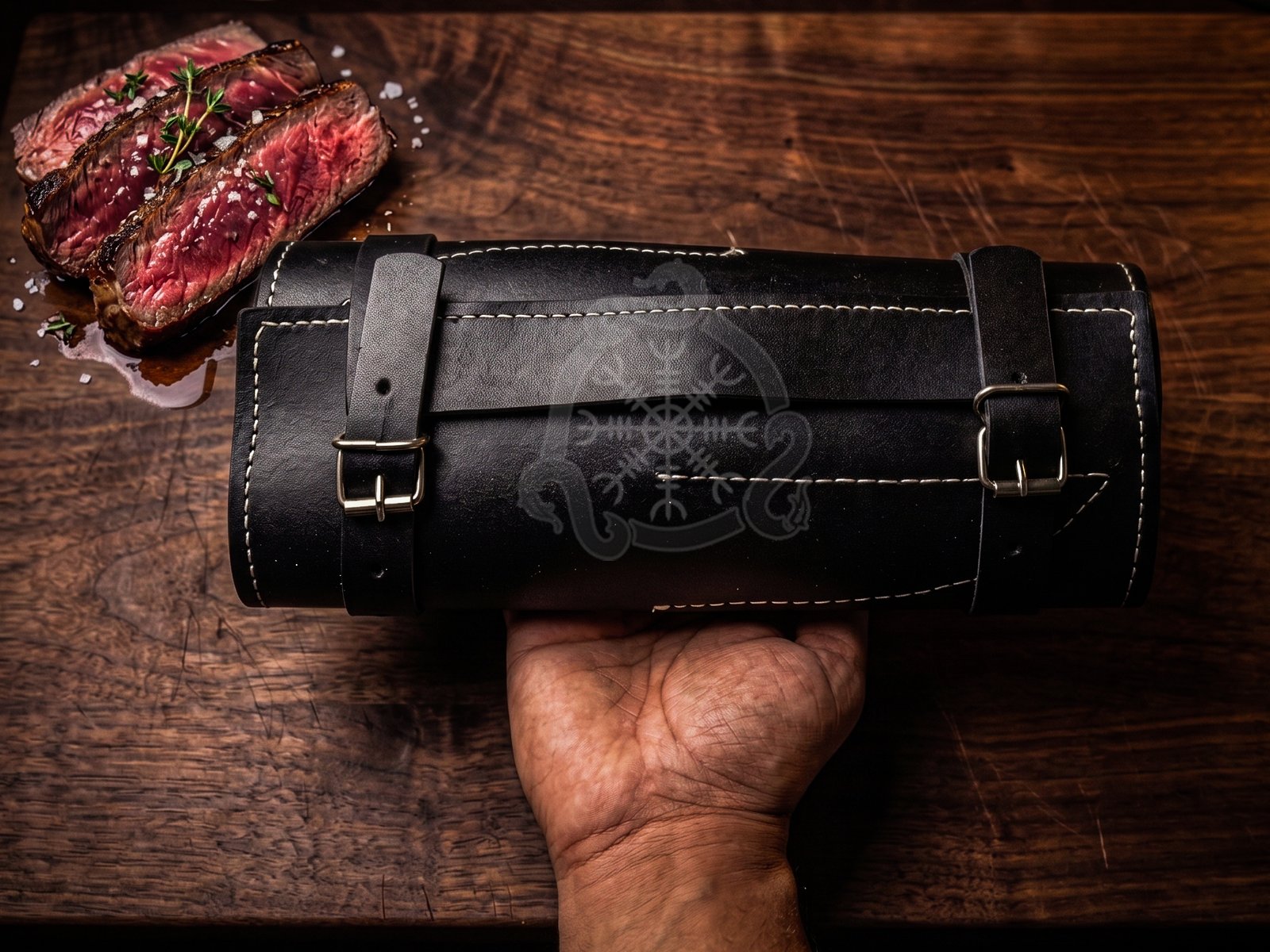
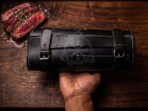
It is made in a Czech Republic workshop and ships with a leather sheath and protective packaging.
Specifications
| Steel | Hand forged Damascus, 1095 and 15N20 |
|---|
| Hardness | 58 to 60 HRC |
|---|
| Overall length | 12 inches |
|---|
| Blade length | 7 inches |
|---|
| Handle length | 5 inches |
|---|
| Handle | Rosewood with Damascus steel bolster and mosaic pin |
|---|
| Sheath | Leather |
|---|
| SKU | RK-10473 |
|---|
Balance, the bolster and the two schools of chef knife
There are broadly two traditions in Western kitchen knives. The German profile has a pronounced curve through the belly and is built for rocking: the tip stays on the board and the handle rises and falls, which is fast for herbs and garlic. The French profile is flatter with a straighter edge and is built for push cutting, driving the whole edge forward and down through the food. Most modern chef knives, this one included, sit between the two, with enough curve to rock and enough flat to push cut cleanly through to the board.
The bolster is what ties that together. It is the thickened collar of metal between the blade and the handle, and besides protecting your fingers from sliding onto the edge it adds mass exactly where you want it, which is at the pinch point. That is why a knife with a bolster feels settled while a bolsterless one of the same weight feels lively. The bolster here is forged Damascus rather than cast or stamped steel, so it carries the same banding as the blade and takes the same etch. Ground back too far a bolster becomes a nuisance when you sharpen, because it stops the heel of the blade reaching the stone, so it is left proud of the edge rather than running into it. More on kitchen geometry in the Damascus kitchen knife guide.
Why Damascus and not stainless
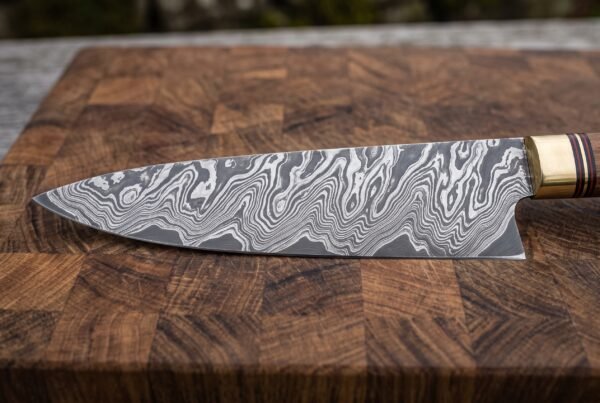
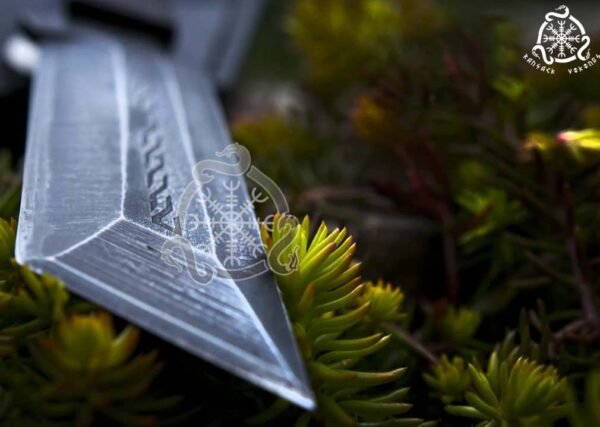
The billet is built from alternating layers of 1095 and 15N20, forge welded, folded and drawn down before the blade is cut from it. Because the layers run lengthways through the bar, the grind cuts across them at a shallow angle and the pattern follows the bevel and rises toward the edge rather than lying flat across the face. That is one of the quickest ways to tell forged Damascus from a printed imitation, and it is discussed further in is Damascus steel good.
For a kitchen the practical difference is the edge. At 58 to 60 HRC this steel takes a finer edge than most stainless kitchen knives and holds it through far more work, and when it does fade it comes back on a stone quickly rather than fighting you. The honest cost is that it is high carbon underneath the pattern, so it reacts to acidic food and to water left standing on it. Hand wash it and dry it straight away, every time, and it will be fine for a lifetime. Leave it wet in a sink and it will spot within a day. The trade off is set out plainly in Damascus versus stainless.
The rosewood handle and the mosaic pin
Rosewood was chosen for grip and weight. It is dense, so it keeps the balance where a pinch grip wants it, and the natural oil content in the timber means it warms to the hand quickly and stays secure with damp fingers instead of going slick the way a lacquered handle does. It takes an oil finish that deepens with age rather than peeling, so a handle three years old looks better than a new one.
The mosaic pin is the small piece of craft in the middle of it. A mosaic pin is made by bundling fine rods and tubes into a pattern, setting them in a matrix and drawing the whole thing down into a length, which is then sliced across so the pattern appears on the cut face. Because it is cut from a length, the exact face on your knife is whatever the slice revealed. Keep the wood fed with a light coat of food safe oil once or twice a year and it will outlast the person who buys it. The method is in wooden handle care.
Engraving, runes and your own design
Use the rune converter on this page to turn a name, a date or a short phrase into Elder Futhark and we will cut it into the steel or the handle. If you would rather have a Viking pattern than a rune line, choose your own design in the engraving option above the add to cart button and tell us whether it goes on the blade or the handle. Where a piece already carries an engraved design, your chosen engraving replaces it rather than sitting alongside it. On a kitchen knife the line goes high on the flat near the spine, so that a lifetime of sharpening never reaches it, and rosewood takes a crisp cut if you would rather have it on the grip. This is a common choice for weddings and housewarmings, and it is all cut here rather than sent out. See the engraving page.
Care and sharpening
Two rules cover almost everything. Dry it, and oil it. Hand wash in warm water, dry immediately, and put a thin film of mineral or camellia oil on the blade before it goes into a drawer for any length of time. Keep it off bone, off frozen food, out of the dishwasher, and off glass, stone or ceramic boards, which will wreck a fine edge in one meal. Wood or soft plastic only. The full method is in steel care.
Sharpening is quick if you do it often and slow if you do not. A few passes on a fine stone every couple of weeks keeps the edge where it started and removes almost no metal, whereas letting it go properly blunt means grinding a new bevel. Raise a burr along one side on a medium stone, match it exactly on the other, finish on a fine stone and strop if you have one. Work a 7 inch blade in two overlapping halves rather than in one pass. Method in sharpening with a whetstone.
Made in the Czech Republic
This is a handmade piece from the Czech Republic, made in a workshop that still forges, grinds and finishes by hand instead of stamping parts out. The smiths there have kept the older way of working, and the wood, horn and leather are shaped and fitted by hand as well. Two pieces of the same design will never be identical, and that is part of what you are buying.
Ransack Viking is a United States company. We handle the import ourselves, look over every piece when it lands and ship from our warehouse in Chicago, Illinois. Engraving is done in the United States after the piece arrives, so your design goes on before we send it out.
A note on handmade variation
This chef knife is hand forged, not machine made and not bulk produced, so the piece that arrives will not be a pixel for pixel copy of the photograph. The Damascus is drawn out under a hammer, and the blade and the bolster are cut from different parts of the billet, so their patterns relate to one another differently on every knife. The rosewood is cut from a different board each time, changing the grain and the depth of colour. The mosaic pin shows whatever face the slice exposed. The dimensions, the steel, the hardness and the build are identical every time. The character is not.
Frequently asked questions
Where should a chef knife balance?
At or just ahead of the bolster, which is where your thumb and forefinger sit in a pinch grip. Balanced there the knife stays still in the hand rather than having to be steered.
What is a mosaic pin?
A bundle of fine rods and tubes arranged into a pattern, set in a matrix and drawn down into a length, then sliced across. The pattern on the face of your pin is whatever that slice revealed, so it is different on every knife.
Is the bolster real Damascus or plated?
It is forged Damascus, made the same way as the blade, so it carries genuine banding through the metal and takes the same etch. It is not a coating or a plated finish.
How often should I sharpen it?
A few light passes on a fine stone every couple of weeks is better than a full sharpening twice a year. Little and often keeps the edge where it started and takes off almost no steel.
What kind of board should I use?
End grain wood is best, edge grain wood or soft plastic is fine. Never glass, stone, ceramic or steel, all of which will dull or chip a hard edge in a single meal.
Is it full tang?
Yes. The tang runs through the handle with the rosewood scales fixed to it and the Damascus bolster at the front, which is what gives the knife its balance at the pinch point.
What is in the box
- One Rosechef Damascus chef knife with Damascus bolster
- Leather sheath
- Protective packaging for storage or gifting
- Forged and finished in the Czech Republic
Explore the range
Browse the rest of the range in Chef Knives, Viking Knives, Dagger Knives and Hunting Knives. The reasoning behind the materials is in the guides.
Also in this part of the catalogue
If this one is not quite right, there is the Fireleaf chef knife, pattern welded Damascus. Also in this group is the Wengechef chef knife, pattern welded Damascus. Sitting beside it in the catalogue is the Kitchenskald chef knife, pattern welded Damascus.
From the same corner of the shop, there is the Olivecamp hunting knife. Or start from a blank sheet on the custom Damascus knife page.




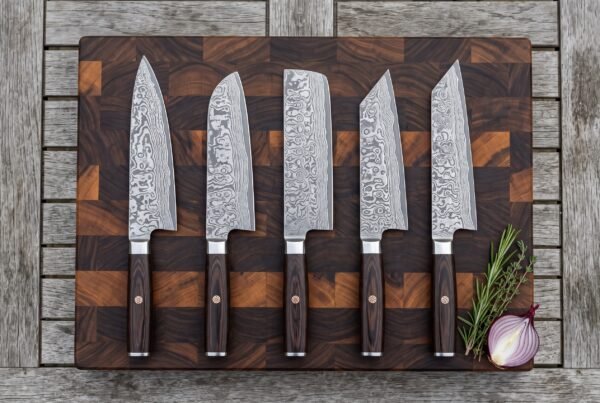
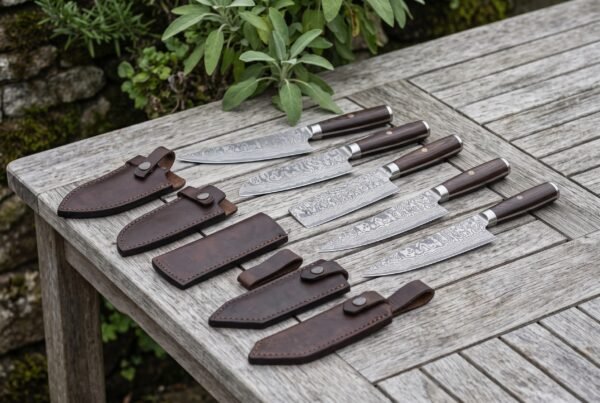
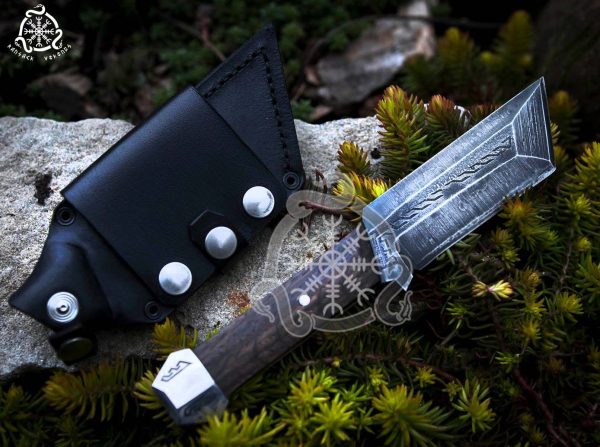
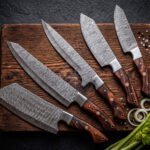
This knife is a genuine work of art. Beyond happy with how this turned out.
No regrets on this purchase at all. Love that this is Czech craftsmanship and shipping from the US meant it showed up in just a few days. The rosewood handle feels amazing and the balance is perfect. Even the small engravings are crisp and clean. So worth it.
Got this as a birthday gift and the reaction was priceless. Even the small engravings are crisp and clean. Highly recommend this one. Ransack Viking is quickly becoming my go to shop for anything Norse themed.
It’s a decent knife. Nothing extraordinary though.
Really happy with this knife overall. Blade quality is solid. Arrived a bit less sharp than expected but a few passes on a strop fixed it. Ransack Viking usually delivers solid quality and this was no exception. Would still tell others to give this a try.