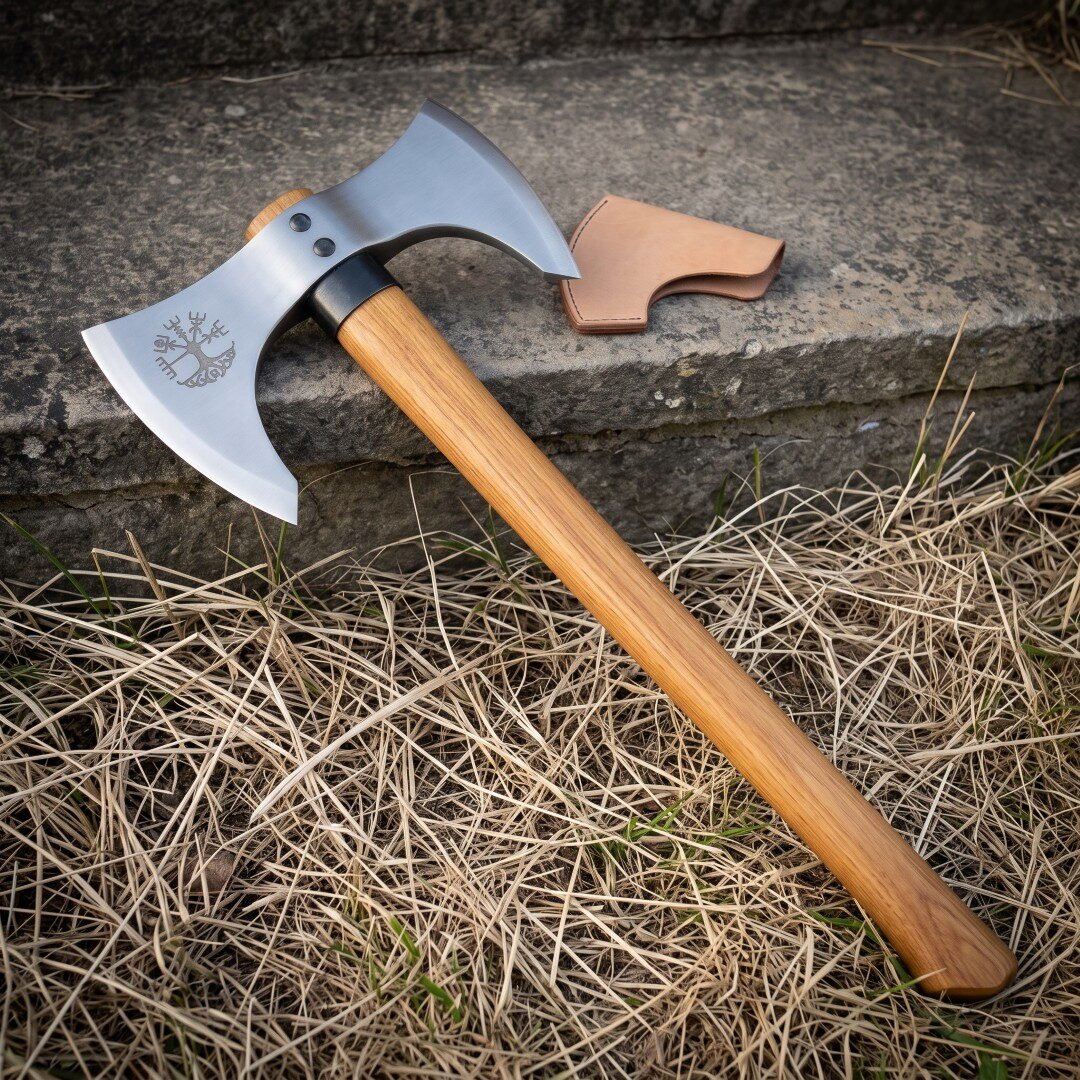
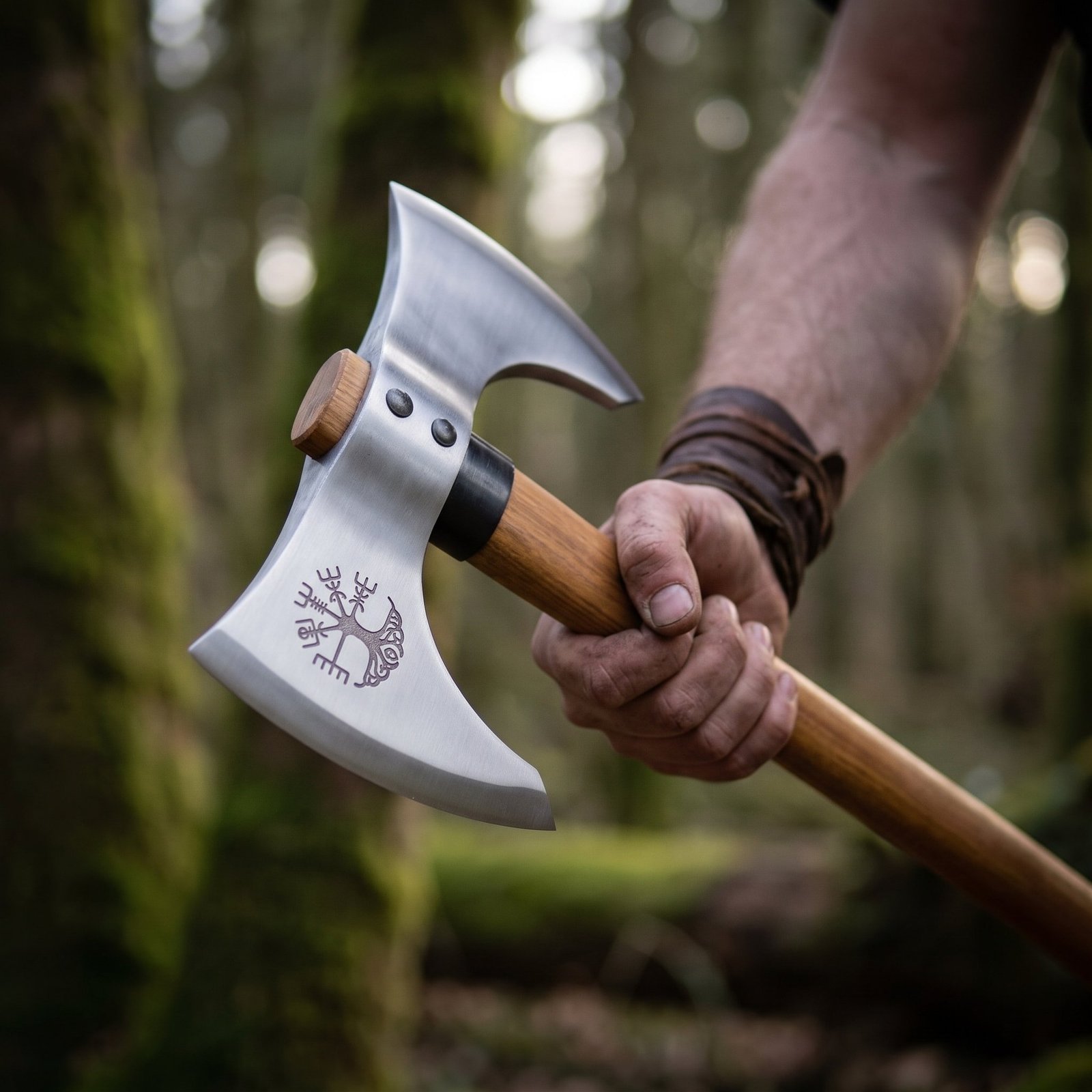
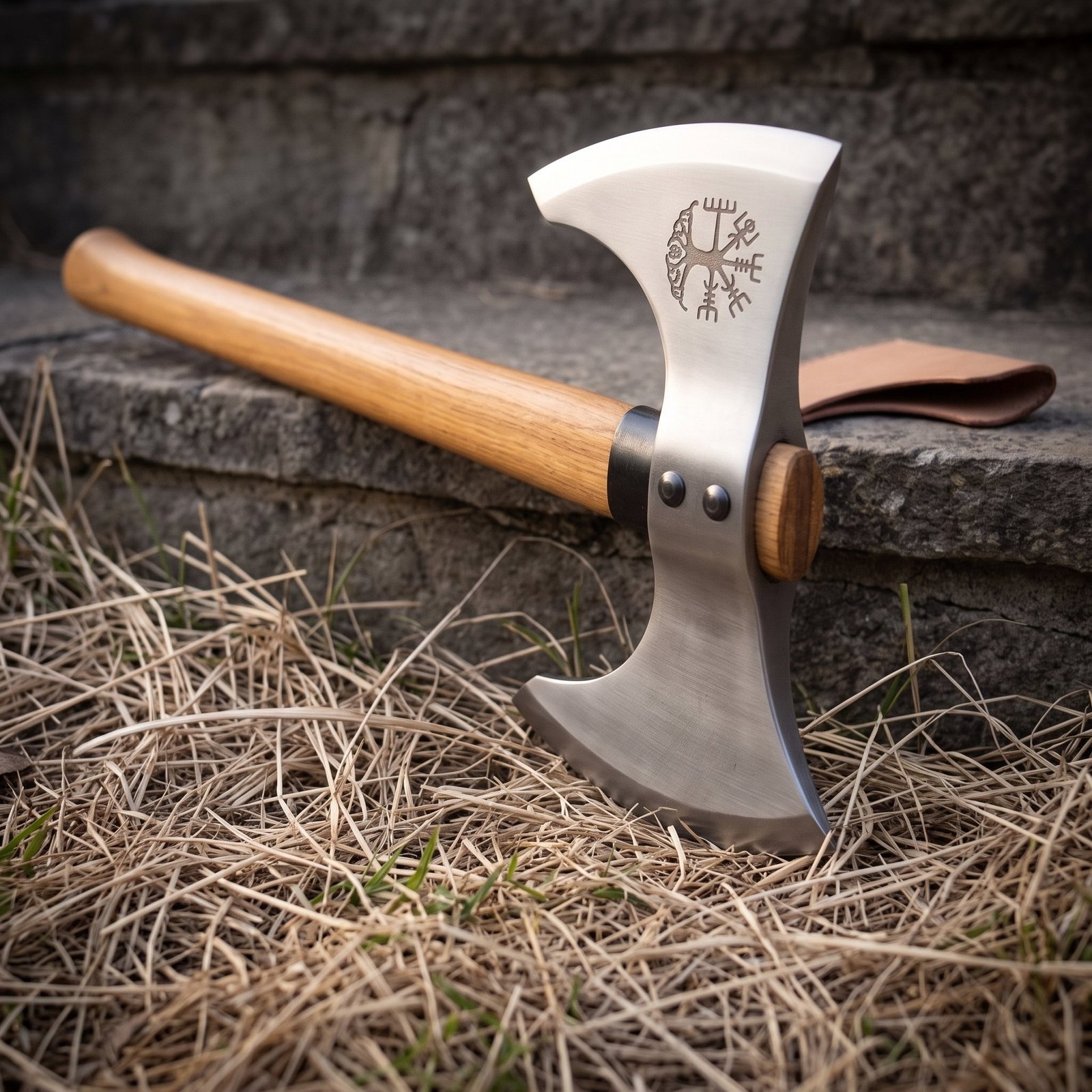
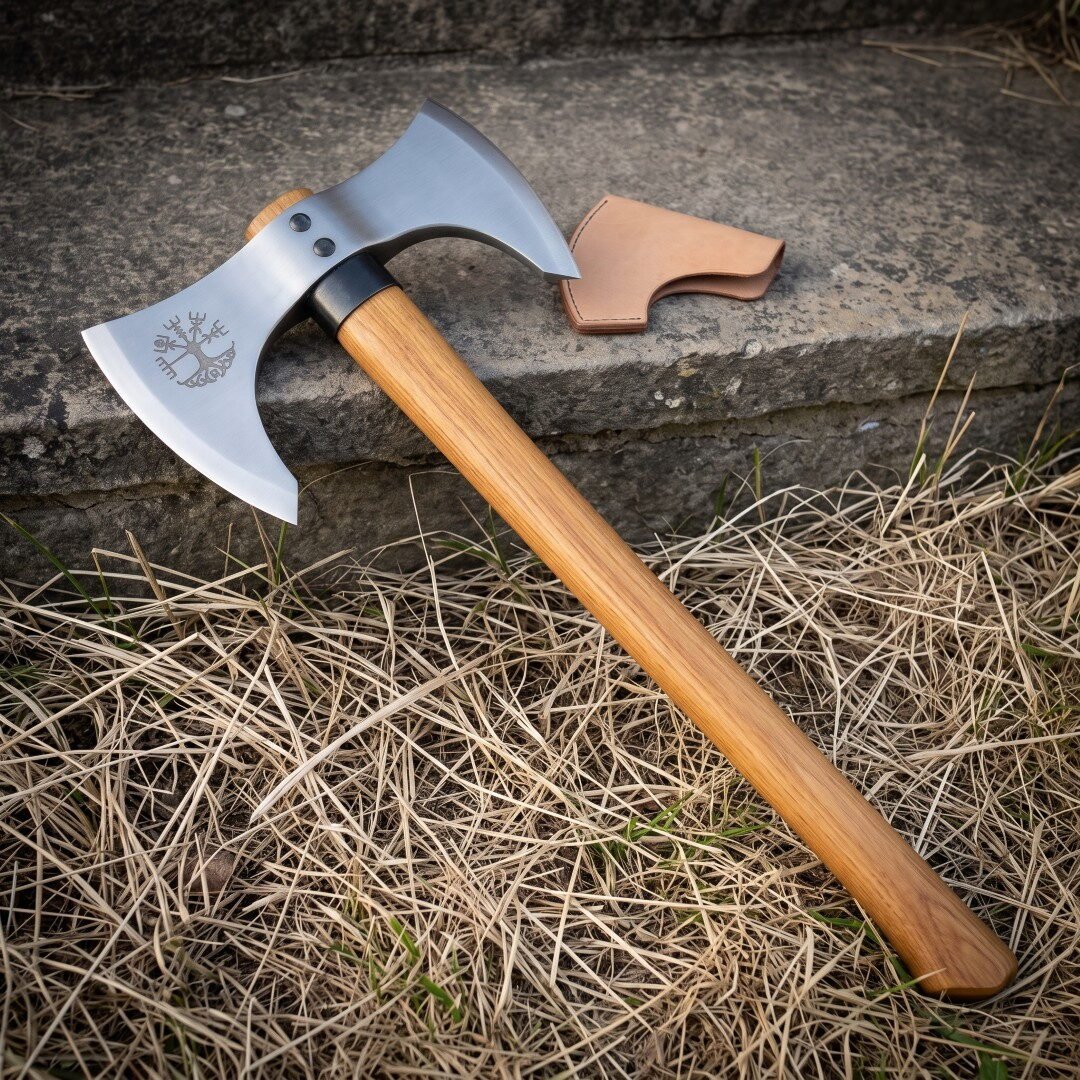
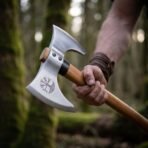
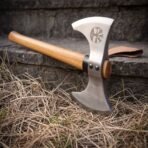
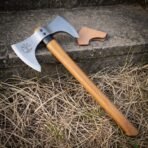
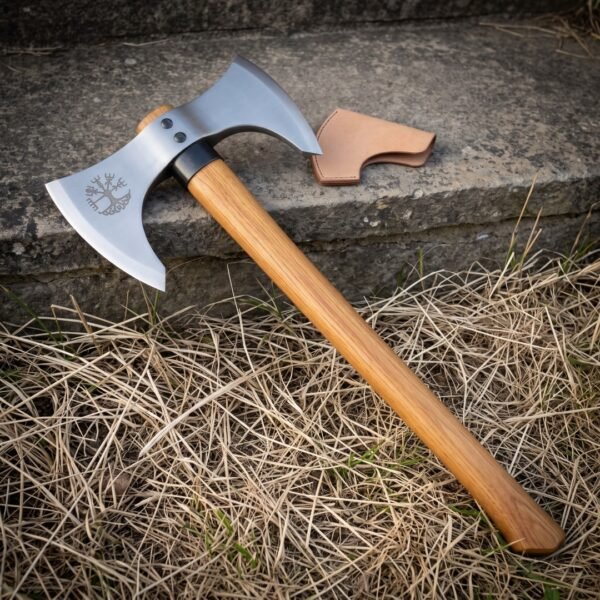
The Twinvane is a double headed Viking axe with two very different working ends. The forward bit is a broad bearded blade whose lower beard drops well below the eye, and behind the haft sits a second, upswept bit that rises to a sharp point. Both are ground from one billet of high carbon steel and taken to a bright satin polish. The head sits on a straight oak haft, held by two rivets through the eye with a blackened steel collar below it.
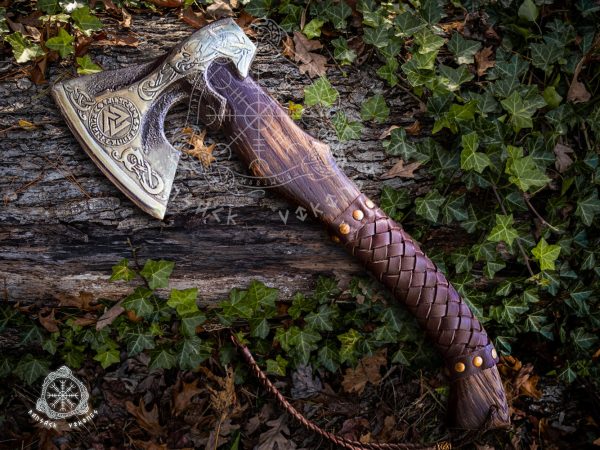
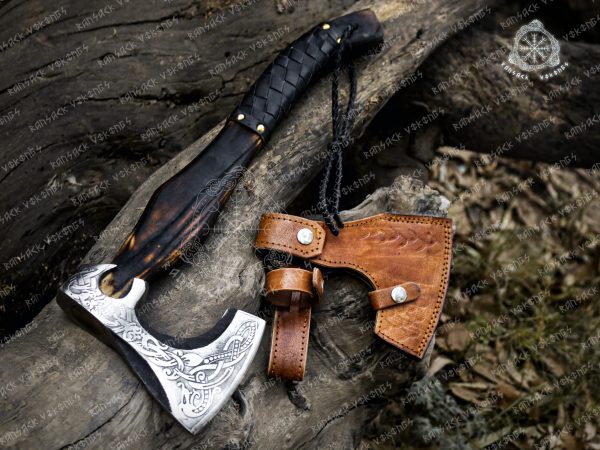
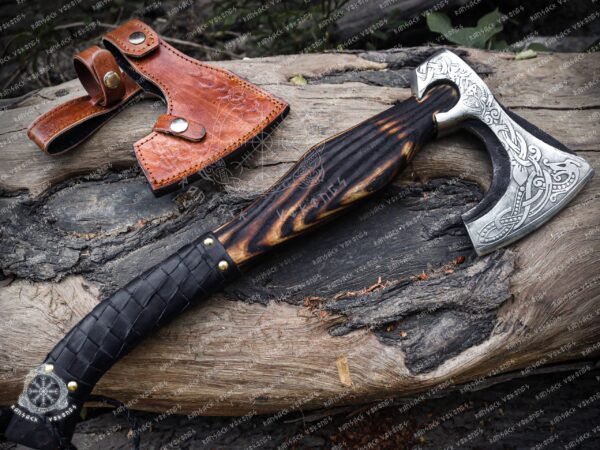
Two headed axes are much rarer in the Norse archaeological record than single bit types, and the pairing here owes more to the later medieval hooked axes than to any single grave find. What is genuinely Norse is the mark on the cheek. The mark is cut into the forward bit as a Vegvisir stave with a Yggdrasil tree at its centre: the stave arms radiate from the trunk, each ending in a different terminal rather than the matching trident tips of the Helm of Awe, and the roots of the tree fan out beneath. This axe is hand made in the Czech Republic. Ransack Viking imports it, checks the head seating, the grind and the finish when it lands, and ships it from the Chicago warehouse. It arrives with the fitted leather blade cover shown in the photographs.
Double headed axes are a later idea than most people think, and the history of the Viking axe covers what the graves actually held. The vegvisir is Icelandic and centuries later than the Viking age, which where the vegvisir comes from sets out plainly. Lighter heads meant for a target sit in the throwing axes.
Specifications
| Material | 1095 high carbon steel head, 54 to 58 HRC |
|---|
| Overall length | Approximately 19 inches |
|---|
| Head | Double headed, broad bearded forward bit and an upswept rear bit rising to a point |
|---|
| Fixing | Two rivets through the eye, blackened steel collar below the head |
|---|
| Haft | Straight oak, oval section, natural oiled finish, top end standing just proud of the head |
|---|
| Etching | Vegvisir stave with a Yggdrasil tree and roots, on the forward cheek |
|---|
| Finish | Satin polished steel |
|---|
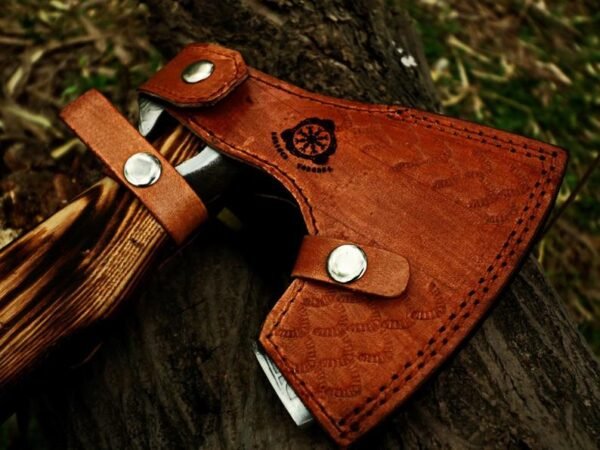
| Included | Fitted tan vegetable tanned leather blade cover for the forward bit |
|---|
| SKU | RK-2145 |
|---|
What the Vegvisir actually is
The Vegvisir is the eight spoked runic compass, and it is worth being straight about where it comes from. It is written down in the Huld manuscript compiled in Iceland in 1860, alongside a note that a person who carries it will not lose their way in bad weather even on unfamiliar ground. It is a stave from the Icelandic grimoire tradition, several centuries after the Viking age closed, rather than something dug out of a ship burial. That does not make it less Norse. It makes it a piece of living Icelandic folk practice that grew out of the same soil.
The quickest way to tell it from the Helm of Awe is to count and compare the arms. The Helm of Awe has eight identical arms, each finishing in the same trident tip with the same pair of cross bars. The Vegvisir has eight arms that are all different, one ending in a fork, one in a hooked hand, one in a small cross bar, and so on down the circle. On the Twinvane you can see that variation clearly, and the maker has set a Yggdrasil tree at the centre of the stave, trunk and branches rising through the arms and roots fanning out beneath. If you would rather have the matching arms of the Helm of Awe, that is one of the designs you can request through the engraving option.
The steel and the heat treat
The head is 1095 high carbon steel taken to 54 to 58 HRC. That is deliberately softer than a kitchen knife would be run. An axe head takes shock loading that no knife ever sees, and a head run hard enough to hold a razor edge for a long time is a head that chips when the beak catches a knot. In the middle fifties the steel gives up a little edge retention and buys a great deal of toughness, so the edge rolls rather than cracks and you can bring it back with a file and a stone rather than sending it away. High carbon steel is not stainless. It will develop a grey patina in normal use and it will rust if it is put away wet.
The oak haft is a straight grained blank rather than a curved handle. Straight grain running the length of the haft is what keeps it from splitting under a hard swing, and oak is chosen for stiffness and shock resistance rather than for looks. The two rivets through the eye and the blackened steel collar carry the head and stop it creeping down the haft in dry weather.
Engraving, runes and your own design
Use the rune converter on this page to turn a name, a date or a short phrase into Elder Futhark and we will cut it into the steel, the leather or the wood. If you would rather have a Viking pattern than a rune line, choose your own design in the engraving option above the add to cart button and tell us where it goes. Where a piece already carries an engraved design, your chosen engraving replaces it rather than sitting alongside it. On this axe the usual choices are the cheek that currently carries the Vegvisir, the rear beak, or a line cut down the haft. Engraving is done here in the United States after the piece arrives, so see the engraving page for what fits in each position.
Handling and balance
A double headed axe handles differently from a single bit of the same head weight. The beak behind the eye acts as a counterweight, so the balance point sits closer to your hand and the head feels less like it wants to run away at the end of a swing. That makes the Twinvane easier to control one handed than the head weight would suggest. For a full swing take the haft near the butt. For close work, splitting kindling or shaping wood, choke up so your hand is just under the collar and let the beard do the cutting. The lower beard is the part of the edge that reaches furthest, so it is what you use for a draw cut.
The rear bit is ground and it has a point, so treat it with the same respect as the forward edge and keep the cover on it when the axe is being passed to somebody or carried in a bag. This is a functional hand forged axe, not a sparring piece, and it is not intended for full contact use against another person.
Care
Wipe the head dry after handling and put a thin film of oil on it before it goes back in the cover. Any light mineral oil or a purpose made blade oil works. Leather holds moisture, so do not store a damp head inside the cover for weeks at a time. If a patina forms, leave it, because it slows further rust. If orange rust appears, take it off with fine steel wool and oil the bare metal straight away. The oak haft wants a wipe of boiled linseed oil once or twice a year, worked in and buffed off, which keeps it from drying and shrinking away from the collar. The leather cover takes a little neatsfoot oil or leather balm every few months. Full detail on blades and edges is in our steel care guide.
Keep the head dry and the edge oiled, and the axe care guide covers sharpening and haft upkeep.
Made in the Czech Republic
This axe is made by hand in the Czech Republic, then imported by Ransack Viking. Nothing here is drop shipped from an importer catalogue. Each piece is unpacked in Chicago, checked for head seating, edge condition and haft fit, then repacked and shipped free within the United States. Processing runs one to two weeks because the stock is checked rather than picked blind. Returns are open for seven days, and every piece carries a lifetime warranty against defects in forging, grind, heat treat and fittings, with no end date and no receipt needed.
A note on handmade variation
This axe is hand made, not machine made or bulk produced, so what arrives will not be a pixel for pixel copy of the photograph. The oak grain will run its own way, the tone of the wood will be a shade lighter or darker, the hammer texture near the eye will sit differently, and the exact profile of the beard and the beak will vary by a small amount. The etched Vegvisir and tree are cut individually and the line weight can differ slightly. The dimensions, the material and the build are the same every time. The character is not.
Frequently asked questions
Is the axe sharp when it arrives
Yes. Both the forward beard and the rear beak come with a working edge that will cut. It is a field edge rather than a razor edge, which is what you want on an axe head, and a few passes with a file and a stone will take it further if you like.
Can I use this to split firewood
It will split kindling and small rounds. It is not a splitting maul, and the bearded profile is a cutting geometry rather than a wedge, so it will bind in big seasoned rounds. Treat it as a hand axe for camp work and carving.
Does the leather cover fit both ends
The cover shown is shaped for the forward bearded bit, which is the edge that sticks out furthest and is most likely to catch on something. The rear beak is left open.
Will the head loosen over time
The collar and rivets carry the head, so it is far more stable than a friction fit. If the haft dries out in a heated room the fit can go slightly loose, and oiling the wood twice a year prevents that.
Can I get runes cut into the haft
Yes. A rune line down the flat of the oak is one of the more popular requests and it takes a longer phrase than the steel cheek does.
How long does shipping take
Processing is one to two weeks while the piece is checked and any engraving is cut, then free shipping inside the United States. Engraved pieces sit at the longer end of that window.
What is in the box
- Twinvane double headed Viking axe with oak haft
- Fitted vegetable tanned leather blade cover
- Care card for high carbon steel and oiled wood
- Hand made in the Czech Republic, shipped from our Chicago, Illinois warehouse
Explore the range
See the rest of the double headed axes, the wider Viking axes, the bearded axes and everything under engraved and personalised, or read the guides.
If this one is not it
Closest to this in the range is the Twinfell double headed axe, forged from 1095. If this one is not quite right, there is the Stormcleave double headed axe, pattern welded Damascus. Also in this group is the Twincrescent double headed axe, forged from 1095.
If you are putting a set together, the Walnutskeg bearded axe sits alongside it. Pick the steel, the length and the fittings yourself on the custom Viking axe page.

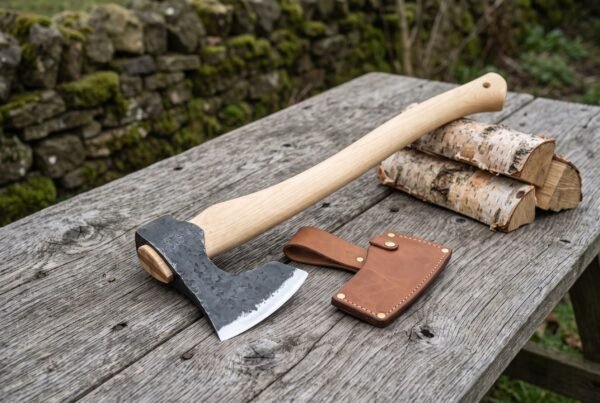
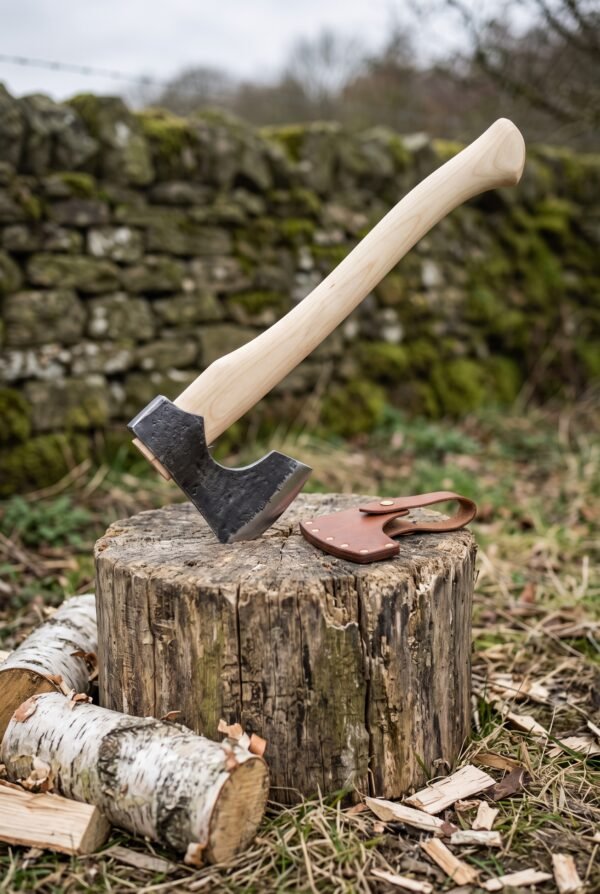

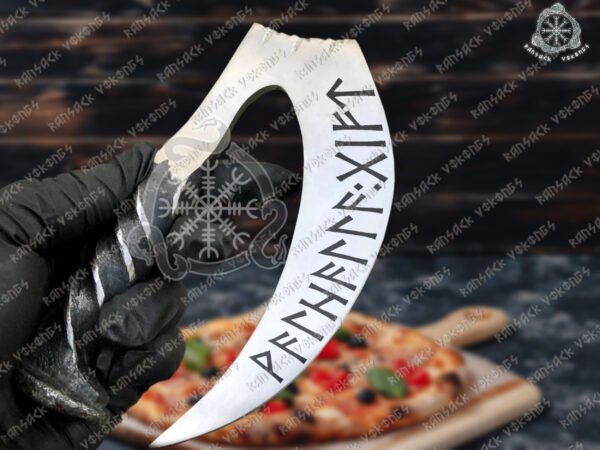
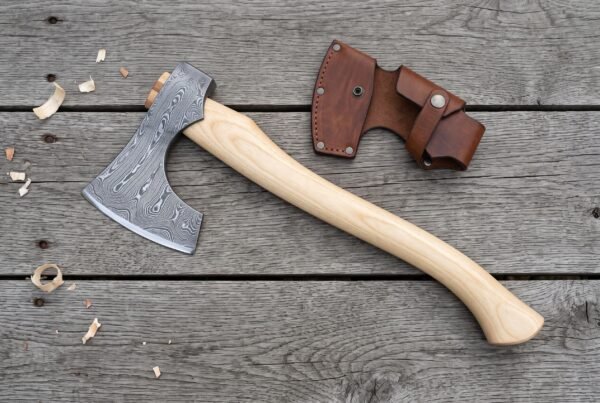
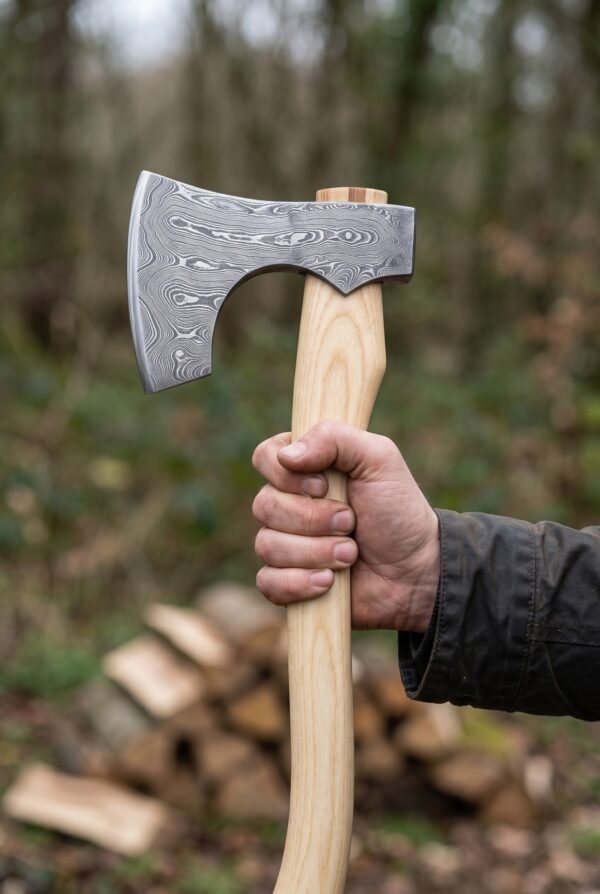
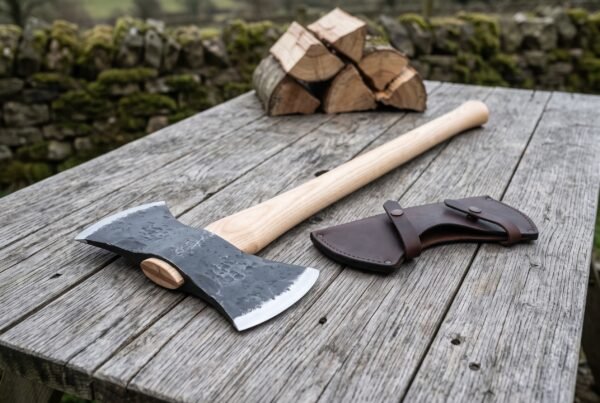
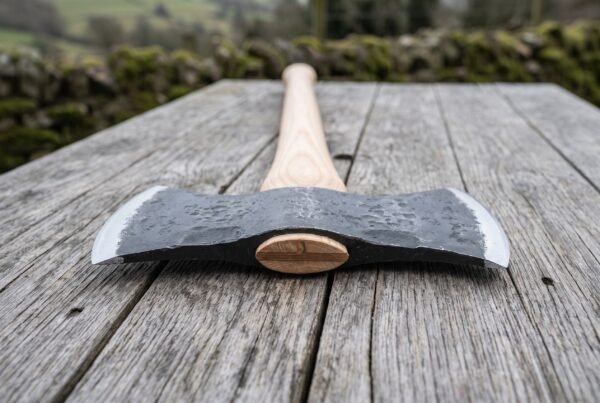

Bought this on a whim and it turned out to be one of my favorite purchases this year. Leather sheath is thick and well stitched. Not the cheap stuff you usually get. Edge retention has been great even after regular use. Fit and finish is museum quality. You can tell real craftsmen made this by hand. This will be a family heirloom for sure.