
Blog
The Norse Gods: Aesir, Vanir and Who Was Actually Worshipped

Norse myth has two families of gods. The Aesir are the group around Odin, Thor, Tyr, Frigg, Baldr and Heimdall. The Vanir are a smaller set tied to fertility, wealth and the sea: Njord, Freyr and Freyja. They fought a war, swapped hostages, and afterwards lived together. Worship evidence points hardest at Thor, then Freyr and Odin, which is not the order the films use.
That last point is the one most guides skip. The gods who dominate the stories are not the same as the gods people actually made offerings to, and the gap between the two is wide.
Two families and one war
Voluspa opens the conflict with a figure called Gullveig, pierced with spears and burned three times in Odin’s hall, and three times reborn. Then spears fly over the host and the wall of the Aesir stronghold is broken. Snorri Sturluson, writing around 1220, gives the settlement in his Prose Edda and again in Ynglinga saga: the two sides exchange hostages. Njord and his son Freyr go to the Aesir, along with Freyja in the Ynglinga version. Hoenir and the wise Mimir go the other way, and when the Vanir decide Hoenir is useless without Mimir prompting him they cut off Mimir’s head and send it back.
How much of this is old and how much is Snorri’s arrangement is disputed. Some specialists have argued that the Vanir as a distinct, self-aware family of gods is largely a construction of the thirteenth century, built out of a handful of poetic references, and that the older material simply had gods with different areas of concern. Other scholars defend the division as genuinely old. You will find both positions in print from people who have spent their careers on the material.
The Aesir
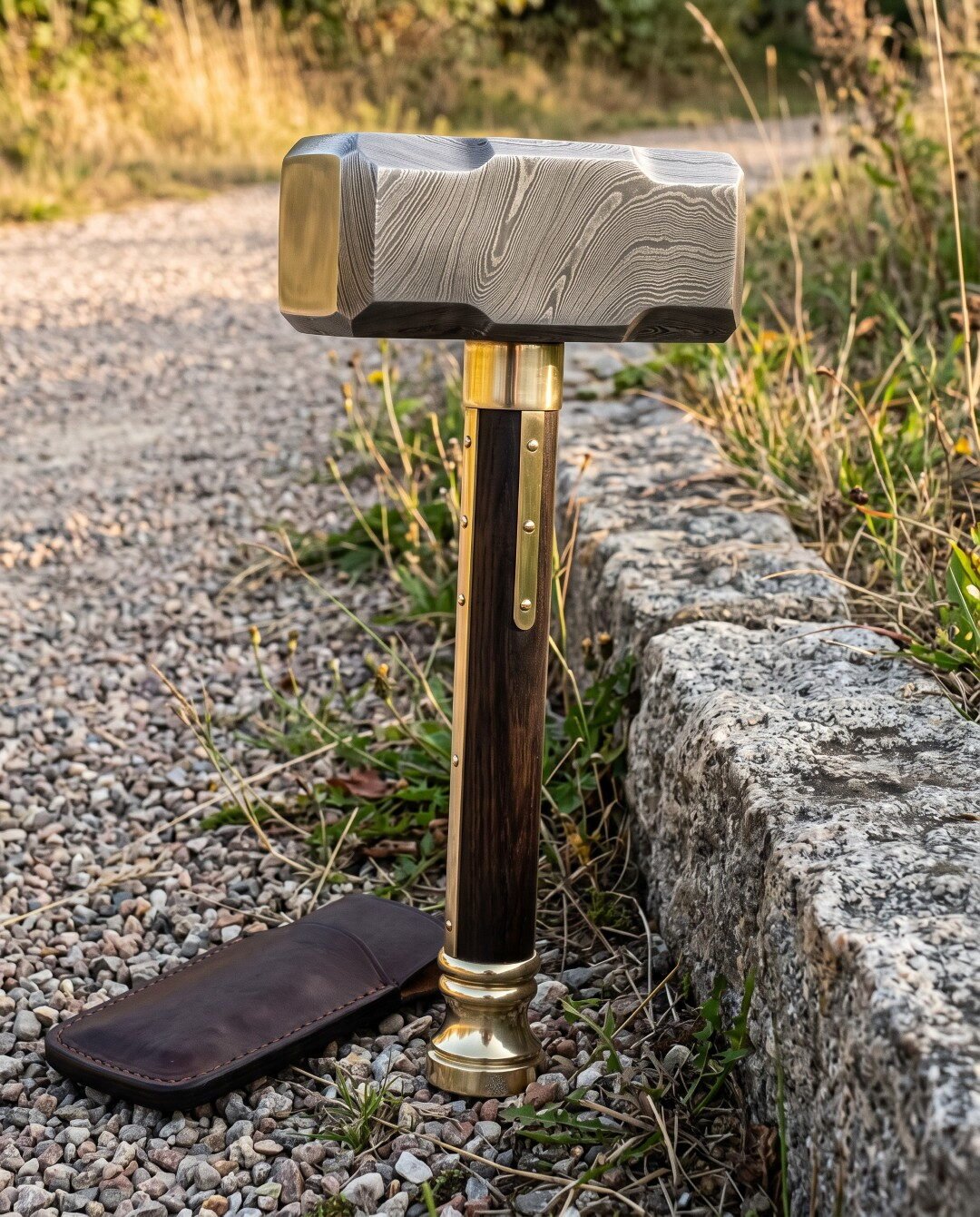
 Thunderclad Hand Forged Damascus Viking War Hammer | Flat Faced Damascus Head | Rosewood Haft with Brass Bolsters and Turned Brass Pommel | Norse Gift | RK-1633
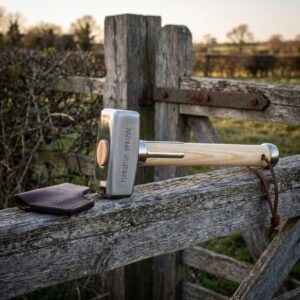 Runestrike Hand Forged Steel Norse War Hammer | Rune Cut Head with Ash Haft and Steel Collar | Leather Head Cover and Wrist Lanyard | Norse Gift | RK-1635
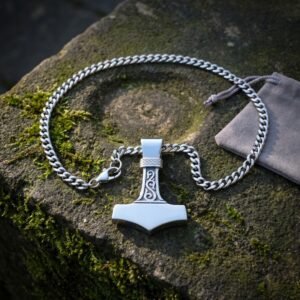 Thunderclasp Hand Made Stainless Steel Mjolnir Pendant with Knotwork Bail & Heavy Curb Chain | Norse Gift | RK-1734
Odin
Odin is the god of poetry, fury, kingship, the dead and hidden knowledge. He rides Sleipnir, an eight legged horse, carries the spear Gungnir, and sends out two ravens, Huginn and Muninn, thought and memory, to bring back news. Two wolves, Geri and Freki, sit at his feet. In Havamal he describes hanging on a windswept tree for nine nights, pierced by a spear, given to himself, with no bread and no drink, until he takes up the runes screaming and falls back. He gave an eye at Mimir’s well for a drink from it.
He is not a comfortable figure. The sagas show him picking favourites among kings and then abandoning them at the moment it counts, because he wants the best fighters in Valhalla before Ragnarok. Poets and rulers dealt with him. Farmers, on the whole, did not.
Thor
Thor is Odin’s son by the earth, Jord. He drives a chariot pulled by two goats, Tanngrisnir and Tanngnjostr, which he can kill, eat and revive. He owns the hammer Mjolnir, a belt called Megingjord that doubles his strength, and iron gloves. His work is killing giants, and the poems put him at it constantly. Thrymskvida, one of the funniest things in the Poetic Edda, has him dressed as a bride to recover the stolen hammer.
Thor is the god of ordinary people in the sources, and the archaeology backs that up hard.
Tyr
Tyr puts his hand in Fenrir’s mouth as a pledge while the gods bind the wolf, and loses it when the trick becomes clear. His name is cognate with the old Indo-European word for the sky god, which suggests he was once far more important than the surviving myths make him. Old English called him Tiw, which is where Tuesday comes from.
Baldr, Frigg and the rest
Baldr is the shining son whose death sets the collapse in motion. Frigg makes every living and unliving thing swear not to harm him, misses the mistletoe, and Loki puts a shaft of it into the hand of the blind Hodr. Hermod rides to Hel to buy him back, and Hel agrees if everything in the world will weep. One giantess, Thokk, refuses. Frigg herself is Odin’s wife, sits in Fensalir, knows the fates of all people and says nothing about them, and gives her name to Friday.
Heimdall watches Bifrost, needs less sleep than a bird, hears grass growing, was born of nine mothers, and holds the Gjallarhorn. Bragi is poetry. Idunn keeps the apples that hold off old age. Sif has the golden hair the dwarves made after Loki cut off her real hair. Ullr barely appears in any story at all, which turns out to matter.
The Vanir
Njord governs the sea, seafaring, wind and wealth. He lives at Noatun, ship enclosure. His marriage to the giantess Skadi fails in a way the sources treat as comedy: she chose him by looking at feet only, expecting Baldr, and neither could stand the other’s home, so she went back to the mountains and he to the shore, a predictable end for a marriage arranged on the evidence of ankles.
Freyr governs peace, good seasons and prosperity. He owns the ship Skidbladnir, which folds into a pouch, and the boar Gullinbursti. In Skirnismal he gives away his sword to win the giantess Gerd, and that is why he is empty handed against Surtr at the end. The sources do not present this as a shrewd trade.
Freyja is the most complicated of the three. She owns the necklace Brisingamen, drives a chariot drawn by cats, has a falcon cloak that lets its wearer fly, and teaches Odin the practice called seidr. Grimnismal states plainly that she takes half of those killed in battle to her field Folkvangr and Odin takes the other half, which cuts against the popular idea that Valhalla receives every fallen fighter.
Loki, who fits nowhere
Loki is the son of the giant Farbauti. He travels with the gods, solves the problems he creates, and by degrees turns from nuisance to enemy. He fathers Fenrir, Jormungandr and Hel on the giantess Angrboda, and gives birth to Sleipnir himself after taking the shape of a mare. Snorri sometimes counts him among the Aesir and sometimes does not. After Baldr’s death the gods bind him under a serpent that drips venom on his face, with his wife Sigyn holding a bowl to catch it.
Who was actually worshipped
Myth and cult are different things, and four kinds of evidence let us separate them, which is the step most god lists leave out.
Place names
Farms, fields and sacred sites carry god names across Scandinavia. Thor is everywhere. Freyr is common. Ullr, who has almost no surviving story, appears in a large number of Swedish and Norwegian names, which tells us the myths that reached Iceland are a filtered sample rather than the whole religion. Njord appears. Odin turns up, including at Odense in Denmark, which means Odin’s sanctuary. Loki is effectively absent.
Personal names
Parents named children after the god they trusted. Thorstein, Thorbjorn, Thorgeir, Thorgerd and dozens more built on Thor fill the sagas and the runic inscriptions. Names built on Odin are rare by comparison. Nobody was calling a son after Loki.
Objects
Small hammer amulets in iron, silver and bronze turn up in graves and hoards from the ninth century onward, right across the Norse world. One found at Kobelev on Lolland in Denmark carries a short runic inscription that reads, in effect, this is a hammer, which removed any doubt about what the shape was meant to be, a rare courtesy from the Viking Age to the people digging it up. Nothing comparable exists for most of the other gods.
Written description
Adam of Bremen, writing around the 1070s, describes a temple at Uppsala in Sweden holding three images: Thor in the centre as the most powerful, with Wodan and Fricco beside him. Adam never visited. He was a churchman collecting reports at second hand with a clear interest in how pagan the north still was. Archaeologists have dug at Gamla Uppsala and found large halls and post structures, but nothing that settles his account either way. Treat it as a source with an agenda rather than a photograph.
Put the four together and the picture is consistent. Thor first by a wide margin, Freyr and Njord strong in farming and coastal country, Odin present but narrower, tied to rulers and poets, Ullr important in ways the literature lost, and Loki a story character rather than an object of worship.
Wearing the old names
If you want one of these gods on you rather than on a page, the practical question is which emblem has evidence behind it. Our Thor’s hammers follow the shapes of excavated amulets rather than film props, and the Norse pendants cover the valknut, the vegvisir and helm of awe designs, with a note on each about how old the symbol really is. The wider Damascus steel jewelry range uses 1095 and 15N20 forge welded and finished at 58 to 60 HRC, the same billet stock as our blades. Ransack Viking is a US company in Chicago, Illinois. Every piece is handmade in the Czech Republic the old way, then imported, inspected and shipped from Chicago. Engraving is done in the US after arrival, so a name, a date or a line of Elder Futhark goes on once the piece has landed and passed inspection. Before you choose, our piece on what Mjolnir meant and the guide to Viking symbols and their meanings both separate the genuinely old from the nineteenth century additions.
The monsters on the other side of the story are covered in the three children of Loki, and Odin’s two birds have a page of their own in Huginn and Muninn explained.
Questions people ask
How many Norse gods are there?
There is no fixed number. Snorri Sturluson lists twelve Aesir in one passage of the Prose Edda, but his own lists disagree with each other and with the poems. Add the goddesses, the Vanir, and figures who appear once and vanish, and you have several dozen names with wildly uneven amounts of surviving story attached. Anyone quoting you a precise total has decided for themselves what counts.
Was Odin the chief god everyone worshipped?
He leads in the myths, but the cult evidence favours Thor. Place names, personal names and hammer amulets all show Thor far ahead. Odin appears in place names such as Odense and in poetry connected with rulers and skalds. He looks like a god for kings and poets rather than for farming households.
What is the difference between Aesir and Vanir?
The Aesir cluster around Odin and cover war, law, poetry and the dead. The Vanir, meaning Njord, Freyr and Freyja, cover good seasons, wealth, the sea and fertility. They fought and then merged through a hostage exchange. Some scholars think the division is genuinely old, others that it was sharpened by later writers.
Do all fallen warriors go to Valhalla?
No. Grimnismal says Freyja chooses half of those killed in battle for her field Folkvangr and Odin takes the rest. Most people who died of sickness or age went to Hel, which the older poetry treats as a place rather than a punishment. The all roads lead to Valhalla idea is a modern simplification, and a flattering one.
Is Loki a god?
He lives among the Aesir and is counted with them in some lists, but his father is a giant and he ends up bound as their enemy. There is no evidence anyone worshipped him: no place names, no amulets, no personal names built on his. He functions as a story engine rather than a figure of cult.
Why do the weekdays carry Norse names?
English took them from Old English forms of the same Germanic gods, following a Latin naming model. Tuesday is Tiw, the English form of Tyr. Wednesday is Woden, Thursday is Thunor, and Friday is Frige. The names travelled through the Anglo-Saxon side of the family rather than directly from Old Norse, which is why we say Thursday and not Thorsday.
What the shop carries
On the shelf in the same spirit, the Odin Viking bearded axe and the Odin handcrafted Viking hammer. Next to those, the Ladderpeen Mjolnir hammer and the Ravenhold Viking round shield.
Shop the range
Thunderclad Hand Forged Damascus Viking War Hammer | Flat Faced Damascus Head | Rosewood Haft with Brass Bolsters and Turned Brass Pommel | Norse Gift | RK-1633Runestrike Hand Forged Steel Norse War Hammer | Rune Cut Head with Ash Haft and Steel Collar | Leather Head Cover and Wrist Lanyard | Norse Gift | RK-1635Thunderclasp Hand Made Stainless Steel Mjolnir Pendant with Knotwork Bail & Heavy Curb Chain | Norse Gift | RK-1734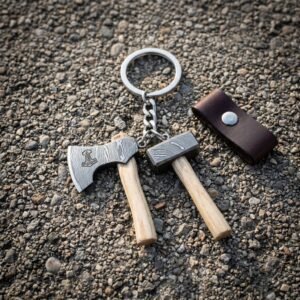 Emberkey Hand Forged Damascus Viking Keyring with a Mjolnir Etched Axe & Hammer Charm | Norse Pocket Gift | RK-1662
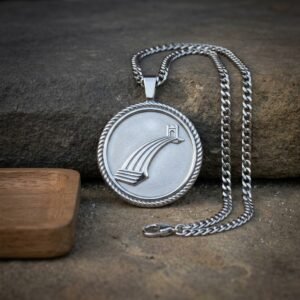 Skybridge Hand Made Silver Tone Bifrost Pendant with a Rope Twist Border & Heavy Curb Chain | Norse Necklace Gift | RK-1664
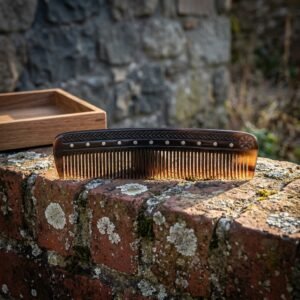 Braidhorn Hand Made Viking Beard Comb with Wooden Box | Natural Horn | Vegvisir Stave and Dotted Spine Border | Groomsmen Gift | RK-1681