
A folding pocket knife is a blade that gets out of its own way. The edge pivots back into a slot in the handle, the handle goes in a pocket, and the knife stops being something you have to carry and starts being something you happen to have. That is the whole point of the design, and it is why the folder outlived almost every other small knife pattern.
The folders here run 6.5 to 10 inches open, with blades from 2.75 to 5 inches, and prices from 89 to 229 dollars. Most carry a hand forged Damascus blade of 1095 and 15N20, forge welded and acid etched, hardened to 58 to 60 HRC. A few are listed with stainless blades instead. Handles run to buffalo horn, stag horn, ram horn, camel bone, rosewood, olive wood, walnut, pakka wood, resin and polished copper, with brass or steel bolsters. Fourteen ship with a stitched leather sheath.
If this is your first folder, start near 3 inches of blade and 7 inches open, and check the carry rules in your state first.
Buying for a wedding party? The groomsmen sets come as six matched knives, 15% less than buying them singly, and each one can carry its own engraved name.
Free US shipping
On most pieces. Heavier and oversized ones carry a flat charge.
Hand Forged
Heated, hammered and ground by hand.
Engraving available
Names, dates or Norse runes on most pieces.
Ships from Chicago
Inspected and dispatched from our Chicago warehouse. No import duty, no customs delay on US orders.
Folding Pocket Knives
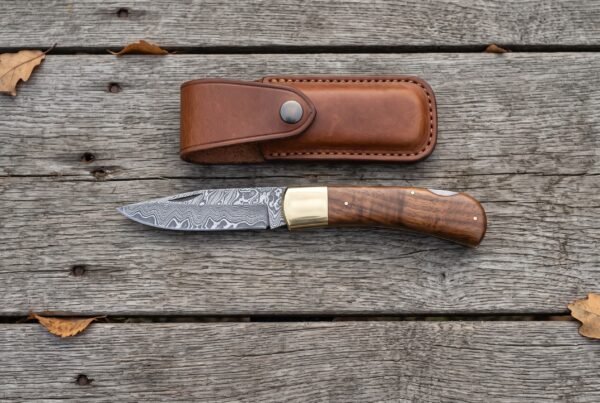
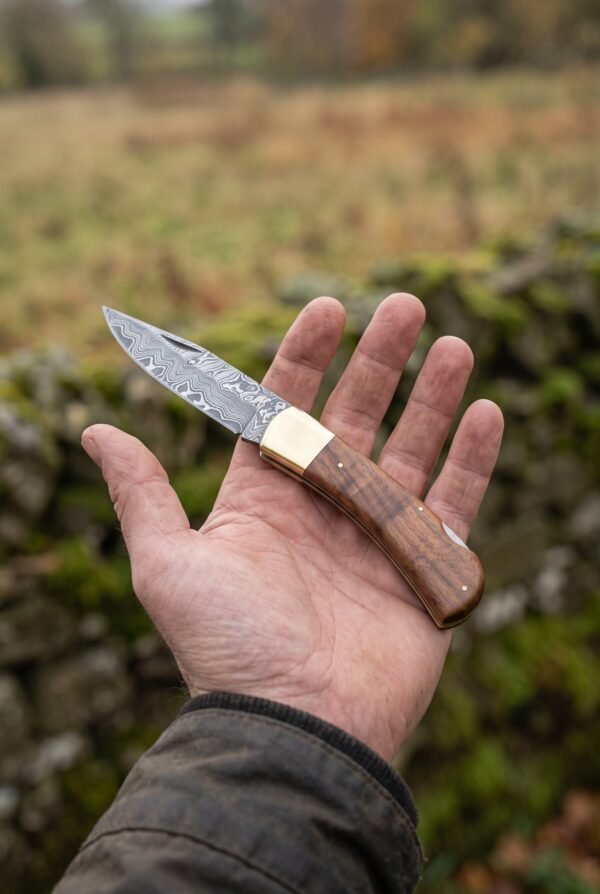
Walnutfold Hand Forged Damascus Folding Pocket Knife with Walnut Wood Handle and Brass Bolster & Handmade Leather Sheath | Everyday Carry Gift for Him | RK-1061
Original price was: $129.00.$109.65Current price is: $109.65.
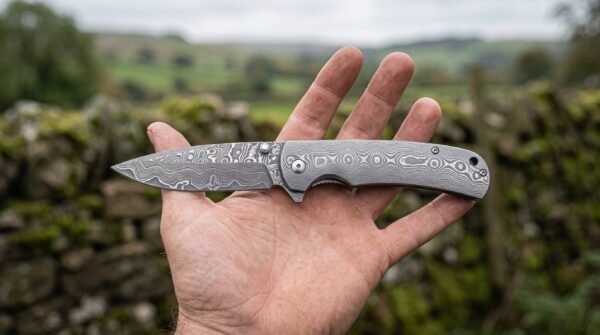
Leafcarry Hand Forged Damascus Folding Pocket Knife with Damascus Steel Handle Ready for Engraving & Cowhide Leather Sheath | Everyday Carry Collector Gift | RK-375
Original price was: $129.00.$109.65Current price is: $109.65.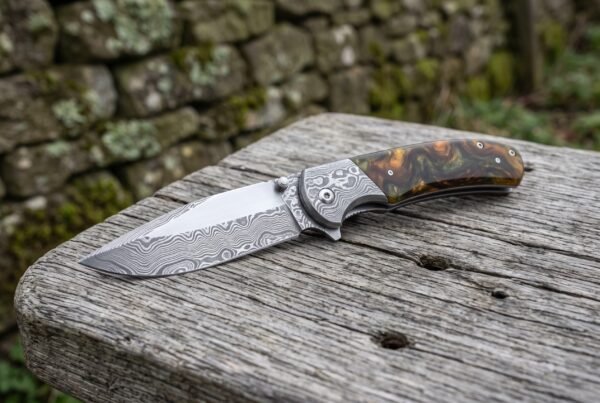
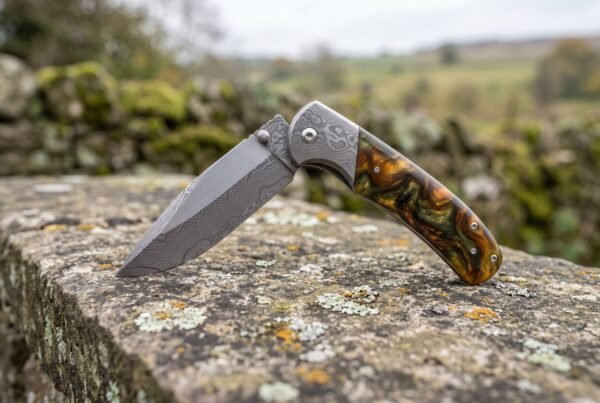
Resincarry Hand Forged Damascus Folding Pocket Knife with Resin Handle | Everyday Carry Collector Gift for Him | RK-10491
Original price was: $129.00.$109.65Current price is: $109.65.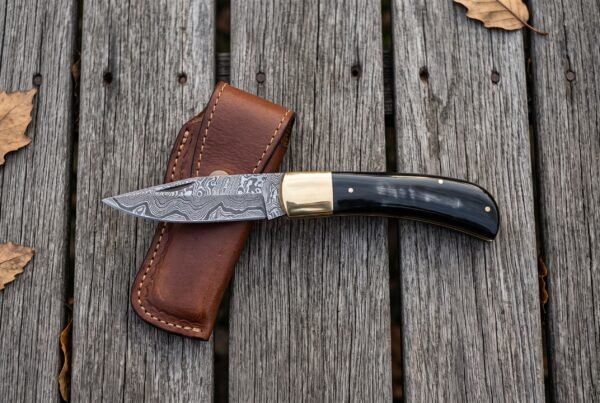
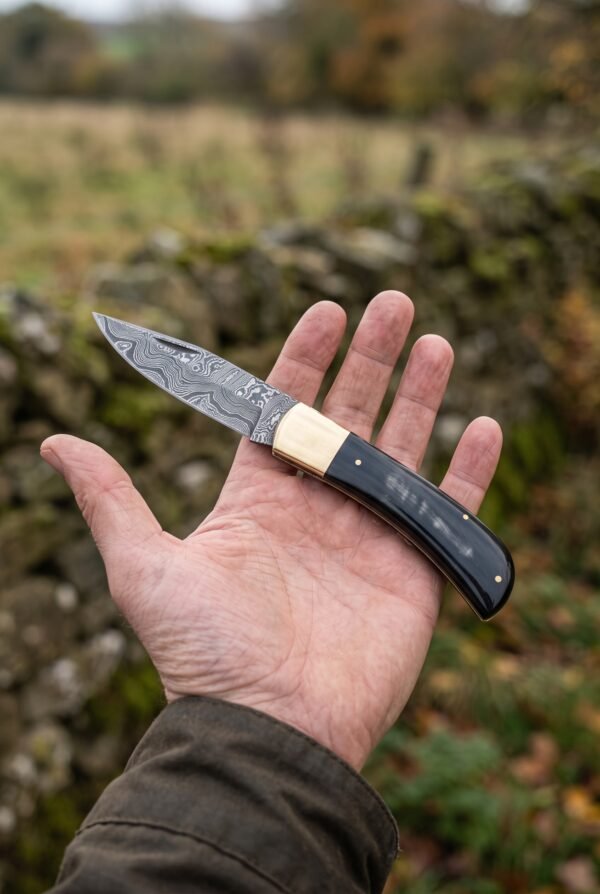
Hornedge Hand Forged Damascus Folding Pocket Knife with Buffalo Horn Handle and Brass Bolster & Handmade Leather Sheath | Everyday Carry Collector Gift | RK-1065
Original price was: $129.00.$109.65Current price is: $109.65.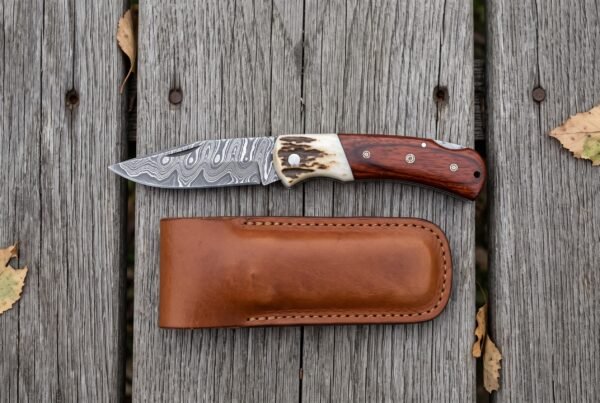
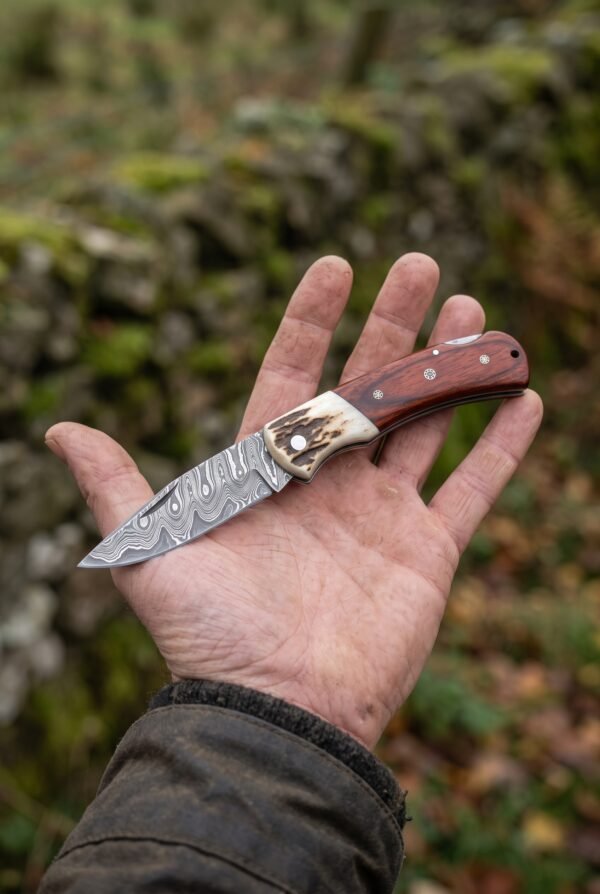
Rosecarry Hand Forged Damascus Folding Pocket Knife with Rosewood Handle and Stag Bolster & Cowhide Leather Sheath | Everyday Carry Gift for Him | RK-372
Original price was: $109.00.$92.65Current price is: $92.65.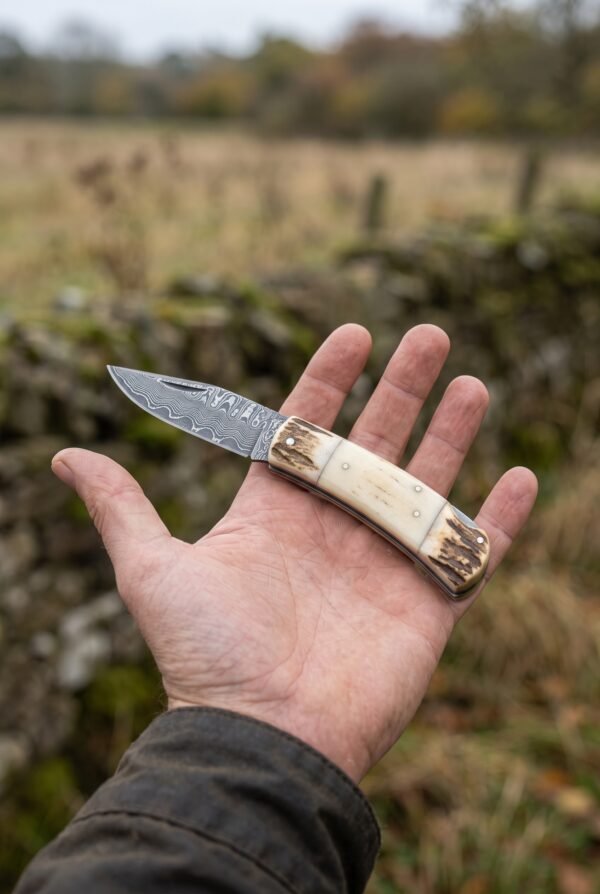
Bonecarry Hand Forged Damascus Folding Pocket Knife with Natural Bone Handle and Stag Bolsters & Cowhide Leather Sheath | Gentlemans Everyday Carry Gift | RK-373
Original price was: $89.00.$75.65Current price is: $75.65.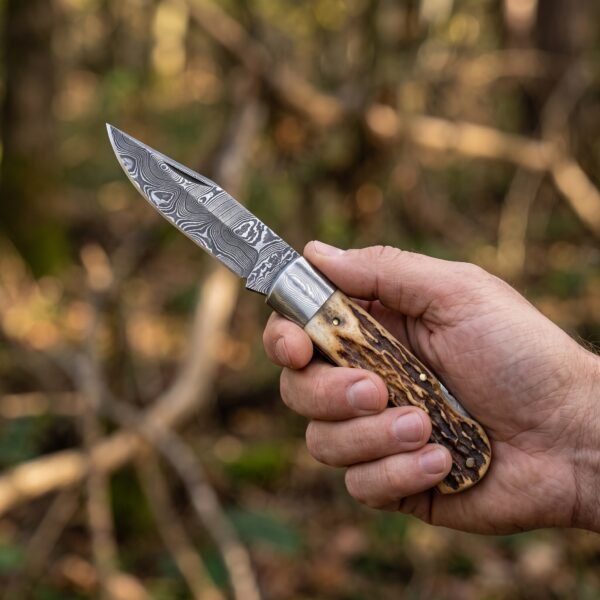
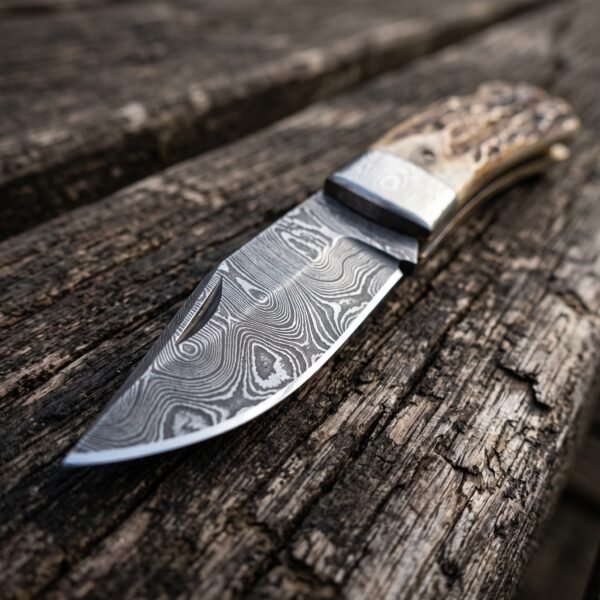
Antlerfold Hand Forged Damascus Folding Pocket Knife with Antler Stag Handle | Everyday Carry Personalised Gift for Him | RK-691
Original price was: $109.00.$92.65Current price is: $92.65.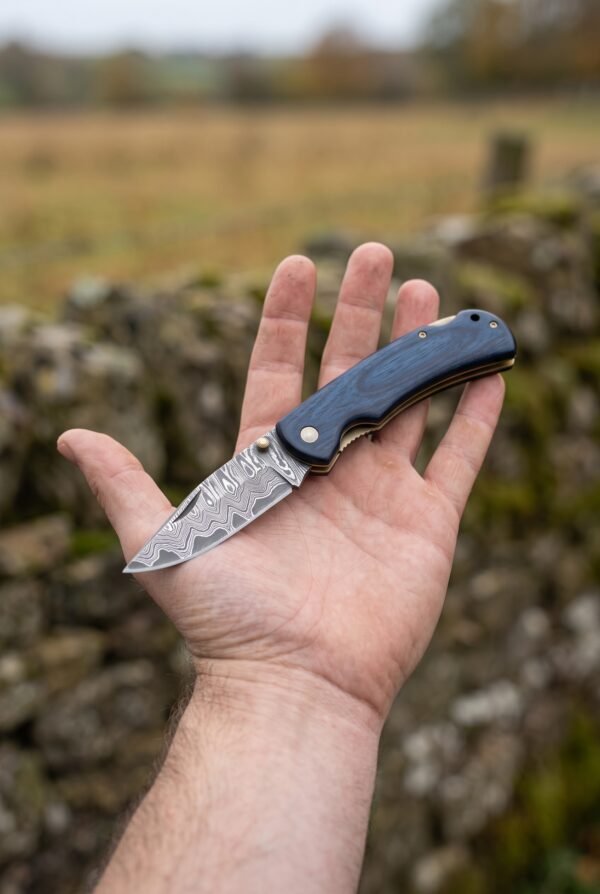
Bluegrain Hand Forged Damascus Folding Pocket Knife with Blue Hardwood Handle & Cowhide Leather Sheath | Gentlemans Everyday Carry Gift | RK-382
Original price was: $89.00.$75.65Current price is: $75.65.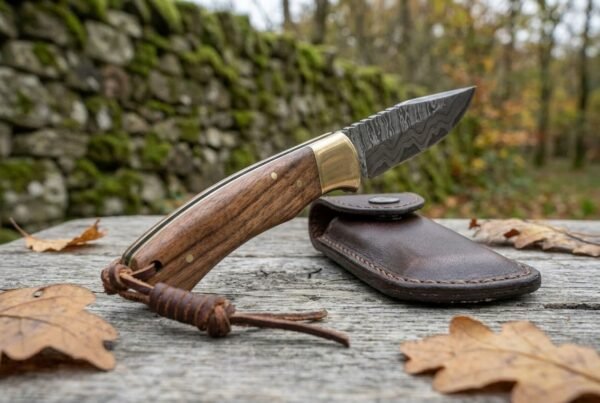
Brasswood Hand Forged Damascus Folding Pocket Knife with Wood Handle and Brass Bolster & Cowhide Leather Sheath | Everyday Carry Gift for Him | RK-380
Original price was: $109.00.$92.65Current price is: $92.65.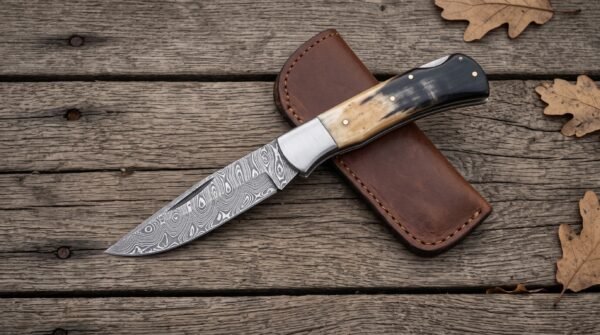
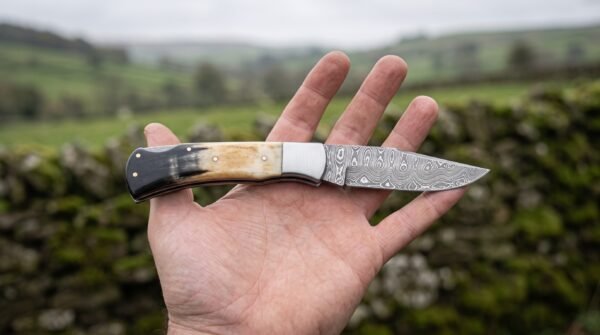
Bullhorn Hand Forged Damascus Folding Pocket Knife with Camel Bone and Bull Horn Handle & Cowhide Leather Sheath | Everyday Carry Collector Gift | RK-426
Original price was: $119.00.$101.15Current price is: $101.15.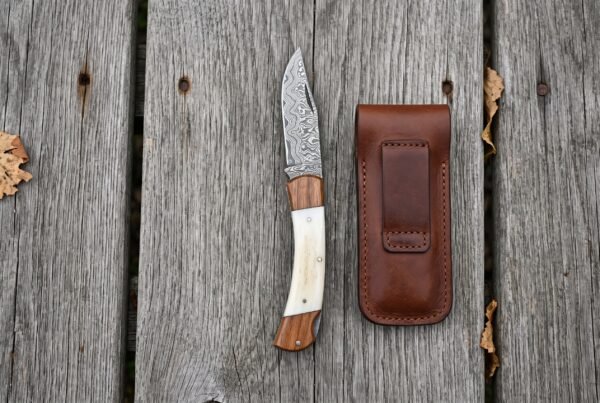
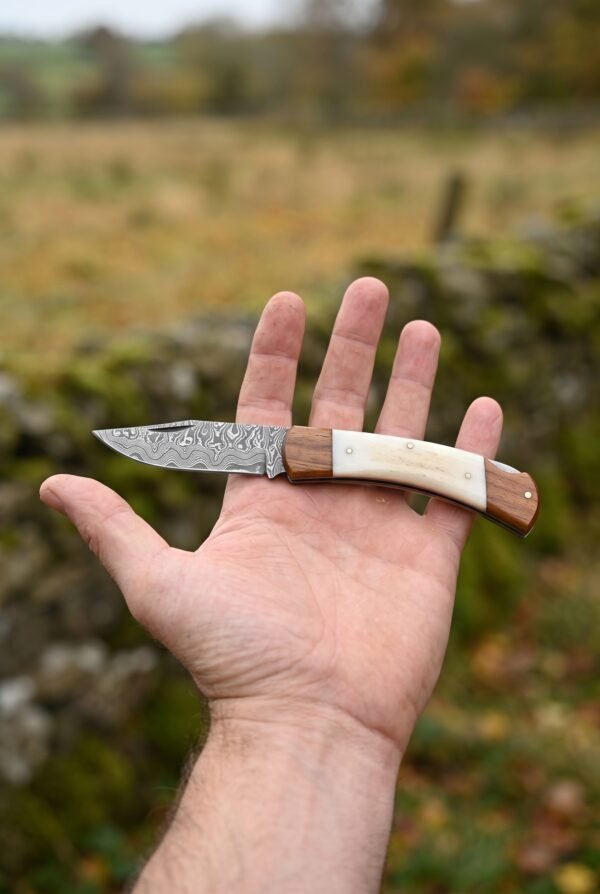
Bonewarden Hand Forged Damascus Folding Pocket Knife with White Bone Handle, Hardwood Bolsters & Leather Belt Pouch | Everyday Carry Gift | RK-376
Original price was: $159.00.$135.15Current price is: $135.15.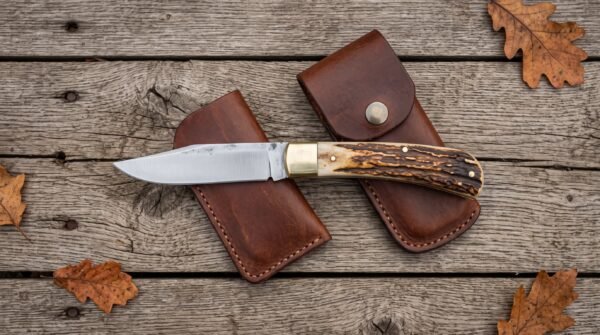
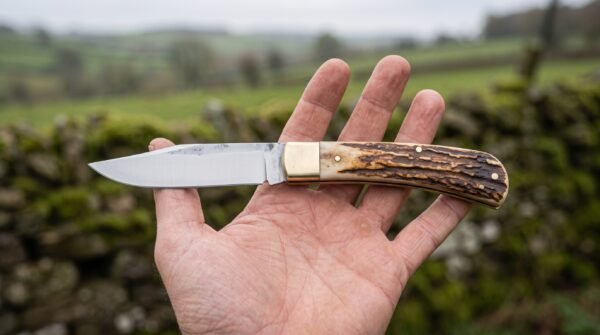
Stagsteel Hand Forged Stainless Steel Folding Pocket Knife with Stag Horn Handle & Two Leather Sheaths and Engraving Available | Everyday Carry Gift | RK-1032
Original price was: $109.00.$92.65Current price is: $92.65.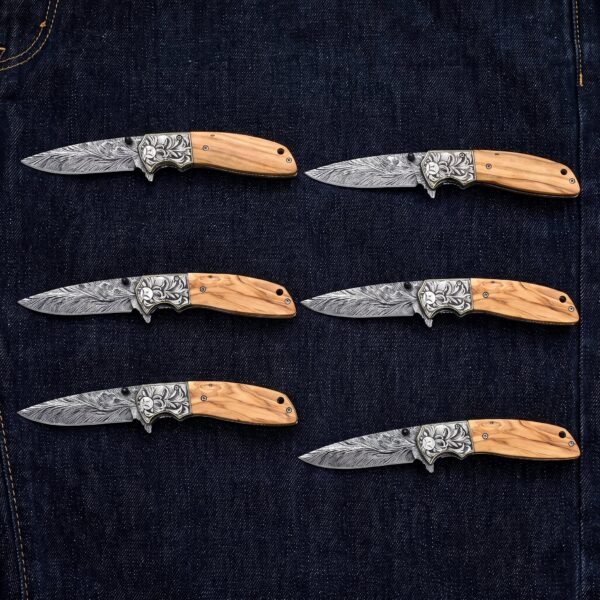
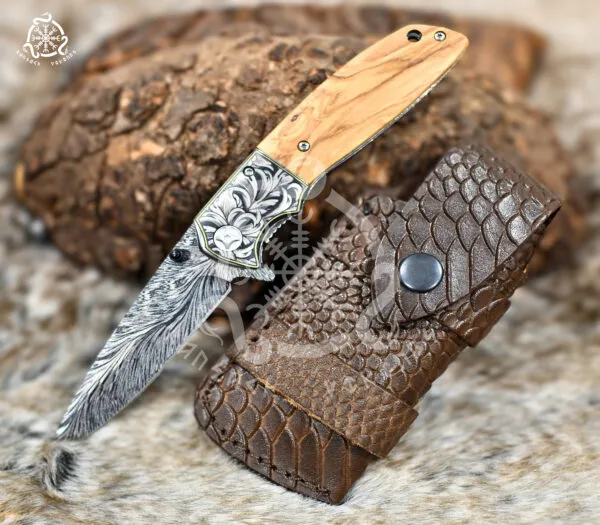
Set of 6 Olivefold Hand Forged Damascus Folding Pocket Knife with Olive Wood | Groomsmen Gift Set | RK-689-S6
Original price was: $1,374.00.$1,167.90Current price is: $1,167.90.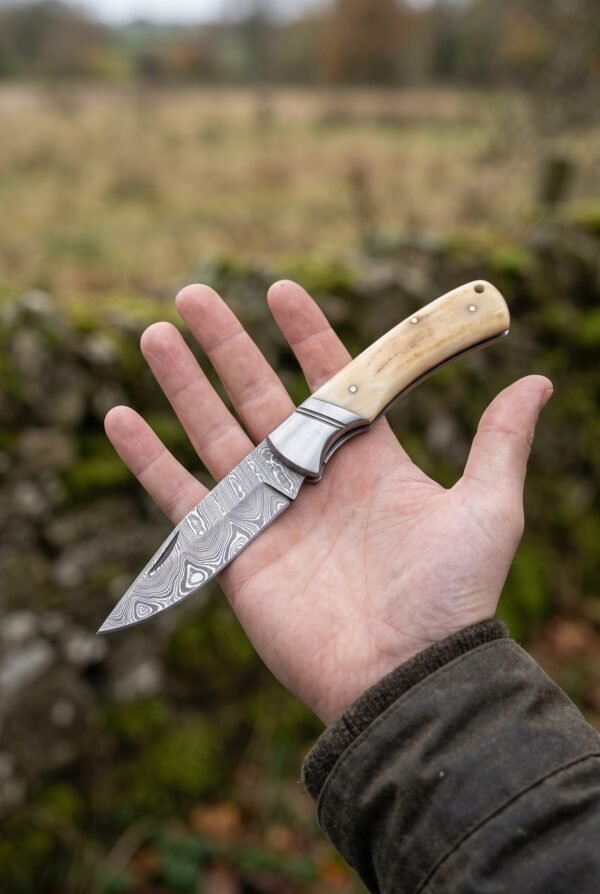
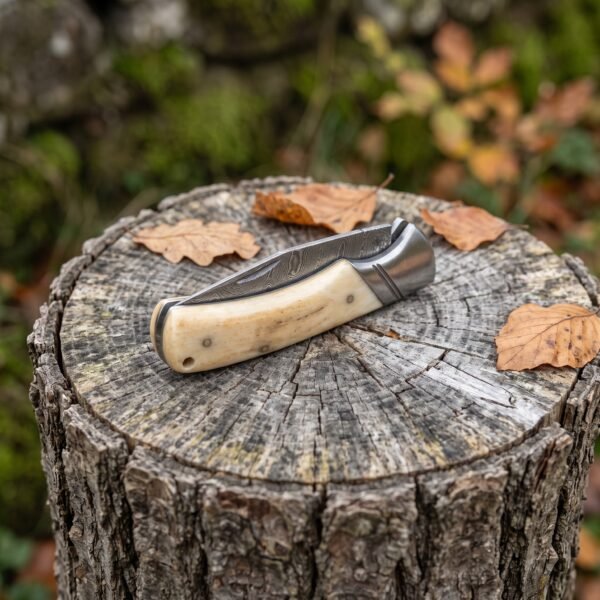
Bonefold Hand Forged Damascus Folding Pocket Knife with Natural Bone Handle | Premium Everyday Carry and Collector Gift for Him | RK-686
Original price was: $119.00.$101.15Current price is: $101.15.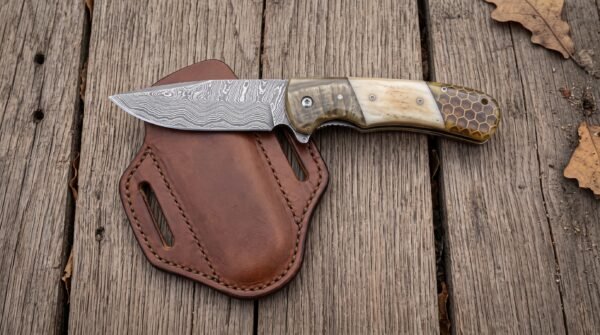
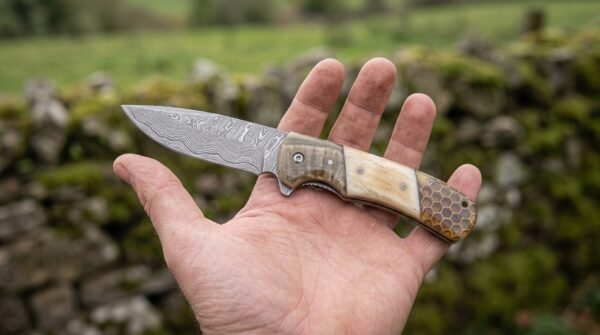
Ramfold Hand Forged Damascus Folding Pocket Knife with Ram Horn Handle & Leather Sheath | Everyday Carry Gift | RK-1017
Original price was: $99.00.$84.15Current price is: $84.15.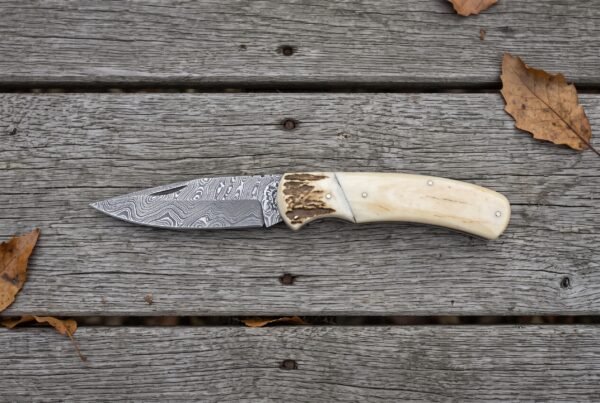
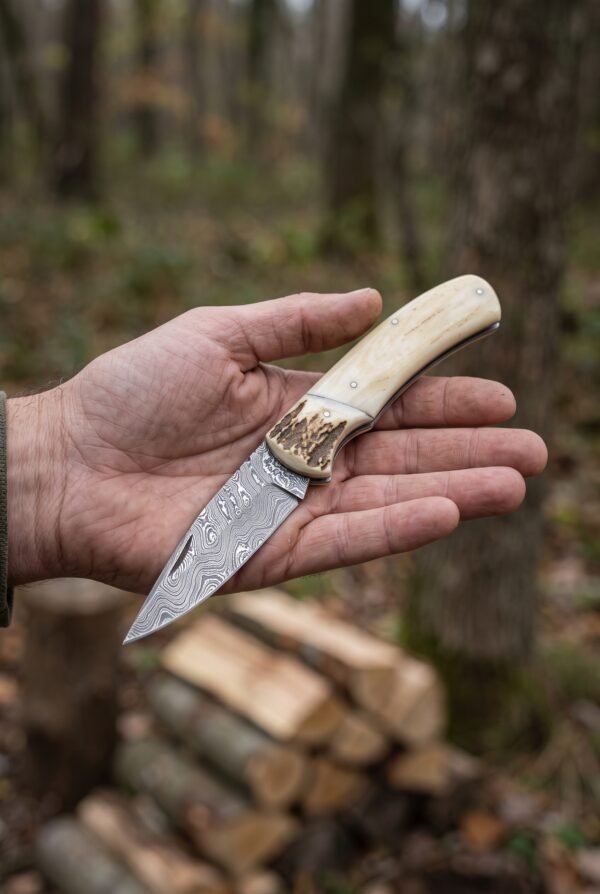
Campfold Hand Forged Damascus Folding Pocket Knife with Camel Bone Handle and Antler Stag Bolster | Outdoor Camping and Christmas Gift | RK-693
Original price was: $109.00.$92.65Current price is: $92.65.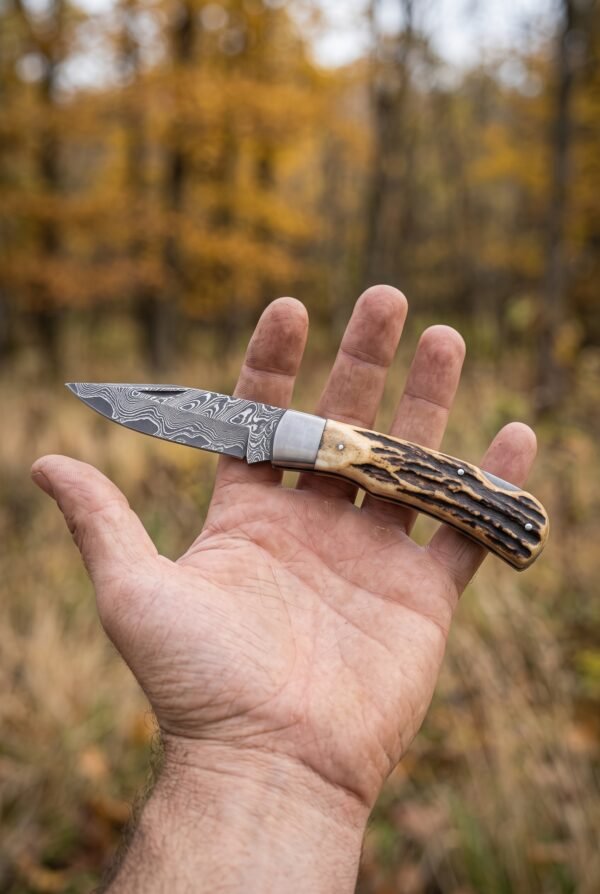
Stagcarry Hand Forged Damascus Folding Pocket Knife with Stag Horn Handle & Cowhide Leather Sheath | Gentlemans Everyday Carry Gift | RK-428
Original price was: $189.00.$160.65Current price is: $160.65.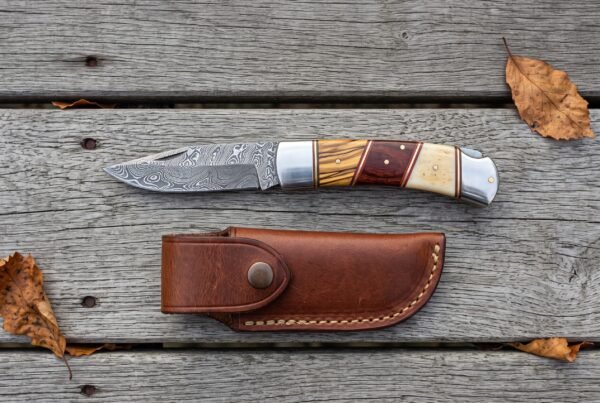
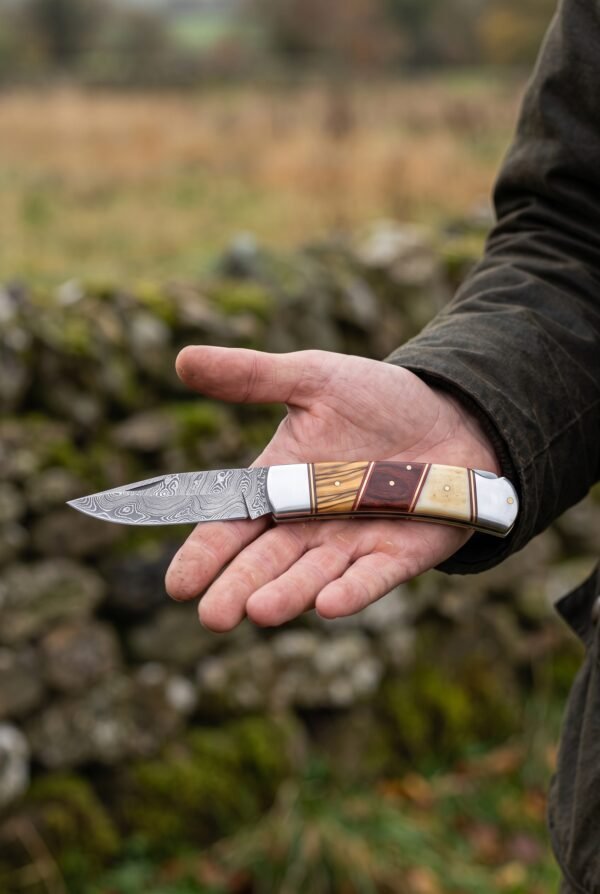
Bonebrass Hand Forged Damascus Folding Pocket Knife with Olive Wood Rosewood and Bone Handle and Brass and Red Fiber Spacers | Everyday Carry Gift | RK-1070-1
Original price was: $99.00.$84.15Current price is: $84.15.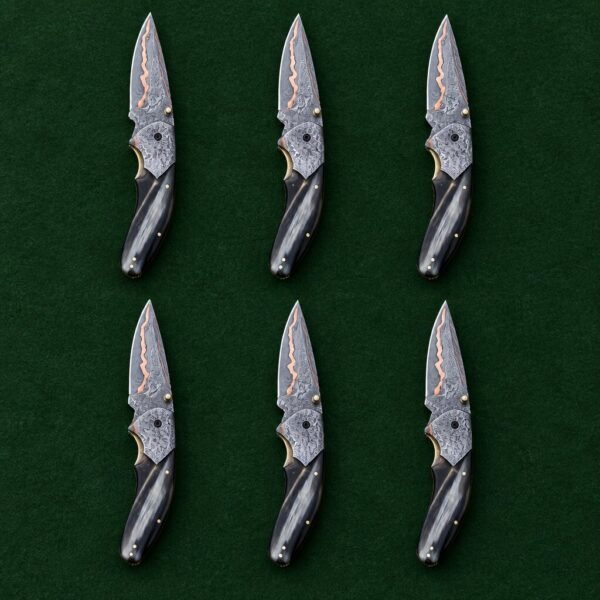
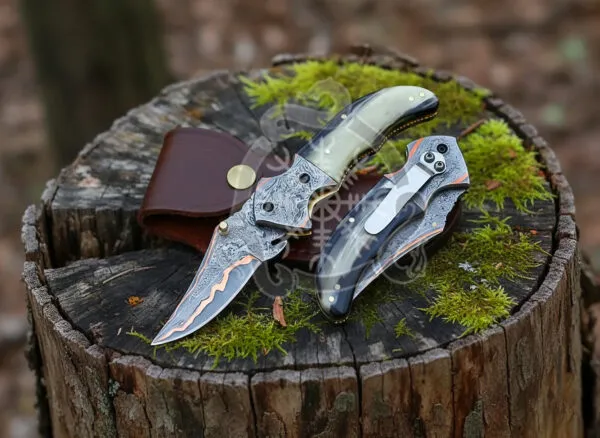
Set of 6 Copperfin Hand Forged Damascus Fish Fillet Knife with Polished Copper | Groomsmen Gift Set | RK-1011-S6
Original price was: $714.00.$606.90Current price is: $606.90.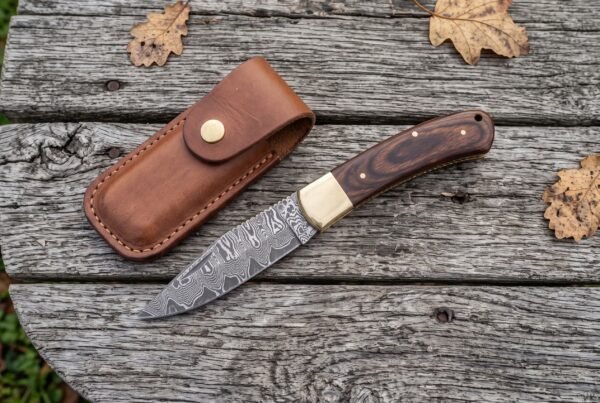
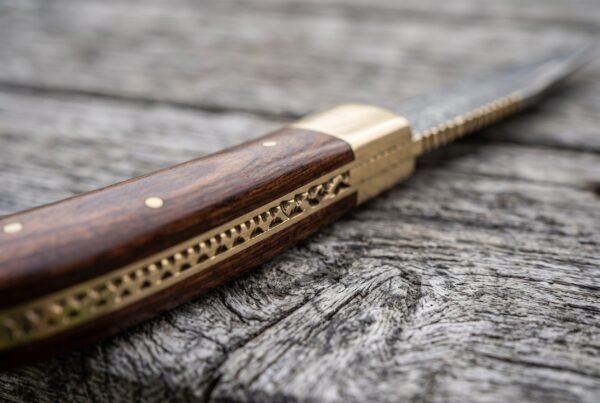
Pakkacarry Hand Forged Damascus Folding Pocket Knife with Pakka Wood Handle & Cowhide Leather Sheath | Everyday Carry Groomsmen Gift | RK-374
Original price was: $99.00.$84.15Current price is: $84.15.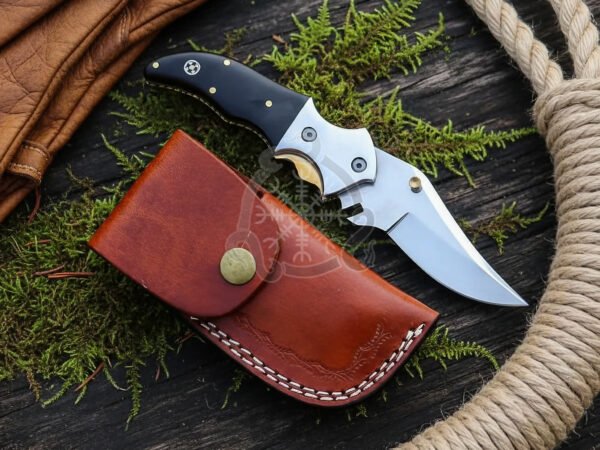
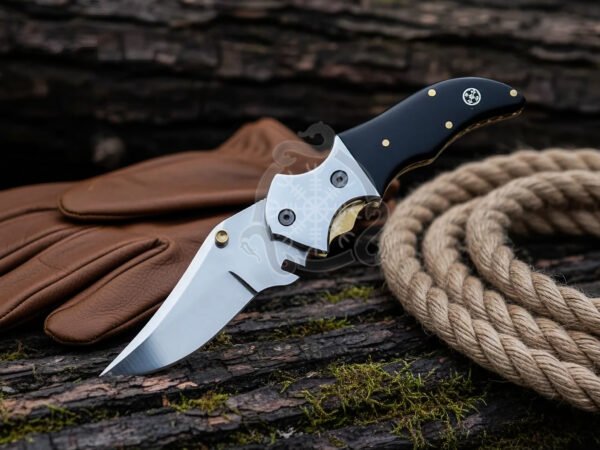
Mosaicfold Hand Forged Stainless Steel Folding Pocket Knife with Resin Handle and Black Mosaic Pins & Leather Sheath | Everyday Carry Gift | RK-1047
Original price was: $109.00.$92.65Current price is: $92.65.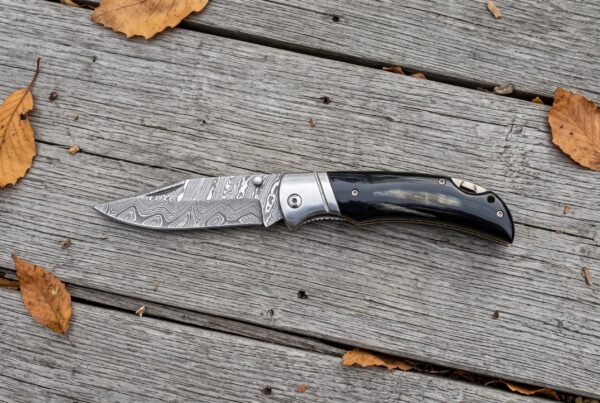
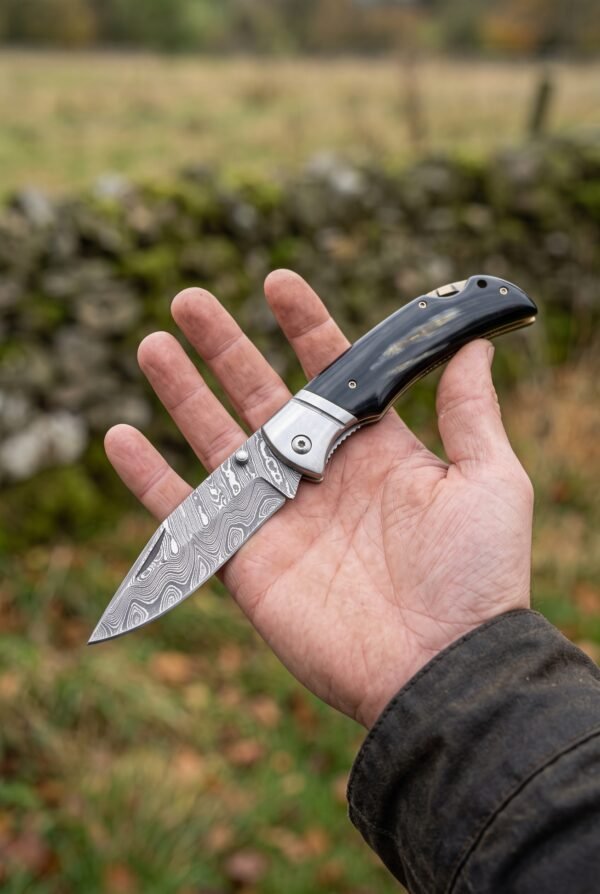
Hornfold Hand Forged Damascus Folding Pocket Knife with Buffalo Horn Handle | Everyday Carry Outdoor and Collector Gift | RK-687
Original price was: $119.00.$101.15Current price is: $101.15.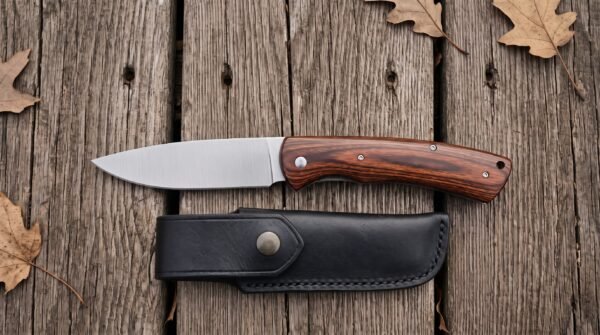
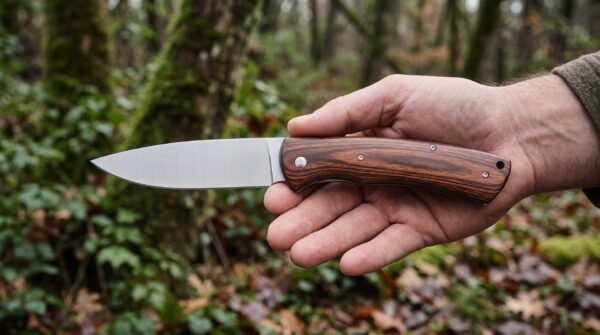
Pakkafold Hand Forged Stainless Steel Folding Pocket Knife with Premium Pakka Wood Handle & Leather Pouch | Large Everyday Carry and Collector Gift | RK-673
Original price was: $119.00.$101.15Current price is: $101.15.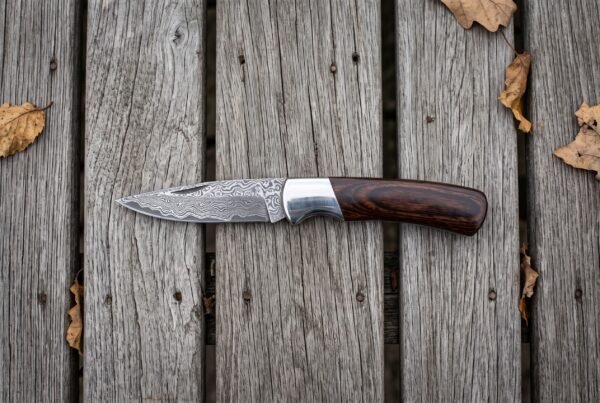
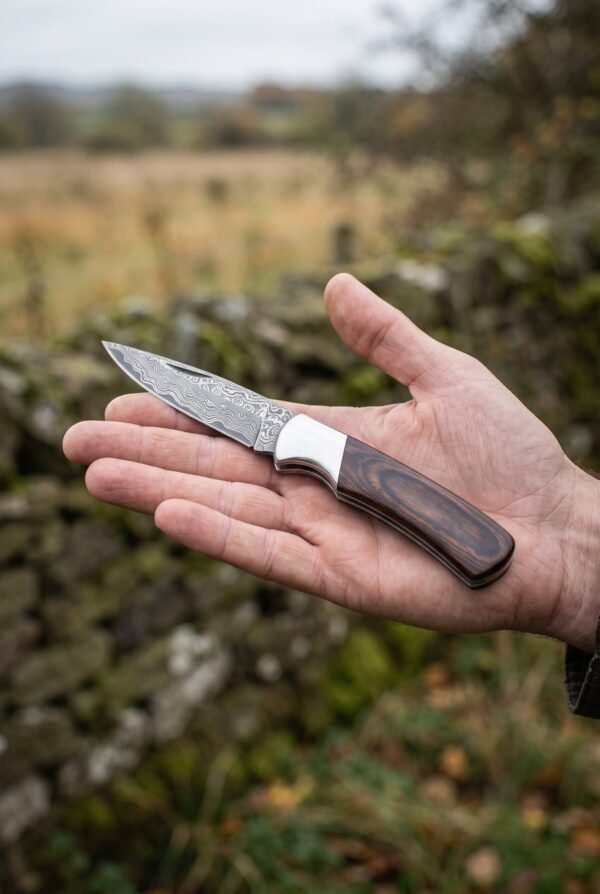
Steelfold Hand Forged Damascus Folding Pocket Knife with Pakka Wood Handle and Steel Bolster | Everyday Carry and Collector Gift | RK-697
Original price was: $99.00.$84.15Current price is: $84.15.Why a knife folds
A fixed blade is stronger, simpler and better at almost everything a knife is asked to do. It also has to live in a sheath on your belt, which means you either wear it or you leave it at home, and most people leave it at home. The folder solves that one problem. The blade rotates on a pivot pin into a slot cut through the handle, so the sharp part is contained by the part you hold, and the whole thing drops into a pocket.
Everything else follows from that. The handle has to be at least as long as the blade, so a folder is always about twice the length of its edge. There has to be a spring or a lock to hold the blade open, because a pivot that turns freely in one direction will turn freely in the other with your fingers in the way. And the pivot is a moving joint in a tool that gets wet, dirty and dropped, which is why folders need cleaning in a way fixed blades do not.
The pattern settled early. The shapes on this page, a slim clip point in a bolstered handle, are essentially the nineteenth century pocket knife that every later design argued with. Nothing here is a tactical experiment.
The folding knives in this collection
Twenty four pieces are on this page. They split three ways: by blade steel, by size, and by what the handle is made of.
Folders in hand forged Damascus
Twenty one of the twenty four carry a Damascus blade. The billet is 1095 high carbon and 15N20 nickel bearing steel, forge welded in alternating layers, drawn out, folded, then ground and acid etched so the layers read as light and dark bands along the flat. One folder here lists 256 layers. Hardness is 58 to 60 HRC, so the blade holds a fine edge through a long spell of cutting and needs a stone rather than a steel to bring it back. The etch is a surface treatment and will go quiet on the parts your fingers touch most.
Because each billet is drawn out by hand, no two blades carry the same figure in the same place. Buy two expecting a matched pair and you will not get one.
Folders with stainless blades
Three pieces here are listed with a stainless blade instead: the resin handled folder with black mosaic pins, the stag horn folder at 4 inches, and the large pakka wood folder at 5 inches. Stainless trades a little edge holding for the ability to sit in a damp pocket without spotting. If you know yourself well enough to admit you will never oil anything, take one of these.
Small folders, from 2.75 to 3 inches
Four pieces sit at 2.75 inches of blade and 6.5 inches open, in blue hardwood, pakka wood, bone and rosewood, and more sit at 3 inches. This is the group that actually gets carried. A knife this size disappears in a front pocket and is legal to carry in far more places than a larger blade. Prices start at 89 dollars.
Larger folders, from 3.3 to 5 inches
The rest run from 3.3 up to 5 inches of blade, and from 7.5 up to 10 inches open. The 10 inch olive wood folder at 229 dollars is the largest and most expensive piece here, and it is a knife you carry deliberately rather than by habit. Two pieces in this group are not conventional folders at all. One is a Damascus karambit with a curved claw blade and a ring at the butt, and one is a folding fillet knife with a polished copper handle and a long flexible blade. Both fold, both live here, and both do something a straight clip point folder does not.
Handles across the range
Buffalo horn, stag horn, ram horn, camel bone, natural bone, rosewood, olive wood, walnut, blue stabilised hardwood, pakka wood, resin, polished copper, and one folder with a Damascus steel handle left plain for engraving. Bolsters are brass or steel and several are filed along the edge.
Sizes, steel and handles across the range
Every figure below comes from the specification panel of a piece on this page. These are ground and assembled by hand, so read the numbers as what to expect rather than as a guarantee to the millimetre. A blank means the product page does not list that figure.
| Handle | Blade length | Overall open | Steel | Sheath | Price |
|---|---|---|---|---|---|
| Blue stabilised hardwood | 2.75 in | 6.5 in | Hand forged Damascus | Included | 89 dollars |
| Natural bone with stag bolster | 2.75 in | 6.5 in | Hand forged Damascus | Included | 89 dollars |
| Rosewood with stag bolster | 2.75 in | 6.5 in | Hand forged Damascus | Included | 99 dollars |
| Stag horn | 3 in | 7 in | Hand forged Damascus | Included | 99 dollars |
| Resin with mosaic pins | 3 in | 7.5 in | Stainless | Included | 109 dollars |
| Walnut with brass bolster | 3 in | 8 in | Hand forged Damascus | Included | 129 dollars |
| Buffalo horn with brass bolster | 3.3 in | 7.5 in | Hand forged Damascus | Included | 129 dollars |
| Olive wood, rosewood and bone with brass spacers | 3.5 in | 7.5 in | Hand forged Damascus | Included | 99 dollars |
| Polished copper, fillet blade | 3.5 in | 8.5 in | Hand forged Damascus | Included | 119 dollars |
| Damascus steel, plain for engraving | 4 in | 8.5 in | Hand forged Damascus | Included | 109 dollars |
| Stag horn | 4 in | 8 in | Stainless | Included | 109 dollars |
| Pakka wood | 5 in | 10 in | Stainless | Not listed | 119 dollars |
| Olive wood | Not listed | 10 in | Hand forged Damascus | Not listed | 229 dollars |
One number to read carefully. Overall length on a folder is measured open, so a piece listed at 7.5 inches folds to roughly 4 inches in your pocket. Compare closed lengths if what you care about is whether it disappears, and compare blade lengths if what you care about is whether it cuts.
Sizing and carry
Blade length is the number that matters legally and the number that matters practically, and the two pull in opposite directions. Under 3 inches is the safest bracket in most of the United States and is enough knife for the great majority of what a pocket knife gets asked to do. Above four inches you are carrying a knife that folds rather than a pocket knife.
Handle length matters as much for comfort. A 6.5 inch folder gives about 3.75 inches of grip, a three finger hold for most adult hands. An 8 inch folder gives a full four finger grip. If your hands are large, size up rather than buying the smallest thing here and resenting it. Carry the knife in a front pocket with the spine against the seam, or in the supplied sheath on a belt, and never loose in the same pocket as keys.
Knife carry law in the United States is set by state and very often overridden by city ordinance, and blade length limits are the usual mechanism. Read our state by state summary of knife laws before you put anything in a pocket, and treat it as a starting point rather than legal advice.
Steel and hardness
Two house specifications run through Ransack Viking blades. Plain 1095 high carbon is hardened to 54 to 58 HRC, and Damascus of 1095 and 15N20 is forge welded, acid etched and hardened to 58 to 60 HRC. On this page the Damascus specification is what you will meet on almost every piece.
Softer steel dulls sooner and sharpens faster. Harder steel holds an edge longer and is more willing to chip if you twist it in a cut. At 58 to 60 HRC a Damascus folder sits in the sensible middle. It cuts cardboard all afternoon without losing its bite and takes a burr off a 1000 grit stone in a couple of minutes.
Neither carbon specification is stainless. That is the trade. The 15N20 in the mix contains nickel, which is what resists the acid etch and gives the bright bands, but it does not make the blade rustproof. Wipe it, oil it, and it will outlive you. Leave it wet in a pocket for a week and it will spot. If you would like the longer version, read Damascus versus high carbon steel and what Damascus steel actually is.
Handles, bolsters and pins
Horn and bone behave the same way as each other. Both are dense, both polish beautifully, and both shrink if you dry them out. Keep a horn or bone handled folder out of a hot car and away from a radiator. If a handle feels slightly proud of its pins in winter, that is the material moving rather than a fault.
Rosewood is oily and close grained and looks after itself. Olive wood and walnut are drier and want a wipe of oil once or twice a year. Pakka wood is timber impregnated with resin and stabilised under pressure, so it is effectively waterproof and stable, which makes it the practical choice if the knife will get wet.
Bolsters are the metal collars at the ends of the handle. They anchor the pivot and take the shock when you close the blade, and several here carry filed decoration along the exposed edge. Brass darkens over months into a warm brown. Polish it back or let it go. A folder that develops side to side blade play usually needs its pivot snugged rather than replaced, so contact us before taking a punch to it.
Care and storage
The pivot is the difference between caring for a folder and caring for a fixed blade. Grit and pocket lint collect in the slot behind the blade, and a folder that has gone stiff is almost always dirty rather than worn out. Flush the joint with hot water, work the blade, dry it thoroughly with the blade open, and put one drop of light oil on the pivot from each side. Once or twice a year is enough.
The blade wants the same treatment as any carbon steel. Wipe it dry after cutting anything acidic or salty and keep a thin film of mineral, camellia or food safe oil on it. Grey patina is stable and does no harm. Orange spotting is early rust and lifts with a fine abrasive and oil before it pits.
Store a folder open or lightly oiled and closed, never damp and closed, and never long term inside a leather sheath. Leather is tanned with salts and holds moisture against steel, which is the single most common reason a well kept blade still ends up marked. Our complete knife care guide and the Damascus care page cover this in more detail.
Engraving and gifting
Most folders on this page can be engraved after they arrive in the United States. Bolsters, the flat of a metal handle and the wider blade flats all take a cut cleanly. One piece here is built for it: a folder with a plain Damascus steel handle left deliberately unfigured so a name or a date has somewhere to sit.
Text engraving is 19 dollars, a symbol is 39 dollars and a family crest is 49 dollars. Elder Futhark is a phonetic alphabet rather than a code, so a name is transliterated by sound and there is no rune for the letter C. If you want a Vegvisir, a Valknut or a Mjolnir instead of text, see the symbol guide and the engraving page.
Engraving is permanent and an engraved piece cannot be returned, so send the exact spelling and read it twice. A folder is a common groomsman gift for good reason. It is small, it gets used, and it carries a name well.
Where these come from and how they ship
Ransack Viking is a US company based in Chicago, Illinois. The pieces are handmade in the Czech Republic, then imported, inspected and shipped from Chicago. Engraving is done in the US after arrival.
Small differences in etch figure, handle colour and the exact line of a bolster between two folders of the same name are normal. Two people made them on two different days. Timelines are on the shipping information page and returns on the returns and warranty policy.
How to choose
Start with where it will live. A knife for a front pocket every day wants 2.75 to 3 inches of blade and a price you will not mourn if it goes down a drain. A knife for a coat pocket or a pack can go to 4 inches, take a horn or stag handle, and use the supplied sheath.
Then pick the steel. Damascus for the figure and the edge holding, stainless for a knife that will get wet and neglected. Then pick the handle for how it will feel in November, because horn is warm and metal is not. If it is a gift, buy the one that looks like the person rather than the one with the best specification. If it is for yourself, buy the smaller one. Everyone overestimates how much knife they will carry.
Browse related categories
- Damascus knives in forge welded 1095 and 15N20
- Karambit knives with the curved claw blade
- Hunting knives for field dressing and skinning
- Bowie knives with long clip points and deep bellies
- Viking knives, the single edged Norse working blades
- Fish fillet knives with long flexible blades
- Leather sheaths and replacement scabbards
- Wedding and groomsmen gifts
Guides worth reading first
- The best Damascus pocket knives for everyday carry
- Knife blade shapes and what each one is good at
- Full tang versus partial tang, and what it means on a folder
- How to sharpen a knife with a whetstone
- Real versus fake Damascus steel
Frequently asked questions
What blade length should I buy for everyday carry?
Between 2.75 and 3 inches for most people. That covers almost everything a pocket knife is asked to do, sits inside the length limit in the majority of US states and city ordinances, and is small enough that you will keep carrying it. Go to 4 inches only if you have a specific job in mind.
Are these Damascus blades real pattern welded steel?
Yes. The billets are 1095 and 15N20 forge welded in alternating layers, drawn out, folded and then acid etched so the layers show. The pattern goes through the blade rather than sitting on the surface, which is the difference between forged Damascus and a laser etched imitation.
Will a Damascus folder rust in my pocket?
It can. Neither steel in the mix is stainless. Wipe the blade after cutting anything acidic or salty, keep a thin film of oil on it, and do not close it wet. Handled that way it will never trouble you. Left damp it will spot within days.
Do these folders lock open?
Locking varies by pattern and each product page states what that piece uses. Several are traditional back spring folders held open by spring tension rather than a positive lock. Whichever you have, keep your fingers clear of the closing path.
Which folders come with a sheath?
Fourteen of the twenty four on this page ship with a stitched leather sheath, and the rest come as the knife alone. The specification panel on each product page lists it. Sheaths are cowhide with a belt loop and are stiff for the first few weeks.
How do I sharpen a small folder?
A 1000 grit stone restores a working edge in a few minutes and a 3000 grit polishes it. Match the angle already on the blade rather than imposing a new one, work each side until you feel a burr along the whole edge, then strop it off. Do not use a powered wheel, which will overheat a thin edge and ruin the temper.
Can these be engraved?
Most of them, yes. Bolsters, metal handles and the wider blade flats all take a cut. Text is 19 dollars, a symbol is 39 dollars and a family crest is 49 dollars, done in the United States after the piece arrives. Engraved pieces cannot be returned, so check your spelling.
Where are these folding knives made?
They are handmade in the Czech Republic, then imported, inspected and shipped by Ransack Viking from Chicago, Illinois. Engraving is done in the US after arrival.
Featured pieces
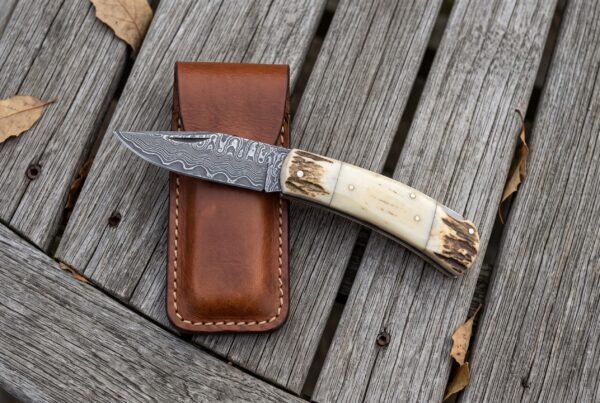 Bonecarry Hand Forged Damascus Folding Pocket Knife with Natural Bone Handle and Stag Bolsters & Cowhide Leather Sheath
Original price was: $89.00.$75.65Current price is: $75.65.
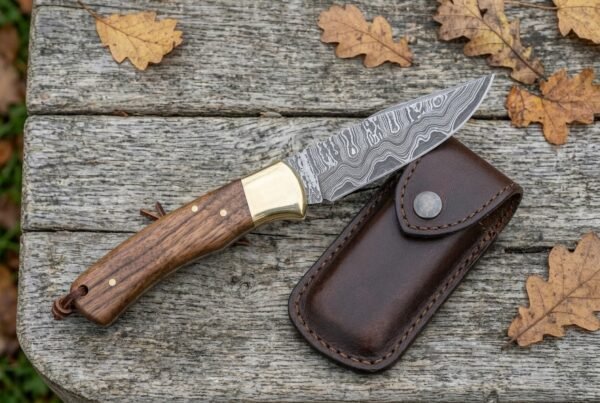 Brasswood Hand Forged Damascus Folding Pocket Knife with Wood Handle and Brass Bolster & Cowhide Leather Sheath
Original price was: $109.00.$92.65Current price is: $92.65.
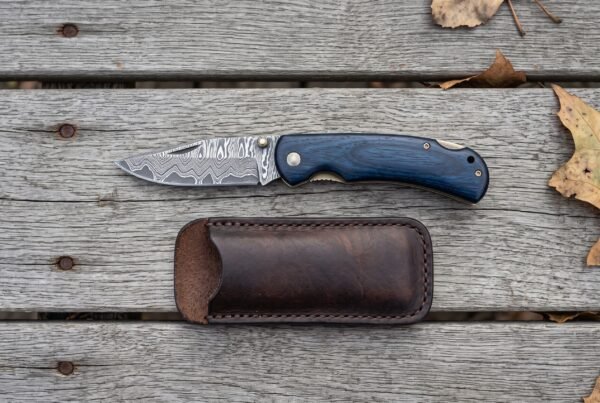 Bluegrain Hand Forged Damascus Folding Pocket Knife with Blue Hardwood Handle & Cowhide Leather Sheath
Original price was: $89.00.$75.65Current price is: $75.65.
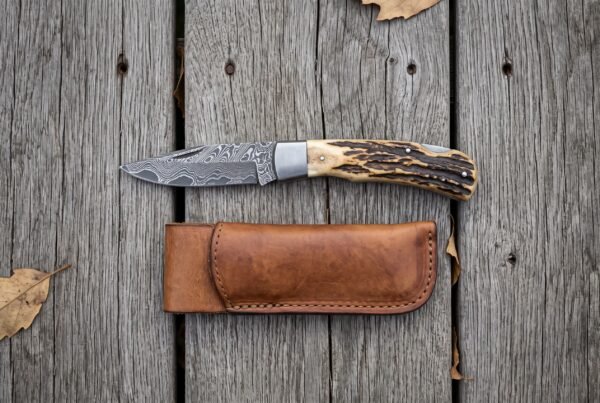 Stagcarry Hand Forged Damascus Folding Pocket Knife with Stag Horn Handle & Cowhide Leather Sheath
Original price was: $189.00.$160.65Current price is: $160.65.